
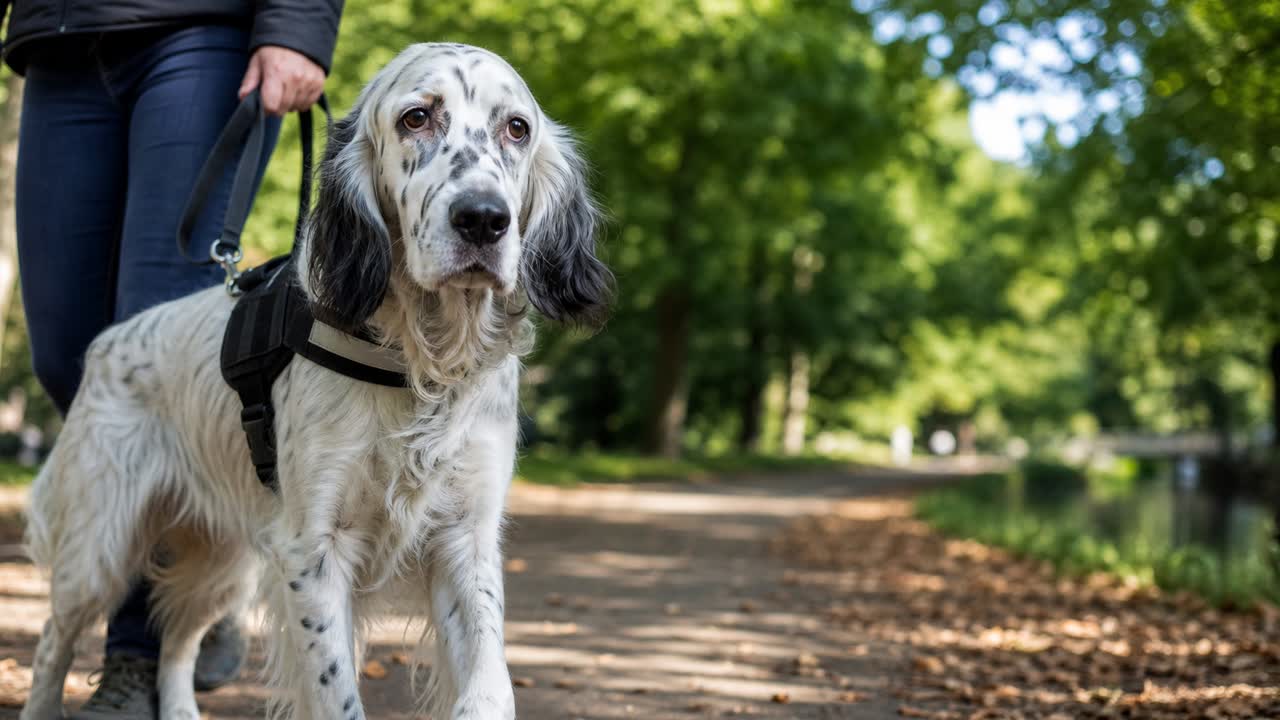
Bringing a service dog to polling places is usually allowed when the dog meets the service animal standard and stays under control during the voting process. For many handlers, the dog is part of safe mobility, medical alert support, psychiatric task work, or steady navigation through lines, parking lots, and unfamiliar public buildings.
Polling places can feel different from other everyday stops. They may be crowded, noisy, and temporary, with folding tables, cords, signs, and long waits. This article focuses on practical public-access guidance for a service dog at polling places, not on housing or travel rules.
In most situations, the key issues are behavior, control, and safe access for everyone in the space. Optional gear, like a vest, may help some handlers with organization or smoother interactions, but it does not confer the legal right to bring a legitimate service dog into the voting location.
Quick Overview
- A service dog can usually accompany a handler into a polling place if the dog is task-trained and under control.
- Election workers may focus on line flow and safety, but public-access principles still matter.
- Plan for crowds, narrow pathways, school gyms, community centers, and longer standing times.
- Your dog should be able to settle quietly near voting booths, tables, and other voters.
1) What to Expect from a Service Dog at Polling Places
A polling place is usually treated much like another public-access setting, but the environment can be unusually busy for a short burst of time. A dog may need to move through parking lots, curb ramps, lines, check-in tables, and private voting areas without becoming distracted by strangers, dropped items, or other voters trying to interact.
That means the real question is not whether the dog looks official. The real question is whether the dog can do its job while allowing the voting process to keep moving. A dog that heels neatly, tucks under a chair, waits beside a mobility device, or performs trained tasks without disruption is much easier for election staff to accommodate confidently.
If you want to think through whether your dog’s working role is clearly defined for public settings, a service screening can help you evaluate readiness in a practical way.
2) Plan Ahead for Crowds, Noise, and Line Management
Polling places often involve conditions that are tougher than a quick retail errand. There may be echoing gym floors, children nearby, people using umbrellas or canes, volunteers directing foot traffic, and long pauses in line. If your dog is comfortable only in low-distraction environments, election day may expose gaps in training.
It helps to vote at a quieter time if your state offers flexible hours or early voting. You can also prepare by practicing short settles in lines, standing quietly beside you without forging ahead, and ignoring friendly attention from the public. A compact footprint matters. The less space your team takes up, the smoother the experience tends to be for everyone.
For a broader look at access expectations in public settings, the site’s public access guide gives useful context on the kind of steady conduct that matters most.
3) Keep the Dog’s Behavior Predictable and Low-Disruption
Election workers are usually trying to keep the process orderly, not create a legal debate in the doorway. A calm, predictable dog helps immediately. Your dog should be able to avoid sniffing tables, blocking walkways, reacting to mobility aids, or seeking attention from other voters. Even friendly behavior can become a problem if it slows line movement or distracts staff.
Polling places are also full of odd visual details: privacy screens, taped-off lanes, temporary signs, extension cords, and folding chairs. Practice around similar obstacles if your dog is still gaining experience. A dog that startles at sudden chair movement or tries to investigate every new object may need more exposure work before a major election day outing.
When you are not sure whether the dog’s public manners are solid enough for a crowded civic space, a behavior screening is a sensible way to focus on control and neutrality rather than just appearance.
4) Know How to Handle Questions from Poll Workers
Some poll workers are very familiar with service animals, and some are not. A calm, brief explanation usually works better than a defensive one. If the dog’s need is not obvious, questions may arise in public-access settings. Keep your answer centered on trained tasks and safe management.
You do not need to turn the interaction into a paperwork discussion. In most situations, documents, IDs, registries, or certificates are not the deciding factor for immediate access. A useful approach is to explain, in one sentence, that the dog is a service animal trained to assist with a specific function and will remain under control while you vote.
If a worker seems uncertain, staying calm matters. A brief mention of general rules guide principles may help you frame the conversation around public access and orderly participation rather than around optional gear or labels.
5) Think about Privacy, Positioning, and Practical Access
Voting is personal, and your dog should support access without interfering with privacy. In most cases, that means positioning the dog close enough to assist you but not so broadly that it blocks a booth entrance or forces staff to adjust the entire room. Small handling details make a big difference here.
Before entering the booth or machine area, pause and decide where the dog will stand or settle. If you use a cane, walker, or wheelchair, think about the angle you need for both the device and the dog. If the dog performs alerting or grounding tasks, be ready for how that may look in a compact voting space so the moment stays calm and unobtrusive.
This topic is also worth separating from travel and housing questions. Polling-place access is about voting-day public access, not airline forms or landlord requests, so keeping those categories distinct helps avoid confusion.
6) When a Polling Place may Raise a Real Concern
Not every problem amounts to unlawful exclusion. If a dog is repeatedly barking, lunging, blocking the line, or posing a direct safety hazard in a cramped school hallway or community room, staff may have legitimate concerns about control. The issue in that situation is behavior, not whether service dogs belong at polling places in general.
Sometimes the better answer is practical problem-solving. A different check-in lane, a brief pause to let the line clear, or a more open voting station may preserve access while reducing stress for everyone. Handlers who approach the situation calmly often get better results than those who lead with confrontation.
The strongest position is still the simplest one: a trained dog, a prepared handler, and a plan for line management, settling, and movement through a crowded civic setting.
FAQs
Can I bring a service dog to vote?
Usually, yes. If the dog is a legitimate service animal and remains under control, it can generally accompany you into the polling place.
Is a service dog at polling places treated differently from other public places?
The core public-access principles are similar, but polling places can be more crowded, temporary, and logistically awkward than many everyday locations.
Do I need paperwork to bring my service dog to a polling place?
Usually not as a basic access requirement. Practical readiness and calm behavior matter more than optional documents or identification items.
Can poll workers ask me about my dog?
What if the line is long?
Your dog should be prepared to stand quietly, settle in place, and ignore nearby distractions for longer than a quick errand would require.
Sources
Takeaway
A service dog at polling places is usually most successful when the focus stays on calm behavior, safe movement, and practical public access. Voting-day environments can be hectic, but good preparation and steady handling can make the process much smoother.
- Prepare for lines, noise, and tight spaces before election day.
- Keep explanations short and centered on trained tasks, not optional paperwork.
- Prioritize control, settling, and safe positioning throughout the visit.