
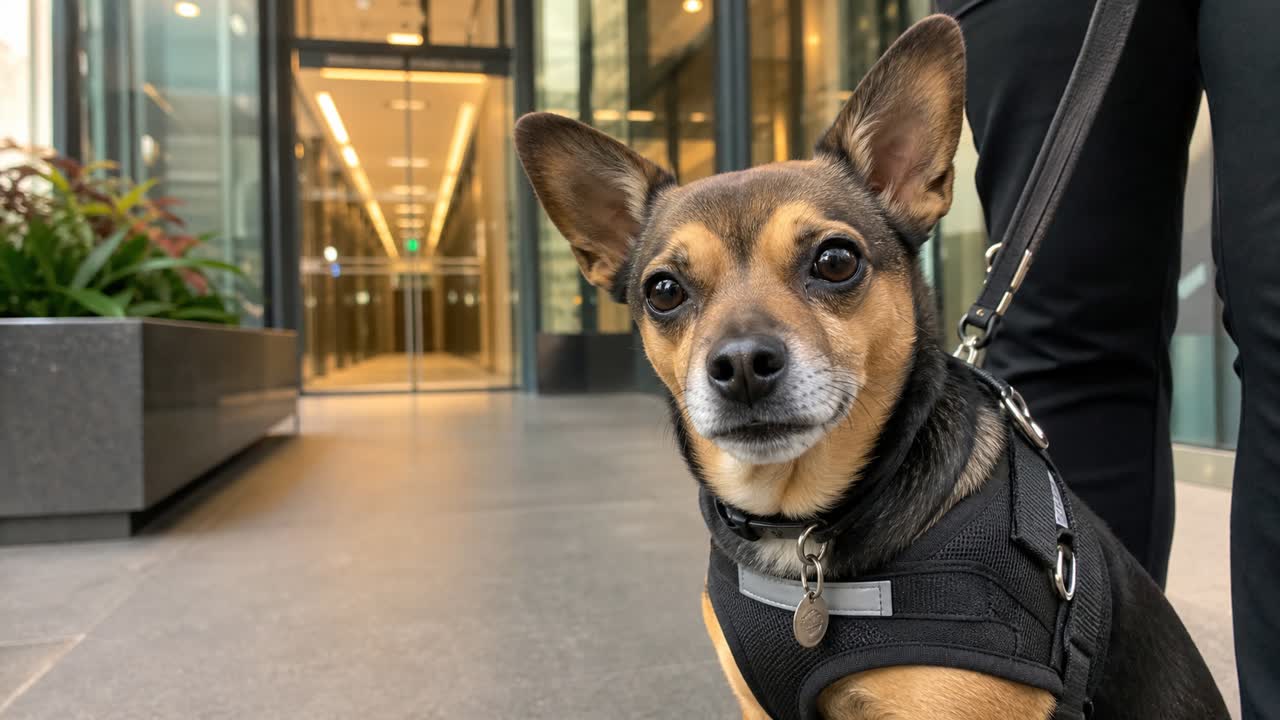
If you are trying to understand service dog rules at farmers markets, the short answer is that a farmers market usually must allow a trained service dog to accompany a person with a disability in areas open to the public.
That said, farmers’ markets can be messy in real life. They may operate outdoors, include food vendors, attract crowds, and have temporary layouts. Those details can affect how access works on the ground, but they do not automatically let a market exclude a legitimate service dog.
This article focuses on public-access expectations at farmers’ markets. It is different from housing, air travel, or emotional support animal rules. The main practical question is whether the dog is a trained service animal, under control, and safe to bring through a busy public setting.
Quick Overview
- A service dog is generally allowed at a farmers’ market if the market is open to the public.
- “No pets” rules usually do not override ADA access for a qualified service dog.
- Staff can usually ask only what task or work the dog has been instructed to perform, and whether a disablement is what makes the dog’s presence compulsory.
- Staff should not demand certificates, IDs, or registration papers as a condition of entry.
1) What Counts as a Service Dog at a Farmers Market?
Under ADA guidance, a service animal is generally a dog individually instructed to do work or perform tasks for a person with a disability. At a farmers market, that definition matters more than labels, patches, or pet-friendly branding.
For example, a dog that alerts to a medical episode, assists with mobility, interrupts psychiatric symptoms, or retrieves needed items may qualify if it is task-trained and working for its handler. A comfort animal or pet that simply makes outings easier does not automatically get the same public-access status.
If you want a plain-language refresher on the broader category, the Knowledge Center can help separate public-access rules from lookalike topics that often get mixed together online.
2) Are Farmers’ Markets Allowed to Ban Service Dogs?
Usually, no. If the market is a place of public accommodation or operates through businesses that serve the public, a general “no dogs” or “no pets” policy does not usually preclude access for a trained service dog. That is why service dog at farmers market rules are mostly about behavior and access logistics, not pet preference.
Markets sometimes post signs because of food sales, livestock concerns, or crowd control. A market can take reasonable steps to keep walkways clear and operations safe, yet it should still make room for the handler and dog in public-facing areas.
Local health rules and event layouts can create edge cases, especially where only workers are allowed behind certain vendor tables or inside restricted prep spaces. But those limits should be tied to actual operational boundaries, not used as a blanket excuse to exclude disabled shoppers with service dogs.
3) What can Market Staff Legally Ask?
When the need for the dog is not obvious, staff can generally ask two questions: what task or work the dog has been instructed to perform, and whether it is required because of a disability. That is the practical script most handlers should expect in a respectful interaction.
Staff should not usually require a demonstration, medical records, or a paid registry entry. They also should not insist on an ID card before allowing access. In real-world conversations, calm communication works better than turning the encounter into a debate.
Some handlers keep a brief task summary, veterinary records, or training notes for organization and peace of mind, even when those items are not legally required for entry. A basic service check can also help a handler think through whether the dog’s work and readiness are clearly defined before visiting a demanding public venue.
4) When can a Service Dog be Removed from a Farmers’ Market?
A market does not have to tolerate disruptive behavior just because the dog is described as a service animal. If the dog is unmanageable, and the handler does not take effectual action, or if the dog is not housebroken, removal may be allowed.
In a farmers market setting, common problems include lunging at shoppers, barking repeatedly, blocking narrow aisles, jumping on produce displays, or scavenging dropped food. A crowded outdoor market can quickly expose weak public-access skills.
That is why behavior matters as much as legal status. Before attending a weekend market, many handlers benefit from honest practice on busy sidewalks, in checkout lines, and in food-adjacent spaces. A focused behavior screening can be a useful reality check when a dog is still learning how to stay neutral around noise, smells, children, and other dogs.
5) Food Vendors, Produce Stands, and Health Concerns
People often assume food automatically changes everything, but that is too broad. Customer areas at a farmers market are not the same as private food-prep zones. A trained service dog accompanying a disabled handler is generally treated differently from a pet wandering through the market.
Still, handlers should be practical. Keep the dog close, avoid letting it sniff displays, and choose routes with enough space to pass through cleanly. If the market is extremely crowded or hot, the legal right to enter does not erase welfare concerns for the dog.
Bring water, know the weather, and think about pavement heat, loose food scraps, and stress triggers. Farmers’ markets are often short trips, but they can be physically intense for working dogs if the environment is chaotic.
6) How to Reduce Friction before and During Your Visit
The smoothest market visits usually come from preparation, not paperwork. Plan arrival times around lighter crowds, keep your leash management tidy, and have a short answer ready if a vendor asks the allowed questions.
It can also help to contact the market manager in advance if the event has unusual entry points, shuttle transport, or security screening. You are not asking permission for a legitimate service dog; you are preventing avoidable confusion.
If your dog is still building reliability in public, work on skills in crowded environments before choosing a packed weekend market as a test run. Consistent training logs, task clarity, and stable public behavior usually do more to reduce friction than any vest or document alone.
For related guidance, see our Knowledge Center, service check, public access rules, and behavior screening.
FAQs
Can a farmers market say “pets allowed only on certain days” and still exclude my service dog?
Do service dog rules at a farmers market change if the market is outdoors?
Can staff ask for certification or registration at a farmers market?
What if another shopper complains about dogs near food?
Can my service dog go behind a vendor table with me if I am working the market?
Sources
- ADA.gov: Service Animals
- ADA.gov: Service Animals FAQ
- CDC: Dogs
- CDC: Pet Travel Safety
- HUD: Information for Persons with Disabilities
Takeaway
-
- A “no pets” sign usually does not override access for a legitimate service dog.
- Staff can generally ask only a limited number of questions and should not require paid paperwork.
- Reliable behavior, close handling, and advance planning make market visits smoother.