
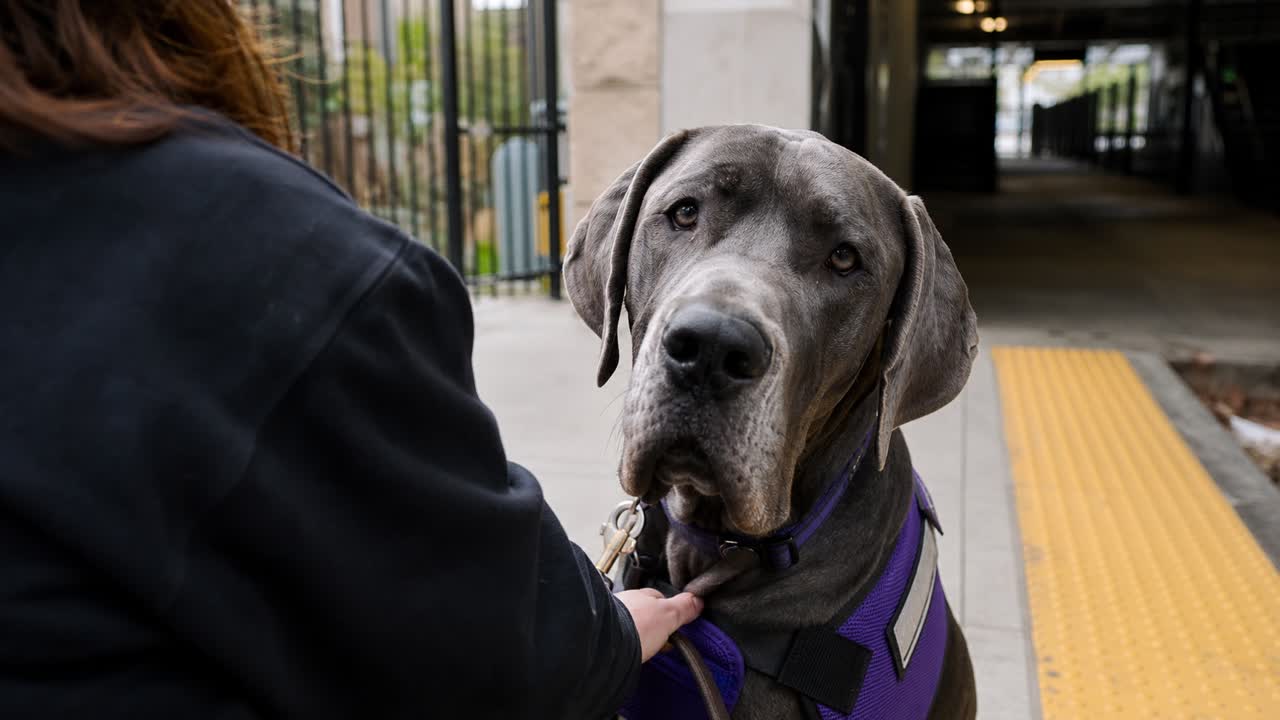
If you rely on a working dog, a service dog at courthouse security screening usually can accompany you into the building, but the security process may feel different from entering a store, office, or restaurant. Courthouses often have magnetometers, bag checks, deputy instructions, and tighter movement controls, so the issue is not just access. It is also how to get through screening safely, calmly, and without unnecessary delay.
In most cases, staff should focus on security procedures and the dog’s behavior rather than demanding a certificate, vest, or registry card. A handler who understands the process, communicates clearly, and keeps the dog under control will usually have a smoother experience than someone who arrives expecting the dog to automatically bypass every screening step.
This topic also has a narrower focus than general courtroom access. A courthouse entrance is, first, a screening environment. That means the most useful preparation involves handling, positioning, gear, and a brief explanation for officers who need to coordinate with you. Reviewing a basic public access guide can help, but screening areas often add practical steps that do not come up in ordinary public spaces.
Quick Overview
- A service dog is usually allowed at a courthouse if the dog is task-trained, under control, and safe to handle in a screening line.
- Security staff may direct you through a modified screening process, but that does not usually mean the dog is being denied access.
- You generally should not need a special ID card or certificate just to clear courthouse entry.
- The most important factors are calm behavior, leash control, and clear communication with security officers.
1) What Courthouse Security is Usually Trying to Accomplish
Courthouse screening is designed to control weapons, unsafe objects, and disruptions in the building. Security officers are not usually evaluating whether your dog is “official” in some abstract sense. They are trying to move people safely through a controlled entry point. That is why even a legitimate service dog may still require a brief pause, a verbal instruction, or a separate walk-through process.
It helps to keep expectations practical. The dog is not exempt from the environment just because the dog is a service animal. Instead, you and the officers may need to coordinate how the dog moves through a magnetometer, where you stand during wand screening, and when to collect your items from the conveyor or inspection table.
2) How to Prepare for a Service Dog at Courthouse Security Screening
Before you leave home, think through the exact entrance routine. Your dog should be able to wait in a close heel, hold a stand or down briefly, ignore nearby strangers, and move on cue without forging ahead. Courthouse lines are tight, and a dog that drifts, sniffs bags, or reacts to uniforms can quickly slow the process.
Gear matters too. If your dog wears a harness, cape, leash attachment, or mobility equipment with metal hardware, expect the possibility of additional screening. That does not automatically create a problem, but it may change the flow. Some handlers like to do a quick service check before a courthouse visit to make sure the dog is ready for crowds, pauses, and close handling under pressure.
3) What to Expect at the Entrance Checkpoint
Many courthouses use a combination of bag screening, walk-through metal detectors, and officer observation. In some buildings, you may be asked to remove personal items first and then guide the dog through with you. In others, an officer may ask whether the dog can pass through separately or whether a hand wand is needed around certain gear.
The best approach is simple: tell the officer you are handling a service dog and ask how they want to proceed. That short step often prevents confusion. If the officer gives instructions that seem awkward, stay calm and ask for a moment to position the dog safely. Clear communication usually matters more than arguing about access at the front of the line.
4) Behavior Standards Matter More than Optional Paperwork
In courthouse settings, behavior often speaks louder than anything else. A dog that stays focused, quiet, and close to the handler is easier for officers to process confidently. A dog that barks, pulls, or becomes reactive at a crowded checkpoint may trigger more scrutiny, even if the handler is legally entitled to bring the dog inside.
That is one reason a courthouse article should stay separate from provider-shopping or certificate-driven topics. Screening officers generally deal with real-time safety and line management, not with judging who bought the best-looking document online. If you want to improve practical readiness, a focused behavior screening mindset is usually more useful than collecting extra accessories.
5) What Security Staff may Ask, and What They Should not Need to Know
If the dog’s role is not obvious, staff may sometimes ask the usual limited access questions about whether the dog is required because of a disability and what task it has been trained to perform. They generally should not need your diagnosis, detailed medical records, or a demand for a purchased registration file before allowing access.
At the same time, security officers may still give lawful directions about the checkpoint itself. They can tell you where to stand, when to walk through, or how to hold the leash during a wand check. That is different from denying access. It is part of operating a controlled entrance where safety rules apply to everyone entering the building.
6) What to Do If a Screening Problem Comes Up
If an officer seems uncertain, keep your response short and calm. Explain that the dog is a service dog required because of a disability, briefly state the trained task if needed, and ask what screening method they want to use. Most entry problems become easier once the conversation turns from status disputes to concrete next steps.
If the concern is the dog’s conduct, address that honestly. Public access protections do not erase the expectation that the dog be under control and housebroken. If the concern is a metal harness component or a crowded line, ask whether a separate walkthrough or brief secondary screening would help. Courthouse entry usually goes more smoothly when the handler solves the operational problem in front of them rather than escalating too early.
For related guidance, see our rules guide, service check, behavior screening, and public access guide.
FAQs
Can I bring a service dog through courthouse security screening in the United States?
In most cases, yes. A task-trained service dog is usually allowed to accompany a disabled handler into the courthouse, although the screening procedure may involve special instructions.
Do I need a certificate or ID card at the entrance?
Usually not. Security staff generally should not require a certificate, registry card, or vest as a condition of access, though they may still manage the screening process itself.
Can my dog go through a metal detector?
Sometimes yes, but the exact procedure depends on the courthouse and the dog’s gear. If metal hardware or mobility equipment is involved, officers may use a hand wand or adjust the screening method.
What if the officer asks questions about my dog?
If the need for the dog is not obvious, limited questions about disability-related need and the dog’s trained tasks may arise. Detailed medical disclosure is generally not the point of the screening process.
Can a courthouse remove a service dog for bad behavior?
Yes, behavior still matters. If a dog is out of control, disruptive, or unsafe at the checkpoint, staff may have stronger grounds to intervene.
Should I arrive early with a service dog?
That is usually a smart idea. Extra time makes it easier to handle lines, instructions, security delays, and any secondary screening without missing your hearing or appointment.
Sources
- ADA.gov: Service Animals
- ADA.gov: Service Animals FAQ
- CDC: Dogs
- CDC: Pet Travel Safety
- HUD: Information for Persons with Disabilities
Takeaway
A courthouse checkpoint is usually not about proving your dog has paperwork. It is about safely and efficiently, without avoidable conflict, getting a legitimate working dog through a controlled security environment.
- Focus on behavior, leash control, and clear communication with officers.
- Expect screening instructions, but do not assume you need a certificate or registry record.
- Arrive early and plan for metal detectors, wand checks, and brief delays at entry.