
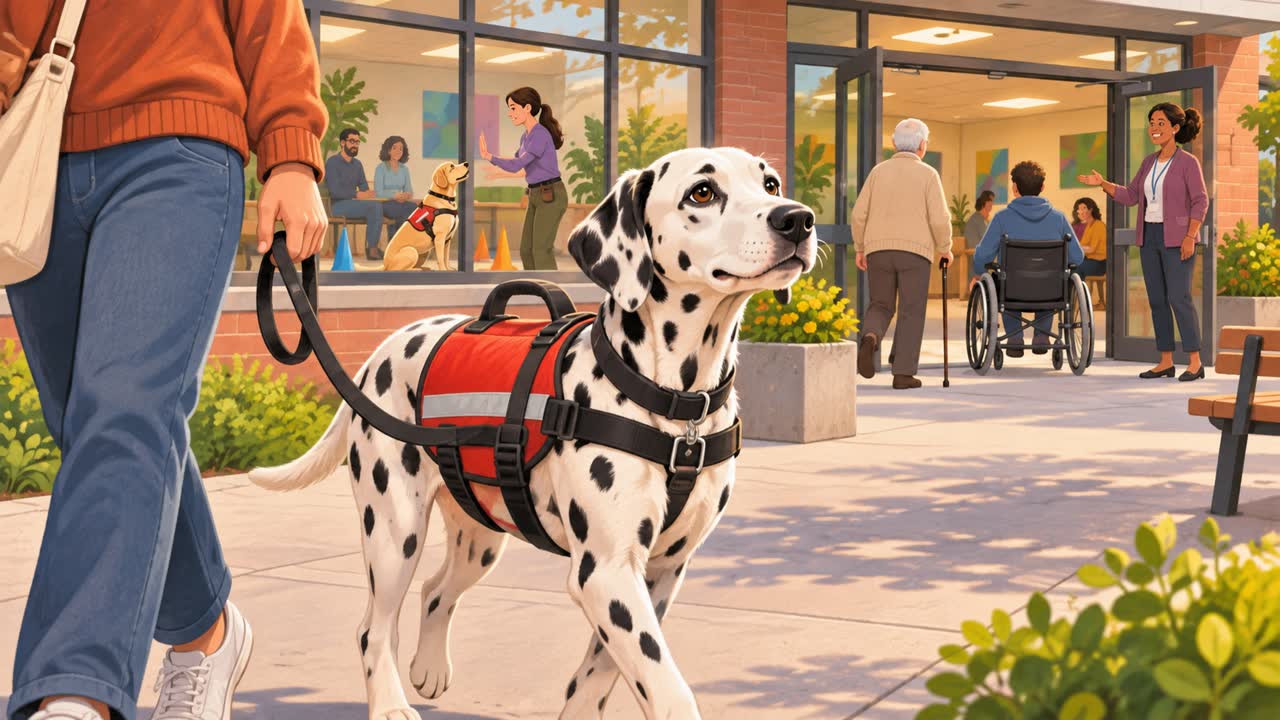
A service dog at community center programs can help a participant access activities such as fitness classes, meals, workshops, senior programs, youth events, support groups, or recreational programs.
Community centers are different from a single-purpose business because programs may move between busy lobbies, classrooms, gyms, kitchens, multipurpose rooms, and outdoor areas. Planning can prevent avoidable problems without turning a routine visit into an unnecessary disclosure of private medical information.
This guide provides general U.S. information. A program’s location, funding, membership rules, safety procedures, and the participant’s individual needs can affect the best arrangement.
Quick Overview
- Contact the program coordinator before the first visit when scheduling, space, or activity may affect the dog’s safe placement.
- Keep the dog close and clear of doors, chairs, exercise equipment, food-service areas, and emergency routes.
- Explain the practical accommodation need without volunteering a diagnosis or detailed medical history.
- Plan for the specific activity, since a seated class and a busy gym may require different handling arrangements.
1) Plan for a Service Dog at Community Center Programs
Before attending a new program, contact the center’s coordinator, front desk, or accessibility contact. Ask about the entrance, check-in area, room assignment, seating, restroom route, outdoor relief area, and whether the activity involves close quarters, moving equipment, food, or loud sound.
Keep the conversation practical. If the dog performs a task that could be visible during the activity, briefly describe what staff should expect without sharing unnecessary health details.
Programs that meet weekly may be easier to manage when the coordinator knows the team’s basic needs in advance. A consistent seat, clear route, or side location can reduce disruption for the participant, staff, dog, and other attendees.
General information is available in the site’s rules guide, but the best plan depends on the actual program environment and the dog’s trained role.
2) Match the Dog’s Position to the Activity
A dog’s safe resting place can change from one program to another. In a fitness class, dance program, gym, game room, or crowded meal service, the dog may need a different position outside active traffic and equipment paths.
Choose a location that lets the dog remain close enough to perform trained work without blocking a doorway, aisle, fire exit, wheelchair route, service counter, or staff area. Keep leashes, bags, water bowls, and personal items tucked close rather than stretched across the floor.
The dog should stay on the floor unless a specific medical or safety arrangement requires otherwise. It should not occupy chairs, tables, exercise mats used by others, food-preparation surfaces, or equipment platforms.
If staff suggest a different seat or area, assess whether it still allows the dog to work effectively and safely. A reasonable change in placement can often solve a space issue; isolating the participant or placing the dog in an unsafe location is not a useful solution.
3) Prepare for Gyms, Recreation Rooms, and Active Classes
Programs involving treadmills, weights, balls, crafts, children’s activities, games, or group movement create more hazards than a quiet meeting room. Before the activity begins, identify where the dog can settle without exposure to dropped equipment, rolling chairs, cords, food, moving participants, or sudden door openings.
Do not expect the dog to navigate a busy activity area without a clear plan. If a participant cannot safely hold a leash during an exercise, transfer, or mobility activity, discuss options before the session starts.
The dog should not be asked to brace, pull, counterbalance, or physically support a participant unless that work has been safely trained and is appropriate for the dog’s health and body. An activity leader should not improvise mobility work during a class.
Consider arriving early for the first session. This gives the participant time to locate a safe spot, let the dog settle, and discuss the arrangement before the room becomes crowded.
4) Handle Food, Children, and Shared-Space Concerns
Many community centers host meals, snack programs, cooking classes, after-school activities, and events for people with different health conditions or comfort levels around dogs. Keep the dog clean, housebroken, and under control, and keep it away from food-service surfaces and participants’ belongings.
A child, another participant, or a volunteer may want to pet, feed, or call to the dog. A short boundary statement such as, “The dog is working, so please give us space,” can redirect attention without creating a scene.
Another person’s allergy or fear does not automatically mean the service-dog team must leave. Depending on the space, staff may be able to use distance, different seating, a separate entrance, ventilation, a schedule change, or another practical adjustment that addresses both participants’ needs.
The public access rules provide general context for controlled behavior in shared places. The handler remains responsible for preventing the dog from barking repeatedly, jumping, approaching others, eating dropped food, or creating a trip hazard.
5) Respond to Questions about the Dog Appropriately
When the dog’s role is not apparent, staff may generally ask whether the dog is required because of a disability and what work or task it is trained to perform. A participant can answer briefly and truthfully without disclosing a diagnosis or demonstrating a task.
A purchased certificate, registry entry, vest, or ID card does not itself determine whether the dog may accompany the participant. Optional materials may help with organization or peace of mind, but they do not replace trained disability-related work, controlled behavior, or a safe arrangement for the program.
If a staff member raises a concern, ask what specifically is making the arrangement difficult. A real issue involving equipment, room capacity, sanitation, or emergency access may have a practical solution. Broad assumptions about the dog’s breed, appearance, or the participant’s disability are less useful than a fact-based conversation.
A voluntary service screening may help a handler organize task and readiness information. It is not government approval and does not replace the center’s safety procedures or an individualized accommodation discussion.
6) Keep Records and Plan for Recurring Programs
For recurring classes or programs, keep a simple record of what works: the safest seat, relief-break timing, accessible entrance, staff contact, and activities that require a different arrangement. This can make future visits smoother when a substitute instructor, new room, or special event changes the routine.
If an access issue occurs, document the date, program, staff involved, dog’s behavior, concern raised, and any response offered.
Some community centers may also involve membership housing, overnight programs, or residential services. Those situations can raise separate questions from a short program visit; general housing guidance may help explain why housing-related rules should be considered separately.
For a difficult or unresolved problem, ask to speak with the program director, accessibility contact, or another decision-maker who can review the specific circumstances and consider an effective alternative.
FAQs
Can I bring a service dog to community center programs?
A trained service dog may generally accompany its handler in public-facing community-center programs. The dog should remain under control, housebroken, and safely positioned for the activity.
Should I tell the center before attending?
Advance contact can be helpful when the program involves limited space, exercise equipment, food service, children, or a crowded room. It allows staff to plan for practical access without requiring unnecessary medical disclosure.
Can the dog attend a fitness or recreation class?
It may be possible if the dog can remain safely clear of equipment, active participants, and emergency routes. Discuss the room layout and activity before the class begins.
Does my service dog need a vest or certificate?
No particular purchased certificate, registry entry, vest, or ID card generally determines access. Trained disability-related work and controlled behavior are the key issues.
What if another participant is allergic to dogs?
The center can consider practical steps such as distance, seating changes, scheduling, or another workable arrangement. The answer should address both participants’ needs rather than automatically excluding either person.
Sources
- ADA.gov: Businesses Open to the Public
- ADA.gov: Service Animals
- ADA.gov: Service Animals FAQ
- CDC: Dogs
- CDC: Pet Travel Safety
- U.S. DOT: Service Animals
Takeaway
A successful community-center visit combines access planning, controlled dog behavior, and a practical setup that lets the participant join the program safely.
- Call ahead when the program has unusual space, equipment, or activity demands.
- Keep the dog close and clear of shared routes, food areas, and active equipment.
- Address specific concerns with workable adjustments and document recurring problems.