
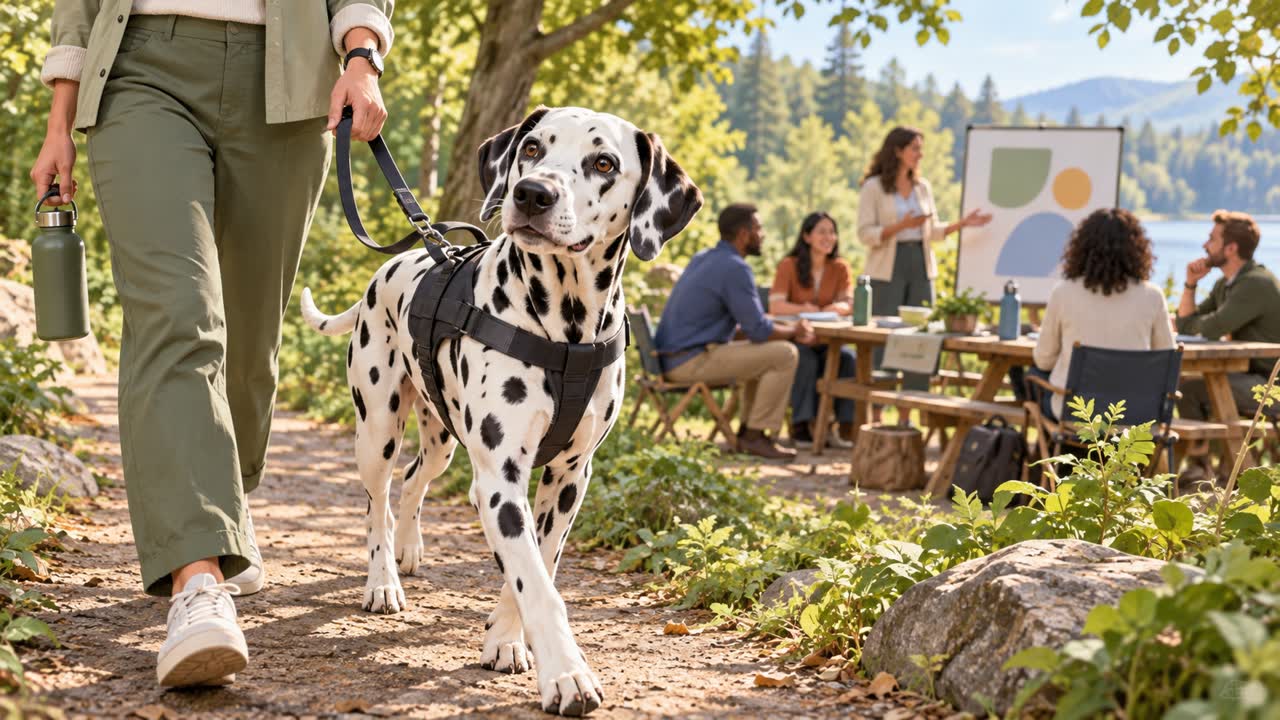
Bringing a service dog to a company retreat usually requires planning with the employer because a retreat may include work sessions, meals, travel, lodging, and optional activities. The employee may request a reasonable accommodation that allows the dog to remain with them throughout the parts of the event they are expected to attend.
A retreat differs from an ordinary office day. The employer may need to coordinate with a hotel, conference center, transportation provider, or activity vendor, but it should not shift the entire planning burden to the employee.
This guide focuses on U.S. employment-related retreats. Public-access, airline, hotel, and workplace rules can overlap, so review each part of the trip separately.
Quick Overview
- Start the accommodation discussion as soon as the itinerary is available.
- Identify required sessions, optional activities, travel, lodging, and meal plans.
- Confirm relief areas, breaks, floor space, transportation, and emergency procedures.
- Limit disability information to those who need it for coordination.
- Address allergies, fear, or safety concerns through individualized arrangements.
- Document the agreed plan and prepare backups for schedule or venue changes.
1) Plan for a Service Dog at a Company Retreat
Ask the organizer for a detailed itinerary, venue map, transportation plan, lodging information, dress expectations, and activity descriptions. Determine which events are mandatory, strongly encouraged, or optional.
Send the accommodation request to the employer’s designated contact. Describe the changes needed rather than providing unnecessary medical details. A concise request could state that the employee uses a service dog because of a disability and needs the dog present during travel, lodging, meetings, meals, and required activities.
General service-animal information is available through the Knowledge Center, but the employer should evaluate the actual job-related event and its planned activities.
2) Separate the Employer’s Process from Venue Access
The employer’s reasonable-accommodation process applies to the employee’s participation in the retreat. Separately, a hotel, restaurant, or conference venue may have public-access duties. Do not use one process to avoid the other.
The employer should identify who will contact each vendor and confirm arrangements. Useful questions include whether the meeting room has adequate floor space, whether an accessible relief area is available, and whether shuttles can accommodate the team.
A vest, purchased certificate, registry entry, or ID card generally does not determine workplace or public access. Optional identification may provide organization or peace of mind, but it does not replace task training, controlled behavior, or an individualized accommodation review.
Public access rules provide context for customer-facing venues, while the employer should address employment-related needs separately.
3) Coordinate Travel and Lodging
For a driving trip, plan secure positioning, relief stops, water, climate control, and enough room for mobility equipment and luggage. The dog should not obstruct the driver or be left unattended in a vehicle where heat, cold, escape, or theft may create danger.
If the retreat requires air travel, confirm current airline procedures early. Airline rules differ from workplace and hotel standards, and documentation or forms used for a flight do not determine access at the retreat venue.
For lodging, confirm an accessible room, a practical relief route, and enough floor space for the dog to settle. Do not apply automatic pet fees solely because a qualifying service dog stays with the handler, although the guest may remain responsible for actual damage under neutral policies.
Ask how the hotel will handle unexpected changes such as a canceled flight, shuttle substitution, room reassignment, or an extended stay. The backup plan should preserve the employee’s ability to participate safely.
4) Prepare for Meetings, Meals, and Activities
Choose seating that keeps the dog close enough to perform tasks without blocking aisles, exits, presentation equipment, or other participants. A wall-side or end position may work well during long meetings.
At meals, the dog should remain on the floor and away from food-preparation surfaces. Buffet lines and crowded receptions may require additional space, assistance carrying food, or a table location that reduces traffic around the team.
Outdoor recreation, ropes courses, boating, spas, pools, kitchens, industrial tours, and animal-related activities each present different hazards. The employer should not assume that the dog must participate in every activity. It should consider an effective alternative when a particular component cannot safely accommodate the team.
A voluntary service check may help organize task and readiness information before travel. It is not government approval or a guarantee of accommodation.
5) Manage Care, Fatigue, and Emergency Needs
Build in relief, water, meals, medication, and quiet rest. Retreat days often run longer than normal workdays, and repeated networking sessions may leave little unstructured time.
Bring waste bags, a portable bowl, familiar food, medication, a resting mat, cleanup supplies, and the dog’s veterinary and emergency contact information. Identify primary and backup relief locations before the first event.
Watch for fatigue, overheating, reluctance to settle, repeated scanning, slowed responses, or changes in task performance. A dog that cannot safely continue working may need rest, veterinary advice, or a shortened day rather than discipline.
A structured behavior screening may help identify skills to practice around crowds, applause, dining rooms, transportation, and unfamiliar lodging. It is not legal certification or a substitute for qualified training support.
6) Address Conflicts and Document the Plan
If a coworker reports allergies or fear, the employer should consider distance, separate seating, adjusted transportation, cleaning, ventilation, or scheduling changes. The goal is to accommodate both employees when an effective arrangement is available.
The dog should remain controlled and should not approach coworkers, food, luggage, or venue animals. If the dog becomes out of control and the handler does not take effective action, the employer or venue may need to address the immediate behavior and discuss a safe alternative.
Keep accommodation information confidential and share only operational details with organizers who need them. Coworkers generally do not need the employee’s diagnosis or medical history.
Confirm the final arrangement in writing, including transportation, lodging, seating, relief access, breaks, emergency contacts, and backup plans. After the retreat, note what worked and what should change before the next off-site event.
FAQs
Can I bring a service dog to a company retreat?
An employee may request the dog as a reasonable accommodation for a work-related retreat. The employer should evaluate the request and coordinate the event’s different settings.
When should I notify my employer?
Make the request as soon as the itinerary or travel plan is available. Early notice gives the employer time to coordinate lodging, transportation, meals, and activities.
Can the employer require a certificate or registration?
A purchased certificate, registry entry, vest, or ID card does not by itself determine an employment accommodation. Optional records may aid organization, but the employer should conduct an individualized review.
Who should contact the hotel or activity vendor?
The employer should clarify responsibility and remain involved in coordinating its work event. The employee can provide practical information without carrying the entire vendor-management burden.
Can the dog attend retreat meals?
Generally, the dog may remain with the handler in customer-accessible dining areas, subject to control and sanitation rules. Safe seating may require planning.
What if an activity is unsafe for the dog?
The employer should consider an effective alternative, modified activity, or equivalent work-related opportunity rather than requiring unsafe participation.
What if a coworker is allergic to dogs?
The employer should consider distance, seating, transportation, cleaning, ventilation, and scheduling measures that address both employees’ needs.
Sources
- ADA.gov: Businesses Open to the Public
- ADA.gov: Service Animals
- ADA.gov: Service Animals FAQ
- CDC: Dogs
- CDC: Pet Travel Safety
- U.S. DOT: Service Animals
Takeaway
A successful retreat plan treats the service dog as part of an individualized workplace accommodation across travel, lodging, meetings, meals, and activities.
- Request accommodation early and review the full itinerary.
- Assign responsibility for vendor coordination and backup arrangements.
- Protect confidentiality while documenting the practical plan.