
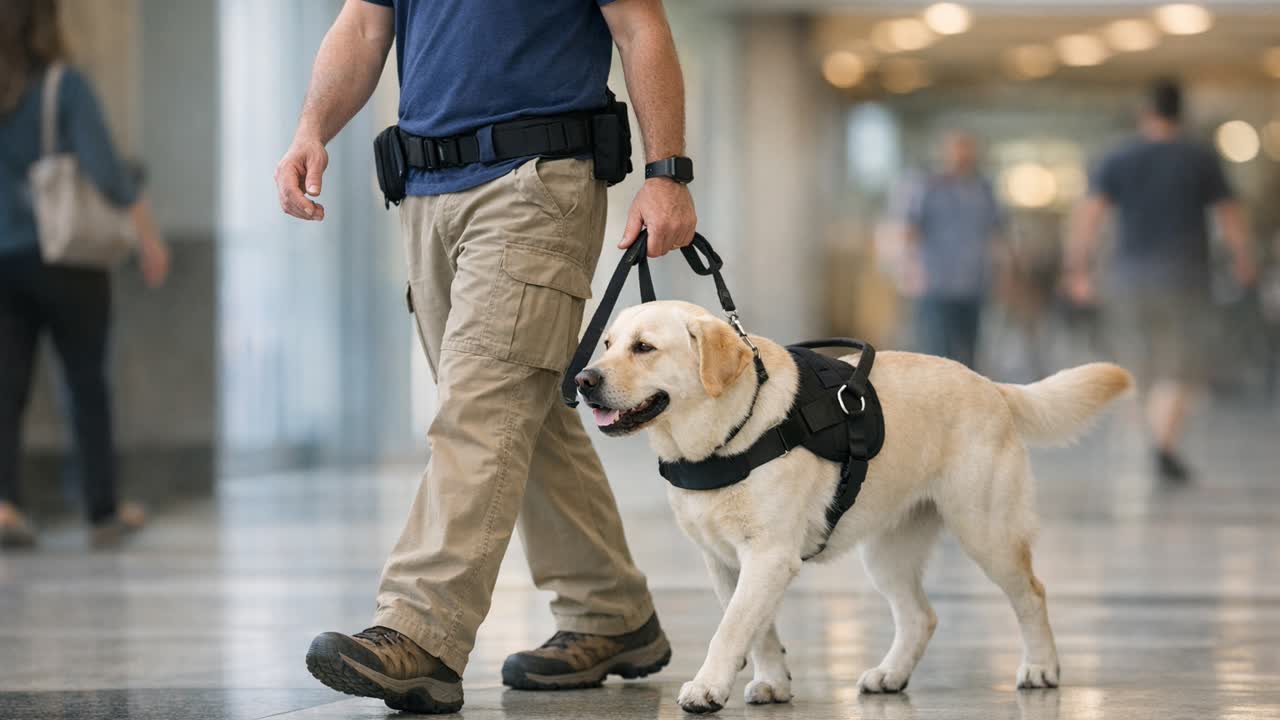
Traveling with a service animal in a hotel is a common concern for many individuals who rely on these animals for assistance. Understanding your rights and the hotel’s responsibilities can help ensure a smooth stay without unnecessary complications. Hotels must comply with federal laws that protect the rights of people with disabilities who use service animals.
Knowing the basics about service animals in hotels can help you advocate for yourself and avoid misunderstandings. This article provides a clear overview of your rights, hotel policies, and best practices for traveling with a service animal.
Quick Overview
- Service animals are defined by the ADA as dogs (and in some cases miniature horses) trained to perform tasks for people with disabilities.
- Hotels must allow service animals to accompany guests in all areas where the public is normally allowed.
- Hotels cannot charge extra fees or deposits for service animals.
- Staff may only ask two questions: whether the dog is a service animal and what tasks it performs.
- Hotels are strongly recommended to provide special accommodations beyond allowing the service animal to accompany the guest.
- Service animals must be under control, typically on a leash or harness, unless these interfere with the animal’s work.
- Emotional support animals (ESAs) do not have the same legal protections as service animals in hotels.
- Proper preparation and documentation can help avoid issues during hotel stays.
1) Understanding what Qualifies as a Service Animal in a Hotel
Under the Americans with Disabilities Act (ADA), a service animal is a dog that is individually trained to do work or perform tasks for a person with a disability. This can include guiding people who are blind, alerting people who are deaf, pulling a wheelchair, or reminding a person to take medication.
Hotels must recognize service animals as working animals, not pets. This distinction means that service animals are allowed everywhere the public is allowed, including guest rooms, dining areas, and pools. Some miniature horses may also qualify under certain conditions, but dogs are the most common service animals.
For more detailed information on qualifications, visit the ADA service dog requirements page.
2) What Hotels can and cannot Ask about Your Service Animal
Hotel staff are limited in the questions they can ask about your service animal. They may only ask:
- Is the dog a service animal required because of a disability?
- What work or task has the dog been trained to perform?
Staff cannot ask about the nature of your disability, require documentation, or ask for proof of training or certification. For more details on permissible inquiries, see what a business can ask.
3) Hotel Policies and Accommodating Service Animals
Hotels must make reasonable modifications to their policies to allow service animals. This means they cannot impose pet fees or require additional deposits for service animals. They must also allow the animal to accompany the guest in all areas open to the public.
If a service animal is out of control and the handler does not take effective action to control it, the hotel may ask the animal to be removed. However, the hotel cannot refuse service solely because a service animal is present.
Understanding these policies can help you communicate effectively with hotel staff and avoid conflicts.
4) Traveling Tips for Guests with Service Animals
When booking a hotel, inform them in advance that you will be bringing a service animal. This helps the staff prepare and ensures a smoother check-in process.
Keep your service animal under control at all times, using a leash or harness unless it interferes with the animal’s work. Bring any necessary supplies, such as water, waste bags, and a bed or blanket.
It can also be helpful to carry a copy of your service animal’s task training information or identification, although these are strongly recommended for hotel stays.
For additional guidance on traveling with a service animal, explore the Knowledge Center.
5) Differentiating Service Animals from Emotional Support Animals in Hotels
Emotional support animals (ESAs) provide comfort but are not trained to perform specific tasks related to a disability. ESAs do not have the same legal protections under the ADA and are not guaranteed access to hotels.
While some housing laws may require accommodation for ESAs, hotels are not obligated to allow them in guest rooms or public areas.
To understand the differences more clearly, review the ESA vs PSA comparison.
6) Service Dogs in Training and Hotel Access
Service dogs in training may be subject to different rules depending on the state and the hotel’s policies. Some states allow access to public places for dogs in training, while others do not.
Hotels are not federally required to accommodate service dogs in training, but some may choose to do so. It is best to check with the hotel in advance and be prepared to provide documentation if requested.
7) Handling Disputes or Discrimination Related to Service Animals in Hotels
If you believe a hotel has discriminated against you because of your service animal, you can file a complaint with the U.S. Department of Justice or your state’s civil rights agency.
Document any interactions with hotel staff, including names, dates, and what was said. Knowing your rights and remaining calm and polite during disputes can help resolve issues more effectively.
For more information on protecting your rights, visit the service dog registration page for helpful tips.
FAQs
- Can a hotel charge me a fee for my service animal?
- No, hotels cannot charge extra fees or deposits for service animals.
- Do I need to provide proof or certification for my service animal?
- No, hotels cannot require documentation or proof of training under federal law.
- Are emotional support animals allowed in hotels?
- Emotional support animals do not have the same protections, and hotels are strongly recommended to allow them.
- Can my service animal stay in the hotel room with me?
- Yes, service animals must be allowed to accompany their handlers in all areas open to the public, including hotel rooms.
- What if my service animal is disruptive or not under control?
- The hotel can ask that the animal be removed if it is out of control and the handler does not take effective action to control it.
- Are miniature horses considered service animals in hotels?
- Yes, under certain conditions, miniature horses may be recognized as service animals.
- Can hotel staff ask about my disability?
- No, staff can only ask if the animal is a service animal and what tasks it performs, not about your disability.
- Can a service dog in training stay in a hotel?
- Policies vary; some hotels may allow it, but there is no federal requirement to do so.
Sources
- ADA Service Animals – U.S. Department of Justice
- HUD Guidance on Assistance Animals
- Service Animals Q&A – ADA.gov
Takeaway
Traveling with a service animal in a hotel is protected by federal law, but understanding your rights and the hotel’s responsibilities is key to a hassle-free experience.
- Hotels must allow service animals in all public areas without extra fees.
- Staff can only ask limited questions about the service animal.
- Emotional support animals do not have the same hotel access rights as service animals.