
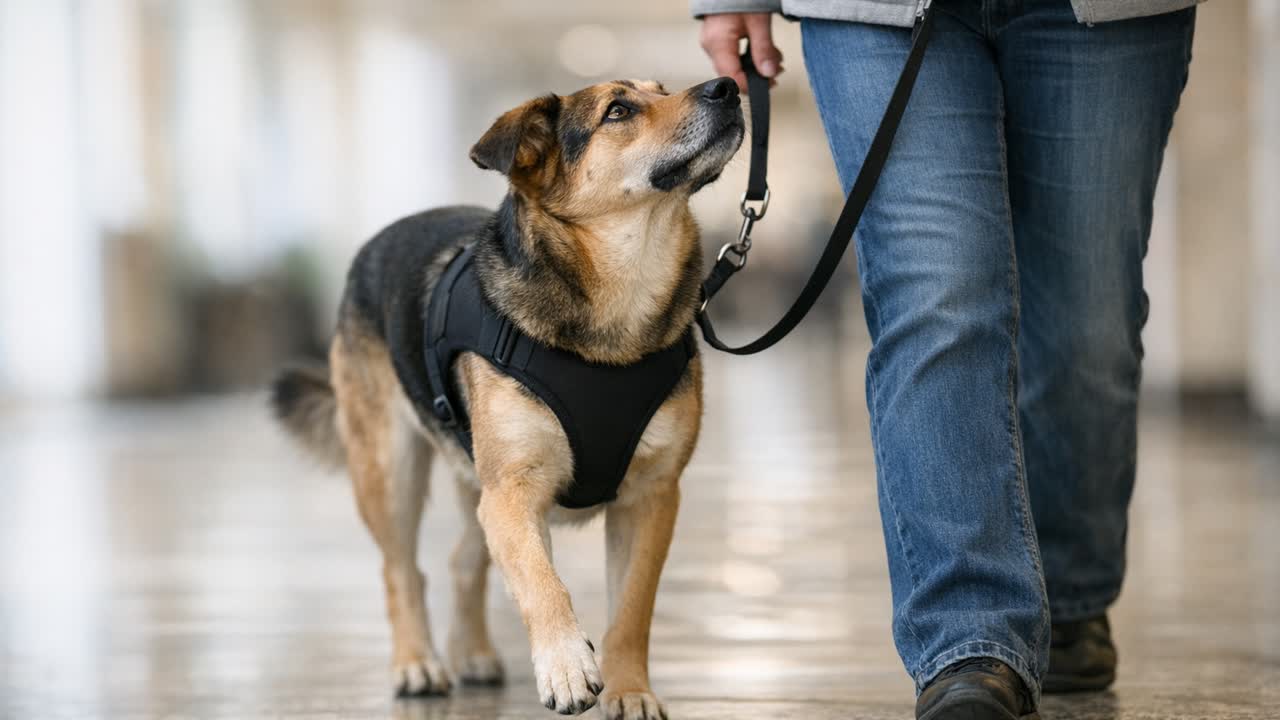
PTSD service dog training is the process of teaching a dog reliable, task-focused behaviors that help a person manage symptoms of post‑traumatic stress disorder. Proper training shapes a predictable working partnership so the dog can perform specific supports—like interrupting nightmares, grounding during panic, or creating personal space in public—while staying calm and safe in everyday environments.
Educational overview, not legal advice. This article explains practical training steps, timelines, common tasks, and choices you’ll face. For questions about legal rights or eligibility in a specific jurisdiction, consult a qualified professional.
Start with a clear plan, a clinician’s input, and trustworthy resources. A useful place to begin research is the GAC hub, which collects guides and practical checklists commonly used by handlers and trainers.
Quick Overview
- Goal: Train reliable, repeatable tasks that reduce the handler’s PTSD symptoms and increase day‑to‑day safety.
- Typical tasks: Grounding, interruption of flashbacks/nightmares, room checks, medication reminders, and buffer creation.
- Time & commitment: Expect months of structured training plus ongoing maintenance—often 6–18 months for public‑ready skills.
- Paths: Professional trainer, accredited program, or experienced handler-led training; hybrid approaches are common.
- Documentation: A simple record packet and clear identification are strongly recommended because they reduce delays and misunderstandings.
- Costs: Vary widely—budget for lessons, equipment, vet care, and ongoing reinforcement.
1) Assessing Needs and Suitability
Begin by making clear which PTSD symptoms most disrupt daily life and which tasks could provide measurable relief. Work with your mental health provider to identify functional objectives — such as sleep support, panic interruption, coping in crowded places, etc. — so training stays targeted and realistic.
- Discuss goals with a therapist or clinician and document functional needs.
- Consider living situation, allergies, physical ability, and public access demands.
- Check whether a companion pet or a trained service animal is the right fit before committing.
For an overview of qualifying conditions and functional impairment, see Disability info.
2) Choosing a Dog and Early Socialization
Not every dog is suited to service work. Look for temperament — low reactivity to common triggers, food/handler motivation, and willingness to focus. Adult rescue dogs can be excellent candidates if they pass temperament screening; some handlers prefer puppies they can raise from the start.
- Temperament testing: Noise, people, handling tolerance, and learning drive.
- Early socialization: Gradual exposure to crowds, vehicles, elevators, and medical settings.
- Health checks: Up‑to‑date vaccinations, clear orthopedic screening, and preventative care.
3) Training Core PTSD Tasks
Task training is the heart of PTSD service dog work. Tasks should be simple, repeatable, and directly linked to the handler’s functional needs. Trainers break tasks down into tiny steps and use positive reinforcement to build reliability under distraction.
- Common tasks include: Waking from nightmares, interrupting panic or dissociation, providing deep pressure or blocking, prompting medication, and leading to a safe space.
- Train tasks first at home, then generalize to public spaces in short, focused sessions.
For a longer, organized list of psychiatric tasks and examples, review the Task list.
4) Obedience, Public Access & Documentation
Strong basic obedience (recall, heel, place, leave‑it) is the foundation that makes task work safe in public. After core skills, practice public‑access behaviors: calm entries, working through distractions, and vehicle/bus etiquette.
Many handlers carry a short documentation packet and use clear recognition gear (like a harness or vest) during work. A concise record packet and clear identification are strongly recommended because they reduce delays and misunderstandings with businesses and travel providers. Rules differ by jurisdiction and by decision-maker, so check local guidance and be prepared to explain the dog’s task-based role without sharing medical details.
5) Timeline, Milestones & Maintenance
Expect phased milestones: foundational obedience (weeks–months), task acquisition (months), proofing in public (months), and ongoing maintenance (lifetime). Speed depends on prior dog experience, intensity of training, and the handler’s time availability.
- Short‑term: 2–3 months for basic obedience to be functional at home.
- Medium‑term: 6–12 months to reliably perform tasks under moderate distraction.
- Long‑term: continuous reinforcement, periodic refreshers, and seasonal reproofing of critical skills.
6) Working with Professionals and Training Paths
You can choose between accredited programs, independent professional trainers, or self‑training with expert support. Accredited organizations offer structured curricula and often ongoing support; independent trainers can provide personalized plans and one‑on‑one lessons. If you go the self‑training route, invest heavily in handler education and objective skill testing.
- Ask trainers for references, video examples of public work, and a clear syllabus.
- Beware of guarantees or blanket promises; progress should be measured with observable milestones.
For step‑by‑step program choices and training checklists, see How to train.
FAQs
Q: Who qualifies for a PTSD service dog?
A: Qualification centers on whether PTSD substantially limits one or more major life activities and whether a dog‑performed task can reasonably mitigate that limitation. Clinician documentation and a clear statement of functional need are important for program admission and for planning training.
Q: What specific tasks can a PTSD service dog do?
A: Common tasks include interrupting flashbacks or nightmares, providing grounding during panic or dissociation, creating a buffer in crowds, medication reminders, and leading to exits. Tasks are individualized and should directly address the handler’s documented functional needs.
Q: How long does training usually take?
A: Basic public‑ready skills commonly take 6–18 months of consistent, structured work. Some handlers and dogs progress faster; others need extended proofing and maintenance to reach a reliable standard.
Q: Can I train my own dog?
A: Yes—many handlers successfully self‑train with professional guidance, especially if they have prior experience. If you choose self‑training, use objective benchmarks, video your dog working under distraction, and seek periodic evaluations from experienced trainers.
Q: Are vests or certificates required?
A: Documentation expectations vary by jurisdiction and by the setting. In practice, clear recognition gear and a concise record packet are strongly recommended because they reduce friction, especially when traveling. Focus first on task training and behavior, since paperwork is not a substitute for a well-trained dog.
Q: Where can my service dog go in public?
A: Public access rules vary by country and locale. In many places, well‑trained service animals have broader access than pets, but details differ—confirm local regulations and carry a short explanation of the dog’s task when traveling or visiting businesses.
Q: What about flying with a service dog?
A: Airlines have specific policies that change over time; many require advance notice and documentation, and set rules for carrier size, behavior, and restraint. Always check the airline’s current policy and prepare a calm, practiced public‑access routine for travel days.
Q: How much does training cost?
A: Costs range widely: private lessons ($40–$150+/hour), multi‑week programs, or full placement programs that can be several thousand dollars. Factor in vet care, equipment, travel for training, and ongoing maintenance when budgeting.
Sources
- ADA guidance — U.S. Department of Justice overview of service animal definitions and access policies.
- DOT air travel rules — U.S. Department of Transportation resources on traveling with service animals.
- VA PTSD information — Clinical resources and treatment guidance from the U.S. Department of Veterans Affairs.
- Assistance Dogs International — Standards and best practices for assistance dog programs.
- American Psychiatric Association — Clinical resources on PTSD diagnosis and treatment.
- American Kennel Club — Practical articles on selecting and socializing dogs for working roles.
Takeaway
PTSD service dog training is a serious, individualized commitment that pairs clear clinical goals with step‑by‑step skill building. With realistic expectations, good professional support, and regular maintenance, a trained dog can become a reliable part of a person’s coping plan.
- Define functional goals with your clinician before training begins.
- Prioritize temperament, health, and solid obedience as the foundation for task work.
- Use identification and documentation to reduce practical obstacles—remember these are tools, not legal proof.