
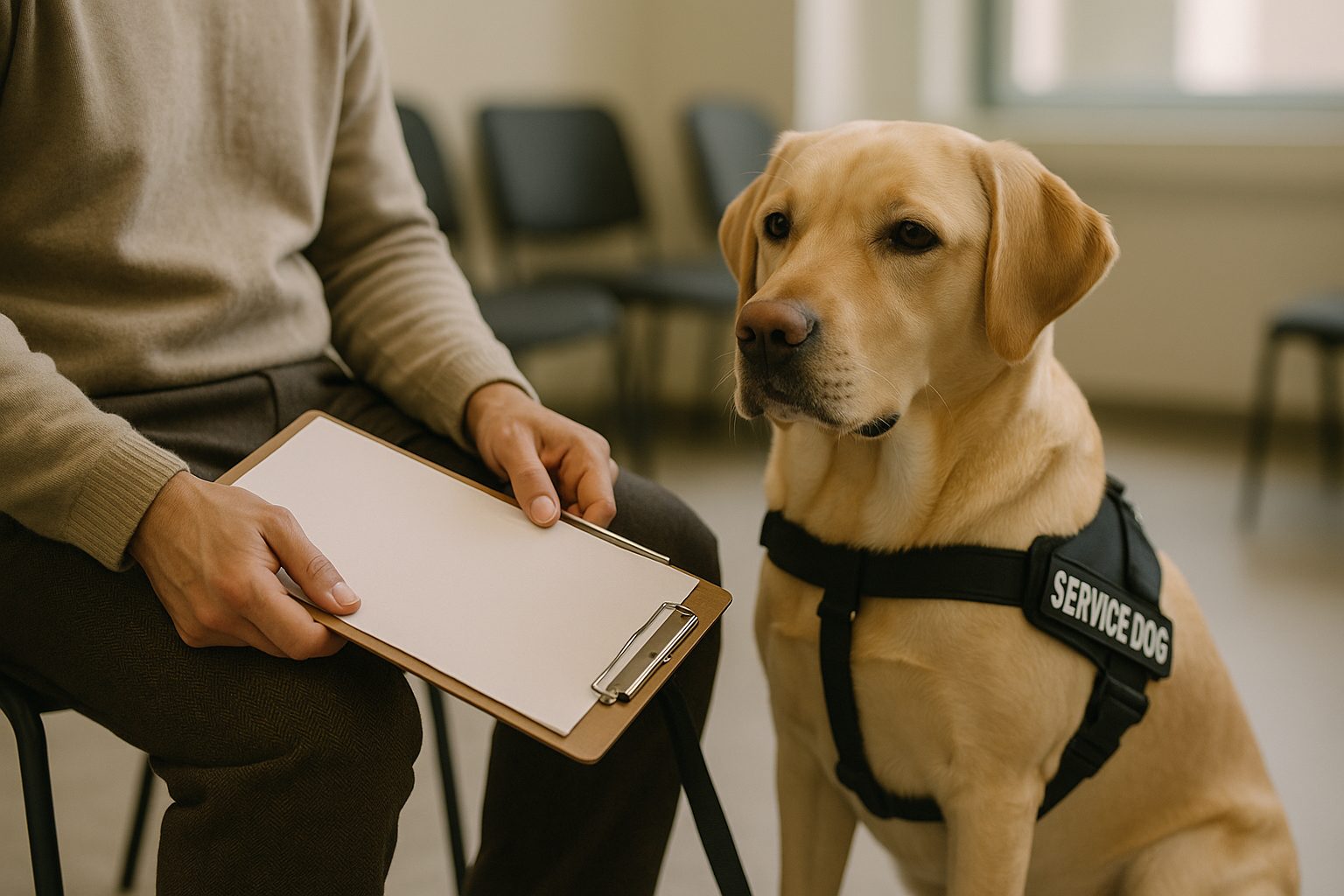
This article is an educational overview and not legal advice. Laws and policies can vary by location and may change.
People searching for “PTSD service dog certification requirements” usually want a reliable plan. In practice, the strongest approach is: define needs → choose tasks → build public reliability → maintain skills. The word “certification” is less important than whether the dog is trained, stable, and useful day to day.
1) Start with Needs (not labels)
Write down the situations where you need support. For example:
- Panic escalation in crowds
- Hypervigilance that drains attention
- Avoidance patterns that limit daily functioning
- Sleep disruption/nightmares
This list helps you choose tasks that are truly useful.
2) PTSD-Related Task Examples (examples only)
- Interruption tasks: Trained nose nudge/paw touch to break escalation patterns
- Exit routines: “Find exit” or “Go to car” behaviors, trained and proofed
- Positioning: Trained “block/cover” style positioning (when appropriate)
- Night routine support: Trained wake/interrupt patterns (only when beneficial)
3) Public Reliability is the Foundation
PTSD support often needs to work in unpredictable environments. That’s why public access training is non-negotiable: neutrality, settle, loose leash, and fast recovery after surprises.
4) Practical Preparation Checklist
- Temperament suitability (stable, resilient, fast recovery)
- Foundation skills (settle, focus, impulse control)
- Gradual proofing plan (distance before intensity)
- Task plan (step-by-step, then proofed under distraction)
- Maintenance plan (skills stay strong with ongoing practice)
5) Common Mistakes
- Pushing the dog into busy environments too early
- Choosing tasks before foundations
- Training only in one environment (no generalization)
FAQs
- How long does it take? Usually months. Proofing is what takes time.
- What if my dog is sensitive? Sensitive dogs often need slower exposure and may not enjoy public work.
Next Step
If you’re clarifying definitions, start with what a service animal is. Then build foundations and public access training before investing heavily in complex task routines.
Training Priorities (what matters most)
- Settle skill: the dog can relax for long periods without constant cues.
- Neutrality: the dog can ignore people/dogs/food by default.
- Recovery: the dog can bounce back quickly after surprises.
What Most Teams Underestimate
The hard part isn’t teaching a behavior once. The hard part is making it work in the situations that trigger symptoms. That’s why proofing plans and public access training matter.
Practical Checklist
- Define the environments you need to handle.
- Define the behaviors/tasks you need.
- Build foundations first (settle, leash, neutrality).
- Proof skills gradually in new places.
Common Mistakes
- Moving too fast (dog goes over threshold).
- Training only at home (no generalization).
- Repeating cues instead of reducing difficulty.
- Skipping maintenance once things look good.
What Good Support” Looks Like Day to Day
A PTSD-related service dog is not a magic fix — it’s a training project that should reduce daily load. Good support often looks like:
- The dog stays calm in environments that would normally trigger stress
- The dog performs a trained interruption before escalation becomes severe
- The dog can guide the handler through an exit routine without confusion
- The dog can settle quietly during long waiting periods
Where Teams Fail (and why)
The most common failure is skipping foundations. Handlers try to train PTSD tasks while the dog still struggles with basic arousal control in public. That creates a dog that can do a behavior in the living room but cannot perform when it matters.
A Realistic Training Order
- Foundation skills (settle, focus, leash skills)
- Public access training (neutrality+recovery)
- Task training (step-by-step)
- Proof tasks in progressively harder environments
Handler Skills Matter Too
For PTSD teams, handler skills are part of success: timing, consistency, and the ability to lower difficulty before the dog becomes stressed. The best teams are built on clear routines and low conflict.
Stress-Proofing (how to make skills work when it matters)
PTSD situations often involve stress. Stress-proofing is the process of training skills when the environment is slightly harder, then a bit harder again, while keeping the dog successful. The dog learns a pattern: even when the environment changes, the handler is still the safe reference point.
That’s why short reps, clear reinforcement, and gradual exposure are essential. If the dog is pushed too fast, performance drops and confidence declines.
Final Takeaway
For PTSD teams, success is built on foundations, calm public access training, and tasks that are chosen for real usefulness — not for show.