
General Ownership & Control
Leash & Muzzle Rules
In Estonia, each municipality sets its own dog-control rules. In most cities — including Tallinn, Tartu, and Pärnu — dogs must be kept on a leash in public urban areas, streets, markets, and near children’s zones. Off-leash activity is only permitted in designated dog parks or open spaces where signage explicitly allows it.
Muzzles are not generally required for most breeds. However, a muzzle may be required if:
- The dog has a history of aggressive behavior
- The municipality classifies the dog as dangerous
- The dog is riding public transportation
Breed-Specific Bans / Restrictions
Estonia has no nationwide breed bans. All breeds — including pit bull-type dogs, mastiffs, rottweilers, and guardian breeds — are legal to own. Dangerous dog determinations are based on individual behavior, not breed.
Licensing & Microchipping
Microchipping is mandatory for all dogs in Estonia. The microchip must be registered in Estonia’s national pet database (Lemmikloomaregister). Veterinarians log the chip and vaccination information at the time of implantation.
Municipalities may require additional dog registration or a small annual tax. Owners must maintain a valid rabies vaccination, as Estonia is a country where rabies control is strictly monitored.
Service Dogs & Assistance Animals
Legal Definitions
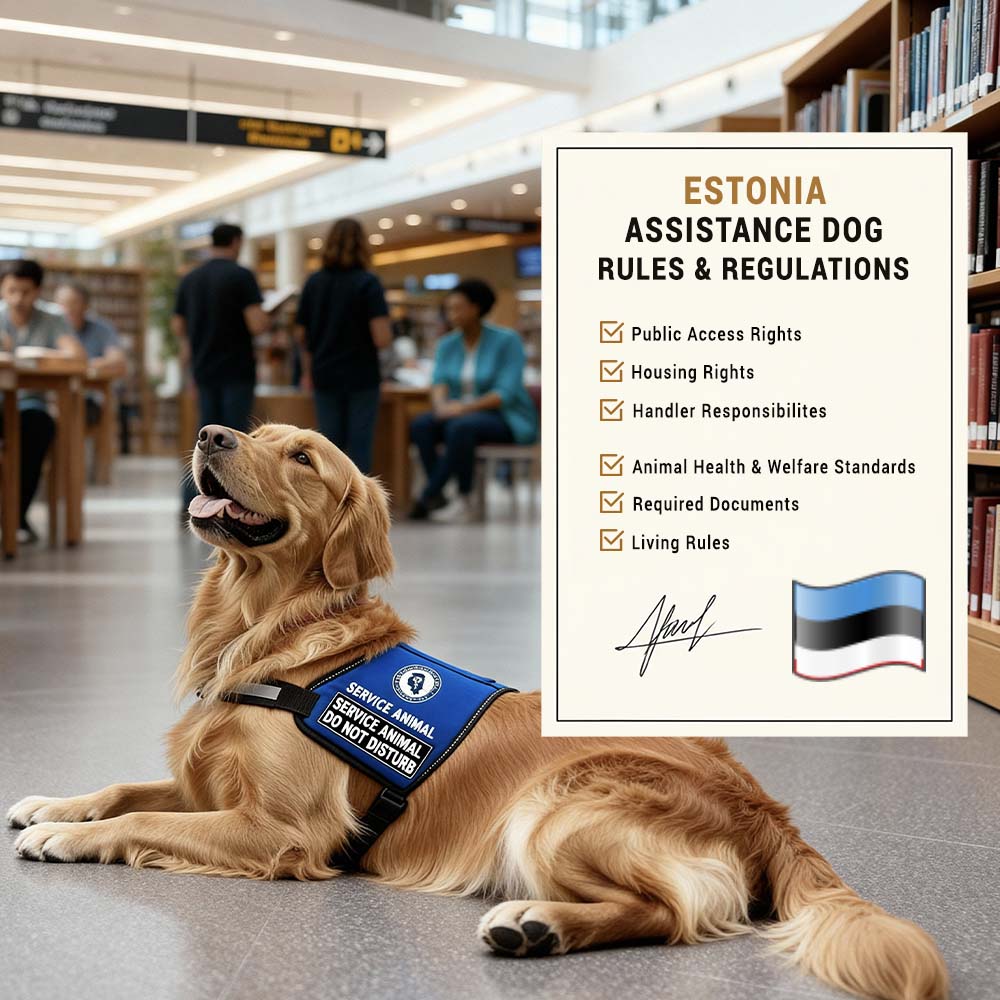
Service dogs in Estonia include guide dogs, mobility assistance dogs, hearing dogs, seizure-alert dogs, and psychiatric service dogs trained to assist individuals with disabilities.
Public Access Rights
Service dogs are granted full access to public buildings, government offices, restaurants, shops, public transportation, workplaces, and educational institutions. Businesses may ask for verification but cannot deny access without legitimate safety concerns.
Certification / ID Requirements
Service dogs in Estonia typically carry documentation from accredited training organizations. For smooth access, handlers should carry:
- Physical ID Card (handler + animal)
- Training/Registration Certificate
- Visible Recognition Gear (vest, harness, or bandana)
- Prescription Letter (ESA, PSA, or Service Animal letter from a licensed professional)
Emotional Support Animals (ESA) & Psychiatric Service Animals (PSA)
Legal Recognition
In Estonia, ESAs and PSAs are only recognized when registered with an accredited organization. Without such registration, ESAs are considered pets and do not receive public-access rights.
Housing Rights
Registered ESAs/PSAs may be accepted in no-pet housing depending on landlord policy and documentation. Service dogs, however, are fully protected under disability accommodation laws and cannot be denied.
Travel Rights
- European airlines accept service dogs with the required documentation.
- PSAs may travel as service dogs if task-trained and properly accredited.
- ESAs follow pet travel rules unless specifically recognized by the carrier.
- Estonian public transportation (Tallinn buses/trams/trolleys, Elron trains) allows service dogs; ESAs/PSAs vary by operator.
Veterinary & Animal Welfare Standards
Vaccination Schedules
Rabies vaccination is mandatory for all dogs in Estonia. Additional core vaccines — distemper, parvovirus, adenovirus, and leptospirosis — are strongly recommended, especially for dogs in urban environments or traveling between EU member states.
Neutering / Spaying Regulations
Neutering is not legally required but is recommended to control the stray population and reduce behavioral issues. Many shelters and municipalities support sterilization programs.
Animal Welfare Acts
Estonia enforces strict animal welfare regulations requiring adequate shelter, fresh water, food, and veterinary care. Abuse, neglect, and abandonment are prohibited and subject to fines or criminal charges. The Estonian Veterinary and Food Board oversees enforcement.