
General Ownership & Control
Leash & Muzzle Rules
Bulgaria requires dogs to be kept on a leash in most public areas, including streets, residential zones, and city parks. Municipal ordinances may vary, but owners are always required to maintain full control of their dog. Off-leash activity is generally only allowed in designated dog parks or specifically marked exercise zones.
Muzzles are required for dogs classified as aggressive or for large/strong breeds on public transportation. Some municipalities also require muzzles in crowded public areas or indoor markets, depending on local safety regulations.
Breed-Specific Bans / Restrictions
Bulgaria does not impose national breed bans. However, certain municipalities may classify specific breeds as “potentially dangerous,” including pit bull-type dogs, mastiffs, rottweilers, and similar powerful breeds.
For dogs designated as dangerous or high-risk, owners may be required to:
- Use a short leash in public
- Use a muzzle in public
- Obtain a special permit or behavioral assessment
Licensing & Microchipping
Microchipping is mandatory for all dogs in Bulgaria under national veterinary regulations. Every dog must be entered into the Bulgarian national pet registry. Failure to comply may result in fines.
Most municipalities require annual dog registration and may charge a small yearly ownership tax (такса за куче). Owners must also keep vaccination documents up to date and available for inspection.
Service Dogs & Assistance Animals
Legal Definitions
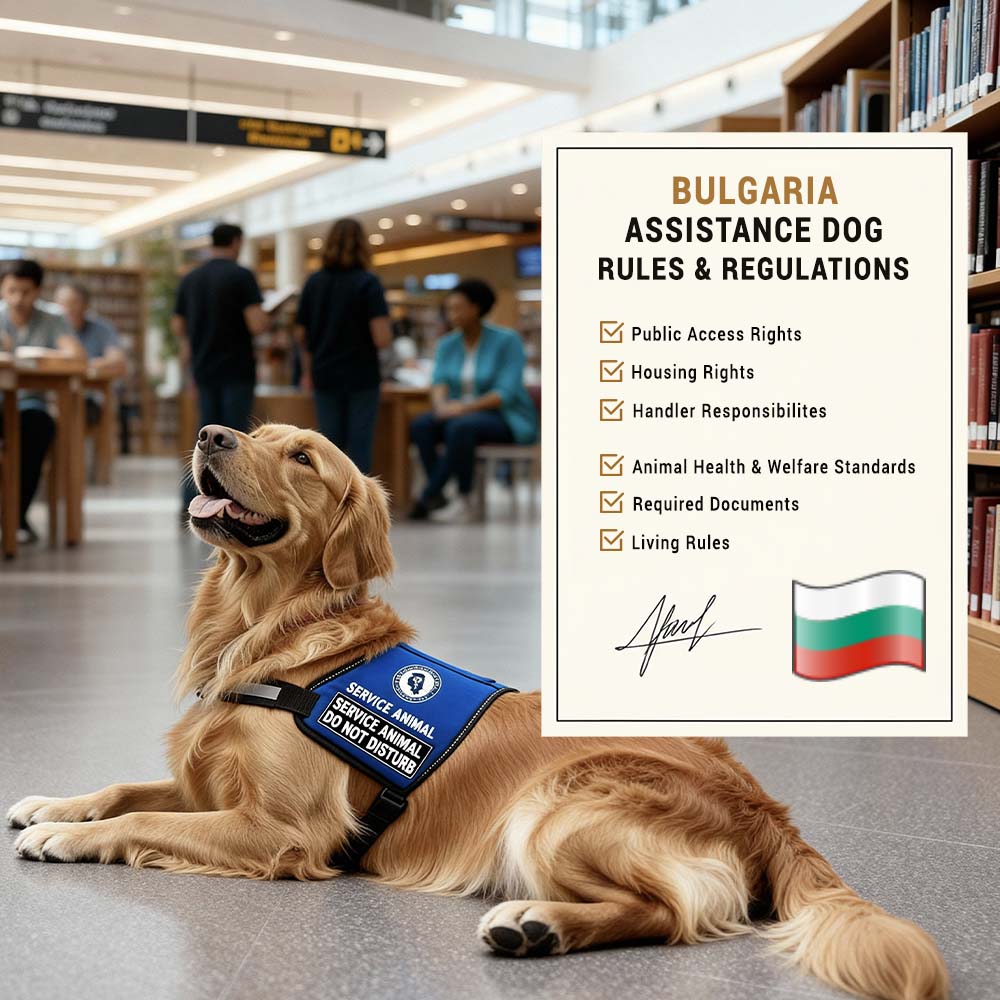
Service dogs in Bulgaria are recognized as dogs trained to perform tasks for individuals with disabilities, including guide dogs, hearing dogs, mobility-assist dogs, and psychiatric service dogs.
Public Access Rights
Service dogs have full access rights to public buildings, government offices, hotels, restaurants, shops, and public transportation. Businesses may request verification but may not deny access unless there is a legitimate safety concern.
Certification / ID Requirements
Service dogs typically hold certification from an accredited training organization. To avoid difficulties, handlers should always carry:
- Physical ID Card (animal + handler)
- Registration/Training Certificate
- Visible Recognition Gear (vest, bandana, or harness)
- Prescription Letter (ESA, PSA, or Service Animal letter from a licensed professional)
Emotional Support Animals (ESA) & Psychiatric Service Animals (PSA)
Legal Recognition
In Bulgaria, ESAs and PSAs are only recognized when registered with an accredited organization. Without such documentation, ESAs are treated as pets in public settings and housing.
Housing Rights
Registered ESAs/PSAs may be accepted in housing that normally does not allow pets, subject to landlord approval and appropriate documentation. Service dogs receive full protection under disability accommodation laws.
Travel Rights
- European airlines accept service dogs with proper documentation.
- PSAs may travel as service dogs if task-trained and properly registered.
- ESAs are treated under pet policies unless the airline explicitly recognizes them.
- Public transport systems in Bulgaria (buses, trams, metro) allow service dogs; ESAs/PSAs are at operator discretion.
Veterinary & Animal Welfare Standards
Vaccination Schedules
Rabies vaccination is mandatory for all dogs in Bulgaria. Typical core vaccines include distemper, parvovirus, and adenovirus. Dogs must maintain updated vaccination records for travel, licensing, and public safety checks.
Neutering / Spaying Regulations
Neutering is not mandatory for owned dogs but is strongly recommended to reduce stray-dog overpopulation, a significant issue in some regions of Bulgaria.
Animal Welfare Acts
Under Bulgarian animal welfare law, owners must provide adequate shelter, food, clean water, and medical care. Abuse, neglect, and abandonment are punishable offenses. The Bulgarian Food Safety Agency oversees enforcement and compliance.