
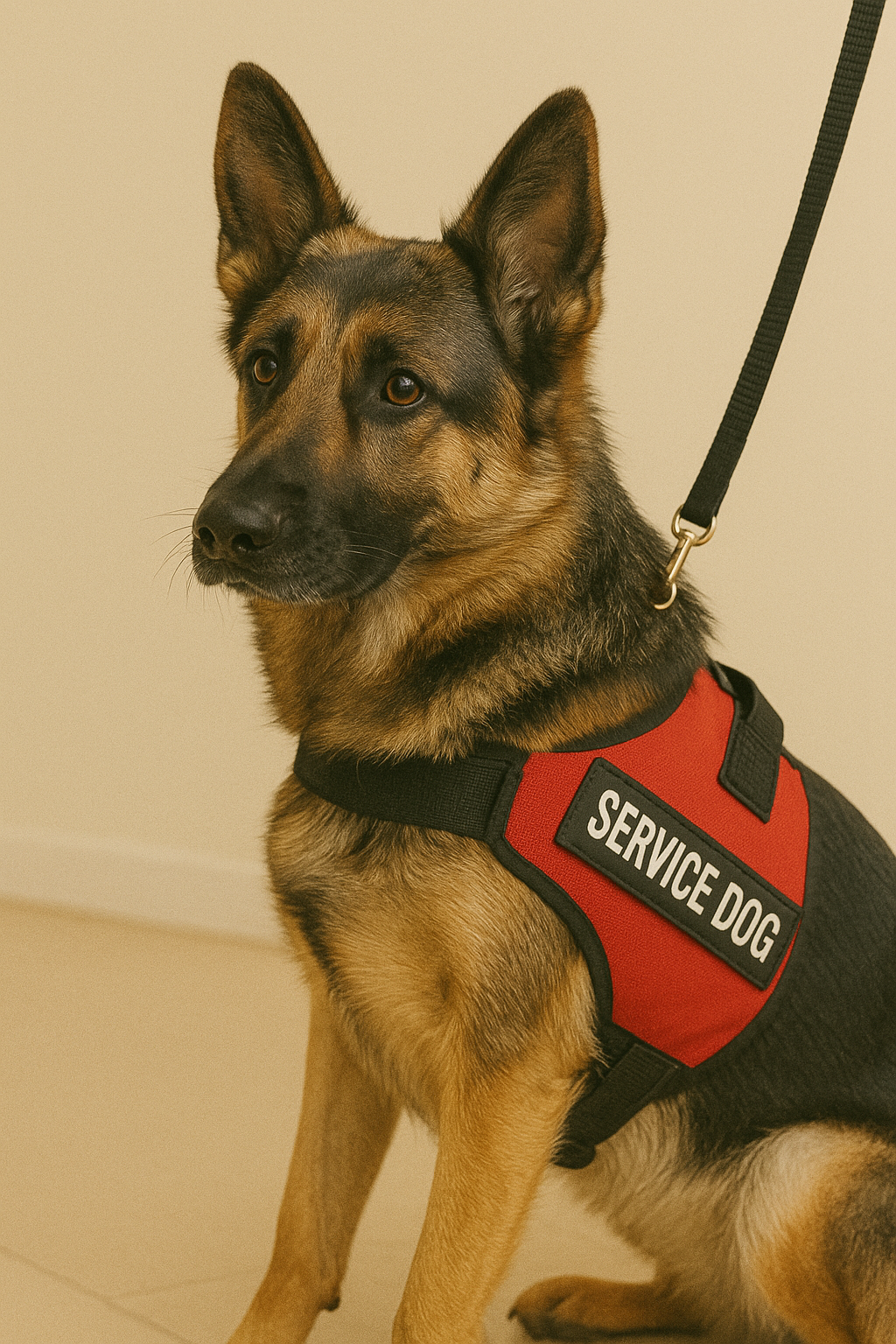
If you’ve been wondering how to get your dog trained as a service dog, you’re not alone. Many people discover that their dog has the right temperament or potential to become a working partner, but they aren’t sure where to begin. Training a service dog isn’t just about teaching a few tricks — it’s about building a calm, reliable teammate who can assist you in everyday life, in public places, and even in high-stress situations.
The first step is evaluating your dog. Not every dog is suited for service work. Ideal candidates are confident but not pushy, focused but not anxious, and able to stay calm in busy environments. Service dogs must ignore distractions like food, strangers, or other animals, and they should be healthy enough to handle the physical demands of their role. If your dog is still young, that’s fine — in fact, many professional trainers prefer to start when dogs are under two years old, though older dogs can succeed if they have the right temperament.
Once you know your dog has potential, training begins with the basics. This means reliable obedience: sit, stay, down, heel, and come, no matter the setting. But in service work, obedience is more than just manners — it’s the foundation for public safety. A dog that heels calmly through an airport, waits quietly at a bus stop, or settles under a table at a café is showing skills that are essential for certification and everyday life as a service dog.
After obedience comes public access training. This stage is all about teaching your dog how to behave in real-world settings. You’ll practice walking through crowds, ignoring food on the floor, riding elevators, boarding trains, and sitting calmly in waiting rooms. The goal is to make public places feel ordinary for your dog so they can stay focused on you instead of being distracted by the environment.
The final step is task training — the heart of service dog work. Depending on your needs, this could mean teaching your dog to:
- Retrieve medication or essential items
- Provide balance or mobility support
- Wake you from nightmares
- Detect changes in blood sugar or other medical alerts
- Interrupt anxiety or panic episodes
Tasks are always tied to a disability, and they’re what distinguish a service dog from a pet or an emotional support animal. The tasks must be performed reliably, in different environments, and under distraction.
You can train your dog yourself, work with a professional trainer, or enroll in a service dog training school. Each route has its benefits:
- Self-training — rewarding and cost-effective, but requires time and patience.
- Professional trainers — provide guidance, structure, and proven methods.
- Accredited schools — follow international standards like those set by Assistance Dogs International (ADI), ensuring a high level of quality.
Training doesn’t end once your dog “graduates.” Service dogs need ongoing practice to keep their skills sharp, and many handlers continue to add new tasks over time. Keeping a training log, using a pet health tracker, and maintaining regular vet care are all part of making sure your partner stays reliable and healthy throughout their working life.
In short, figuring out how to get your dog trained as a service dog is about more than just classes or certificates. It’s about creating a strong partnership, building skills step by step, and making sure your dog can truly support you in the moments you need it most.