
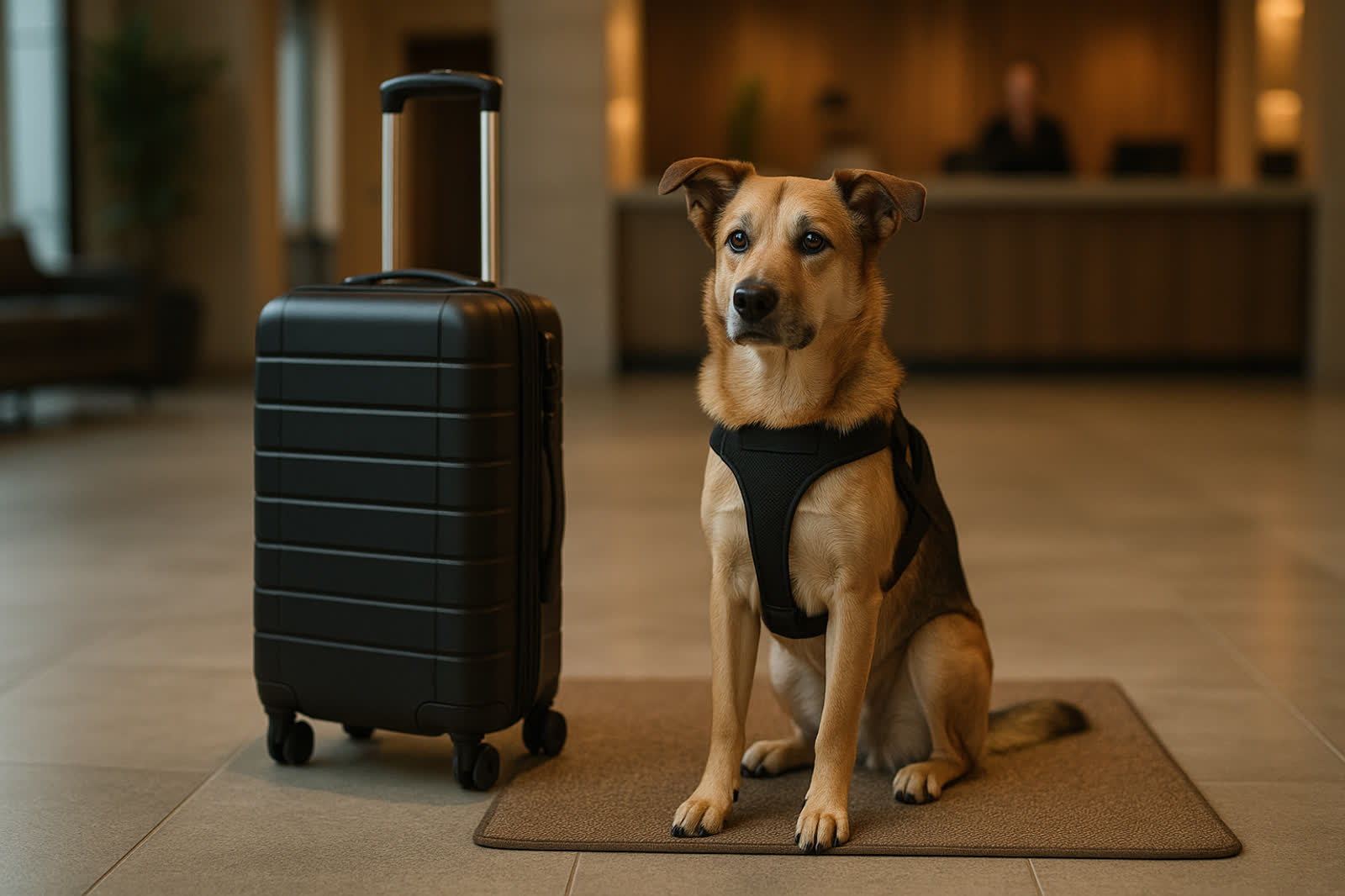
Staying in hotels with a service dog is usually smooth when you (1) know what rules apply where you’re traveling and (2) show up with a calm, controlled dog and a simple plan for check‑in. Most conflicts happen because staff don’t know the policy, or because a trip is rushed and the dog’s behavior falls apart in busy lobbies and elevators.
Quick Overview
- Hotel access rules depend on your jurisdiction (country/state/province) and the hotel’s role as a public accommodation.
- In many places (including the U.S. ADA context), staff can ask only limited questions about the dog and its trained work/tasks.
- Pet fees generally shouldn’t apply to a service dog in jurisdictions where service-dog access is protected; however, you can still be charged for actual damage.
- Recognition gear can reduce confusion and speed up check‑in, but expectations vary by location and venue.
- If a dog is out of control or not housebroken, hotels can usually require removal based on behavior (not labels).
- Travel goes best when you carry practical records (vaccines, vet contact info, training notes) to reduce friction.
What “Service Dog” Means for Hotel Stays (definitions vary)
Hotels are not all governed by one universal rule. What counts as a “service dog” (or “assistance dog”) depends on local law and local custom. A common baseline is that a service dog is trained to perform disability‑related work or tasks—not just provide comfort by being present.
If you’re unsure whether your situation is treated as a service dog vs. an emotional support animal in a specific setting, it helps to review the real‑world differences in how access is handled. A practical comparison is in ESA differences.
What Hotels can Ask at Check-in (and what’s usually out of bounds)
Front‑desk staff often want clarity fast. In many jurisdictions with strong service dog access rules, staff may be limited to a short set of questions, typically focused on whether the dog is needed because of a disability and what trained work/tasks the dog performs. They usually should not ask for medical details or demand a demonstration.
When you travel in the U.S., the ADA framework is commonly referenced for hotels as public accommodations. If you want a simple, staff‑friendly version of what questions are commonly allowed, see public access (the same “keep it brief, keep it factual” approach works at check‑in, too).
Practical script: “Yes, this is my service dog. He’s trained to perform tasks that assist with my disability.” If asked about tasks, give a short task description (no medical history).
Fees, Deposits, and “No Pets” Policies: What to Expect
- Pet fees: Where service-dog access is protected, pet fees often don’t apply to a service dog.
- Damage: You can generally be charged for actual damage (chewed furniture, soiling, destroyed bedding), the same way any guest can be charged for damage they cause.
- Extra cleaning: Policies vary. Many places treat routine cleaning as part of room turnover, with extra charges for unusual mess or damage.
- Room assignment: Hotels may try to “solve” the situation by moving guests to other rooms. If it’s presented as an accommodation (
or a near-exit location for relief), it can be helpful. If it feels like segregation, ask for clarification and the policy basis.
Step-by-Step: How to Book and Check in Smoothly (7 steps)
- Pick the right property layout. Elevators, exterior doors, nearby grass, and safe walking routes matter more than “pet‑friendly” labels.
- Communicate early (briefly). After booking, email the hotel: “I’m traveling with a service dog and would like a room near an exit if available.” Written notes reduce last‑minute confusion.
- Bring a small travel packet. Vaccination record, vet contact info, any destination-specific import paperwork, and a short training summary/log. These aren’t presented as a legal requirement—just practical readiness.
- Pack ‘quiet hotel’ essentials. Mat/bed, chew item, cleanup supplies, and a familiar routine to prevent barking and restlessness.
- Control in shared spaces. Lobbies and elevators are the hardest environment. Keep the dog close, focused, and out of traffic lanes.
- Plan relief breaks. Identify a relief area and a quick route before the dog is desperate—accidents are what turn small interactions into disputes.
- De-escalate if challenged. Ask for a manager, restate your short script, and request the policy in writing. Many issues are training gaps, not intentional discrimination.
If you’re flying to the destination, your travel day prep can shape how calm your dog is at check‑in. A simple, practical checklist is travel day.
When a Hotel can Require a Dog to Leave (behavior-based)
Even in places with strong service dog protections, hotels can usually act when a dog’s behavior creates a real issue. Common reasons include:
- Out of control behavior (lunging, repeated barking, roaming) when the handler does not regain control.
- Not housebroken (repeated accidents in the room or common areas).
- Direct threat to others’ safety that can’t be mitigated.
Hotels typically need to focus on the behavior, not the disability. The best “protection” is a dog who is boringly predictable in public spaces.
Hotels vs. Other Settings (why rules can feel inconsistent)
People get confused because rules can differ by setting: hotels/public accommodations, housing/tenancy, and air travel can each have different standards. If you’re mixing a hotel trip with longer stays or temporary rentals, it helps to understand the housing side too. A clear overview is housing rules.
FAQs
Do I need paperwork to stay in a hotel with a service dog?
It depends on where you’re traveling. In many places, staff focus on limited questions about the dog’s trained work/tasks rather than documents. In practice, carrying practical records (vaccines, vet contact info, training notes) helps the interaction go faster and reduces misunderstanding—especially when traveling across borders.
Can a hotel charge a pet fee for a service dog?
Where service-dog access is protected, pet fees often don’t apply to a service dog. You can still be responsible for actual damage your dog causes, just like any guest.
Can staff ask what my disability is?
In many jurisdictions, staff should not demand your diagnosis or medical details. They typically focus on whether the dog is required because of a disability and what trained work/tasks it performs. Local rules vary, so keep your answers brief and factual.
What if another guest has allergies or is afraid of dogs?
Hotels generally look for practical solutions (distance, room placement, alternate routes) rather than excluding a service dog team outright. The exact obligations depend on the local legal framework and the property layout.
What should I do if I’m denied access?
Stay calm, ask for a manager, and request the policy basis in writing. Document names and times. Many issues resolve once a manager reviews the applicable policy.
How can I make check‑in faster?
Arrive with your dog under control, use a short script, and keep your travel packet organized. Recognition gear can also reduce repeated questions and help staff understand you’re a working team.
Sources
- ADA.gov – Service Animals
- ADA.gov – Lodging resources
- U.S. DOJ – Disability Rights Section
- UK EHRC – Assistance dogs guidance
Takeaway
Hotel stays with a service dog go best when you combine local-rule awareness with calm, well-practiced public behavior.
- Know what questions are typically allowed where you’re traveling.
- Bring practical records and keep your check‑in script short and factual.
- Prioritize behavior: control, quiet movement through shared spaces, and clean relief routines.