
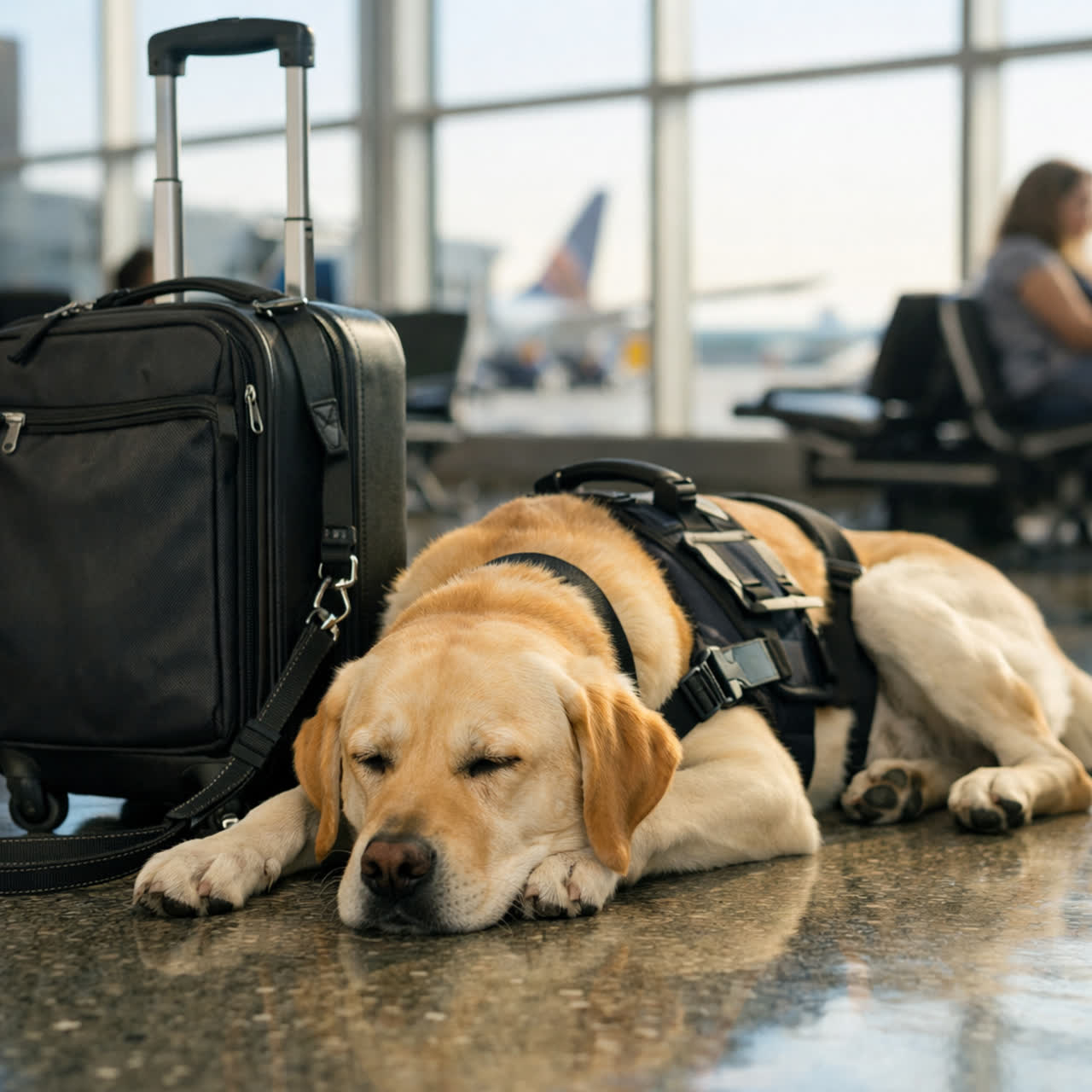
Flying with a service dog can go smoothly when you plan around airline timelines, airport logistics, and your dog’s comfort. The checklist below is a practical travel-day guide focused on preparation and calm execution. It is an educational overview only, not legal advice.
Quick Overview Checklist
- Confirm your reservation notes and submit any required airline forms ahead of time.
- Pack a small “working dog” kit: collapsible bowl, water, wipes, poop bags, a small towel, and a backup leash.
- Plan airport timing with extra buffer for relief breaks and security screening.
- Rehearse key skills: long down-stay, tight-space tuck, calm through crowds and noises.
- Know your route: airline desk, pet/service animal relief areas, gate location, and backup options.
- On the plane: SFlying with a service dog can go smoothly when you plan around airline timelines, airport logistics, and your dog’s comfort. The checklist below is a practical travel-day guide focused on preparation and calm execution. It is an educational overview only, not legal advice.
Quick overview checklist
- Confirm your reservation notes and submit any required airline forms ahead of time.
- Pack a small “working dog” kit: collapsible bowl, water, wipes, poop bags, a small towel, and a backup leash.
- Plan airport timing with extra buffer for relief breaks and security screening.
- Rehearse key skills: long down-stay, tight-space tuck, calm through crowds and noises.
- Know your route: airline desk, pet/service animal relief areas, gate location, and backup options.
- On the plane: set up a comfortable foot-space “settle,” offer small sips of water as needed, and keep the aisle clear.
1) A day-or-two-before checklist (paperwork, booking notes, and timing)
- Review the airline’s service animal instructions on its website and in your reservation email so you know what to bring and when to arrive.
- Double-check your itinerary (connection times, terminal changes, and seat assignments) and consider whether a non-bulkhead seat offers better under-seat space for your dog to tuck.
- Keep key items accessible: ID, boarding pass, and any airline-required forms stored where you can reach them quickly at the airport.
- Plan your arrival with extra time to locate a relief area and handle security without rushing.
2) Pack a compact service-dog travel kit
Pack for cleanliness, comfort, and quick problem-solving. Keep these in a small pouch you can reach without unpacking your whole carry-on.
- Leash and backup leash (plus a simple spare collar if you use one)
- Collapsible bowl and small water bottle
- Poop bags and disposable gloves (optional)
- Unscented wipes and a small towel
- A small mat or thin towel for your dog to lie on (optional, helps define “place”)
- Food and treats in measured amounts (avoid overfeeding right before the flight)
- Any routine items you rely on for handling and calm behavior (keep it minimal and familiar)
3) Food, water, and relief planning (keep it predictable)
Travel day is easier when your dog’s routine is steady and conservative.
- Keep meals light and familiar to reduce stomach upset. Avoid new foods right before travel.
- Offer water strategically: a normal amount earlier in the day, then small sips closer to boarding. Adjust based on your dog and trip length.
- Build in relief breaks before entering the terminal, after check-in if time allows, and once you locate the gate area.
- Know where relief areas are at departure and arrival airports. Many airports list locations on their websites or terminal maps.
4) Getting through the airport: check-in, crowds, and security
- At check-in, be ready to briefly answer practical questions about your dog’s working role and travel plan. Keep your tone calm and efficient.
- Choose lower-stress routes when possible: wider corridors, elevators instead of escalators if your dog is more comfortable, and quieter seating areas near the gate.
- At security, follow officer instructions and keep your dog close and focused. Remove or adjust gear only if instructed, and be prepared for your dog to walk through screening with you while you manage the leash.
- Practice “ignore” cues for food smells, children, rolling bags, and friendly strangers attempting to interact.
5) At the gate: set up for a calm boarding
- Find a low-traffic spot where your dog can settle without being stepped on or distracted.
- Do a quick gear check: leash secure, tags not dangling loudly, nothing that could snag on seats.
- Ask about pre-boarding if you need extra time to get situated without blocking the aisle.
- Keep exercise gentle: a short walk and a few calm repetitions of “down” and “stay” can help without overstimulating your dog.
6) On the plane: positioning, comfort, and courtesy
When flying with a service dog, the goal is a safe, unobtrusive tuck that doesn’t block aisles or interfere with crew duties.
- Guide your dog into a tight “place” in your foot space. A thin mat can help define the boundary.
- Keep the aisle clear and avoid letting the leash extend into walkways.
- Offer small sips of water if needed, especially on longer flights, while balancing the need to avoid frequent relief urgency.
- Manage temperature and airflow: cabins can be warm or drafty; reposition the mat slightly if vents are blowing directly on your dog.
- Stay proactive with calm behavior: reward quiet settling and redirect restlessness early before it escalates.
7) Connections and arrival: reset the routine
- Use the first practical opportunity for relief after landing, especially before a connecting flight.
- Keep transitions structured: heel through crowds, pause in a quiet spot, then proceed.
- After arrival, offer water, do a longer decompression walk if appropriate, and return to normal feeding schedules gradually.
- Have a backup plan for delays: know where you can sit comfortably, and keep extra wipes and bags accessible.
FAQs
- How early should I arrive at the airport when flying with a service dog?
Plan to arrive earlier than usual so you have time for check‑in, security screening, and an extra relief break. If you’re unsure, aim for an additional 30–60 minutes beyond your normal routine. - Should my dog wear a vest in the airport?
A vest isn’t always required, but clear working‑dog gear reduces confusion and helps keep interactions brief. Use what your team is trained to work in. - What if my dog needs a relief break after security?
Many airports have relief areas. If possible, locate one on the airport map ahead of time and build in time to use it before boarding or during a long layover. - Can my service dog sit on the seat?
Typically, the dog should remain on the floor at your feet and must not block aisles. Bring a thin mat if it helps your dog settle and defines a clear “place.” - What’s the biggest travel‑day mistake?
Rushing. A calm, structured routine (food, water, relief, and short training reps) prevents most airport problems.
et up a comfortable foot-space “settle,” offer small sips of water as needed, and keep the aisle clear.
1) A day-or-two-before checklist (paperwork, booking notes, and timing)
- Review the airline’s service animal instructions on its website and in your reservation email so you know what to bring and when to arrive.
- Double-check your itinerary (connection times, terminal changes, and seat assignments) and consider whether a non-bulkhead seat offers better under-seat space for your dog to tuck.
- Keep key items accessible: ID, boarding pass, and any airline-required forms stored where you can reach them quickly at the airport.
- Plan your arrival with extra time to locate a relief area and handle security without rushing.
2) Pack a compact service-dog travel kit
Pack for cleanliness, comfort, and quick problem-solving. Keep these in a small pouch you can reach without unpacking your whole carry-on.
- Leash and backup leash (plus a simple spare collar if you use one)
- Collapsible bowl and small water bottle
- Poop bags and disposable gloves (optional)
- Unscented wipes and a small towel
- A small mat or thin towel for your dog to lie on (optional, helps define “place”)
- Food and treats in measured amounts (avoid overfeeding right before the flight)
- Any routine items you rely on for handling and calm behavior (keep it minimal and familiar)
3) Food, water, and relief planning (keep it predictable)
Travel day is easier when your dog’s routine is steady and conservative.
- Keep meals light and familiar to reduce stomach upset. Avoid new foods right before travel.
- Offer water strategically: a normal amount earlier in the day, then small sips closer to boarding. Adjust based on your dog and trip length.
- Build in relief breaks before entering the terminal, after check-in if time allows, and once you locate the gate area.
- Know where relief areas are at departure and arrival airports. Many airports list locations on their websites or terminal maps.
4) Getting through the airport: check-in, crowds, and security
- At check-in, be ready to briefly answer practical questions about your dog’s working role and travel plan. Keep your tone calm and efficient.
- Choose lower-stress routes when possible: wider corridors, elevators instead of escalators if your dog is more comfortable, and quieter seating areas near the gate.
- At security, follow officer instructions and keep your dog close and focused. Remove or adjust gear only if instructed, and be prepared for your dog to walk through screening with you while you manage the leash.
- Practice “ignore” cues for food smells, children, rolling bags, and friendly strangers attempting to interact.
5) At the gate: set up for a calm boarding
- Find a low-traffic spot where your dog can settle without being stepped on or distracted.
- Do a quick gear check: leash secure, tags not dangling loudly, nothing that could snag on seats.
- Ask about pre-boarding if you need extra time to get situated without blocking the aisle.
- Keep exercise gentle: a short walk and a few calm repetitions of “down” and “stay” can help without overstimulating your dog.
6) On the plane: positioning, comfort, and courtesy
When flying with a service dog, the goal is a safe, unobtrusive tuck that doesn’t block aisles or interfere with crew duties.
- Guide your dog into a tight “place” in your foot space. A thin mat can help define the boundary.
- Keep the aisle clear and avoid letting the leash extend into walkways.
- Offer small sips of water if needed, especially on longer flights, while balancing the need to avoid frequent relief urgency.
- Manage temperature and airflow: cabins can be warm or drafty; reposition the mat slightly if vents are blowing directly on your dog.
- Stay proactive with calm behavior: reward quiet settling and redirect restlessness early before it escalates.
7) Connections and arrival: reset the routine
- Use the first practical opportunity for relief after landing, especially before a connecting flight.
- Keep transitions structured: heel through crowds, pause in a quiet spot, then proceed.
- After arrival, offer water, do a longer decompression walk if appropriate, and return to normal feeding schedules gradually.
- Have a backup plan for delays: know where you can sit comfortably, and keep extra wipes and bags accessible.
FAQs
- How early should I arrive at the airport when flying with a service dog?
Plan to arrive earlier than usual so you have time for check‑in, security screening, and an extra relief break. If you’re unsure, aim for an additional 30–60 minutes beyond your normal routine. - Should my dog wear a vest in the airport?
A vest isn’t always required, but clear working‑dog gear reduces confusion and helps keep interactions brief. Use what your team is trained to work in. - What if my dog needs a relief break after security?
Many airports have relief areas. If possible, locate one on the airport map ahead of time and build in time to use it before boarding or during a long layover. - Can my service dog sit on the seat?
Typically, the dog should remain on the floor at your feet and must not block aisles. Bring a thin mat if it helps your dog settle and defines a clear “place.” - What’s the biggest travel‑day mistake?
Rushing. A calm, structured routine (food, water, relief, and short training reps) prevents most airport problems.