
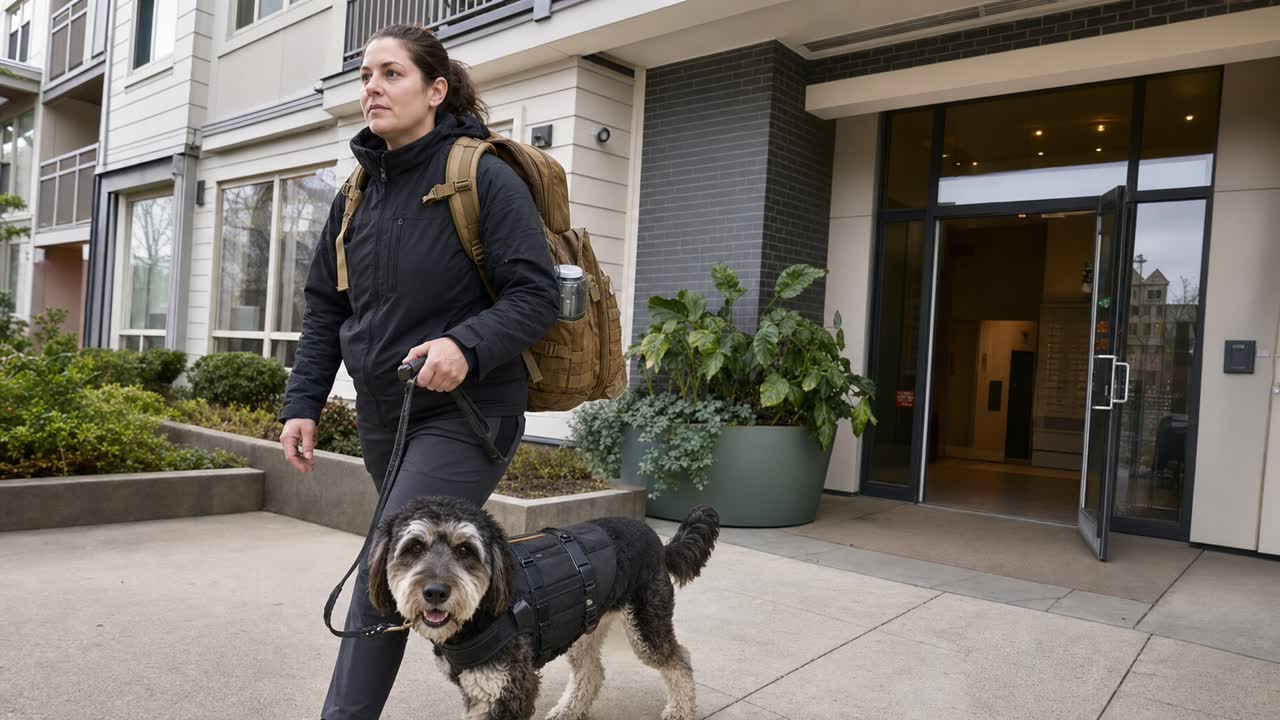
An evacuation checklist for service dog handlers should do two things at once: protect your dog and reduce friction when you need to move fast. In a real fire alarm, hurricane warning, apartment gas leak, or hotel evacuation, the people around you may not know your routine, your dog may be stressed, and you may have only a few minutes to leave.
The most useful plan is simple: keep one ready bag, keep your dog’s working gear in one place, keep key documents easy to grab, and decide in advance how you will travel, where you will stay, and who can help if you are separated. Reviewing general regulations in advance can also make it easier to explain access needs during a chaotic move.
This guide focuses on practical preparation for service dog teams. It is not a legal memo. The goal is to help you leave quickly, keep your dog safe and working, and avoid preventable problems with housing staff, shelters, transport, or temporary lodging.
Quick Overview
- Pack one go-bag for yourself and one compact kit for your dog.
- Keep food, medication, leash, harness, waste supplies, and water ready at all times.
- Store digital and printed copies of useful records in one easy-to-reach place.
- Plan at least two exit routes and one backup pickup or ride option.
- Write down your dog’s feeding schedule, task routine, and behavior needs for helpers.
- Practice short evacuation drills so your dog can stay functional under stress.
1) Start with the Non-Negotiable Emergency Kit
The best evacuation checklist for service dog handlers starts with a bag you could grab half-asleep. Include three to seven days of food, bottled water, bowls, medication, a spare leash, a spare collar with ID, booties if your area has debris or heat risk, waste bags, a towel, and one comfort item your dog already knows. If your dog uses a working harness, keep the backup gear right next to it instead of in another room.
Think in layers: items needed in the first 10 minutes, in the first day, and if you cannot return home for several nights. That keeps you from overpacking random supplies while forgetting essentials like medication or a phone charging cable.
2) Keep Documents Practical, not Performative
You do not need a dramatic binder full of paper to get through an emergency, but you do need a few useful records. Good examples are vaccination records, medication instructions, microchip information, your veterinarian’s contact details, and a short note describing the tasks your dog performs and any handling limitations. A quick service screening summary can also help you organize what information matters most for your own files.
If you rely on a landlord contact, building manager, caregiver, or family member, keep their numbers in both your phone and on paper. Digital copies are convenient, but printouts still matter when batteries die or the signal disappears.
3) Plan for Exits, Transport, and Temporary Lodging
Many evacuations fail at the transition point, not at the front door. Decide now how you will leave if elevators stop, if your usual driver is unavailable, or if roads close. If you use rideshare, public transit, or a friend as backup, note that in writing and keep those contact numbers visible.
Temporary lodging matters too. Some hotels, shelters, and family homes are easier to navigate than others. Your plan should identify at least one realistic place where your dog can settle, toilet, rest, and resume work. This is also where knowing the basics of housing rules can reduce unnecessary arguments when you are already under stress.
4) Prepare Your Dog for Stress before the Emergency Happens
A dog that works beautifully in routine conditions may struggle with sirens, the smell of smoke, crowds, or unfamiliar floors. Build a few short drills into normal life. Practice quickly clipping gear, moving through stairwells, loading into a vehicle, waiting calmly while you gather essentials, and settling into a new room.
Keep the drills boring and repeatable. You are not trying to create fear; you are teaching predictability. If your dog has known triggers, write them down so a helper can avoid making the situation worse.
5) Think Through Shelter and Public-Space Problems in Advance
During a disaster, you may end up in a lobby, evacuation bus, school gym, courthouse annex, or hotel hallway before you reach a stable destination. Your dog may need to stay focused in crowded spaces while people ask questions or try to pet them. Reviewing public access rules ahead of time helps you answer briefly and move on.
It is also smart to pack a small sign or card for helpers that says things like “do not feed,” “working dog,” or “ask before handling.” That is not about proving status.
6) Build a backup-handler plan
If you are injured, delayed, or temporarily separated, who can safely handle your dog? Choose at least one person who knows the leash routine, toileting pattern, feeding amount, medication schedule, and any no-go behaviors. Leave clear written instructions instead of assuming someone will remember them.
Your backup handler does not need to replace you. They need enough information to keep the dog safe and stable until you reconnect. That single step can also prevent a bad emergency from turning into a dog-welfare crisis.
FAQs
What should be in an evacuation checklist for service dog handlers?
Food, water, medication, leash, harness, ID, waste supplies, vet information, microchip details, and a short handling summary are the essentials.
How much food should I pack?
At a minimum, pack several days of food. A full week is better when weather or infrastructure problems might delay your return.
Do I need special paperwork for my service dog during an evacuation?
Usually, the most helpful records are practical ones such as vaccination records, medication notes, and emergency contacts. Clear documentation can reduce confusion, but calm handling and preparation matter more than flashy paperwork.
Should I practice evacuation drills with my dog?
Yes. Short, low-stress drills make real emergencies less chaotic and help your dog stay functional when routines break.
What if we have to stay somewhere unfamiliar?
Bring familiar gear, one comfort item, and a predictable toileting and feeding routine. Dogs handle temporary spaces better when the structure stays consistent.
Can a friend or family member handle my dog if needed?
Yes, if they already know the basics and have written instructions. Do not wait for a crisis to explain your dog’s routine for the first time.
Sources
- ADA.gov: Service Animals
- ADA.gov: Service Animals FAQ
- CDC: Pet Travel Safety
- CDC: Dogs
- National Association of the Deaf: ADA Public Accommodations
Takeaway
The strongest evacuation plan is simple enough to use under stress. Pack the basics, keep your records useful, rehearse the route, and make sure another person can step in if needed.
- Keep one ready bag for the dog and one for yourself.
- Store practical records where you can grab them fast.
- Practice the routine before an emergency makes every choice harder.