
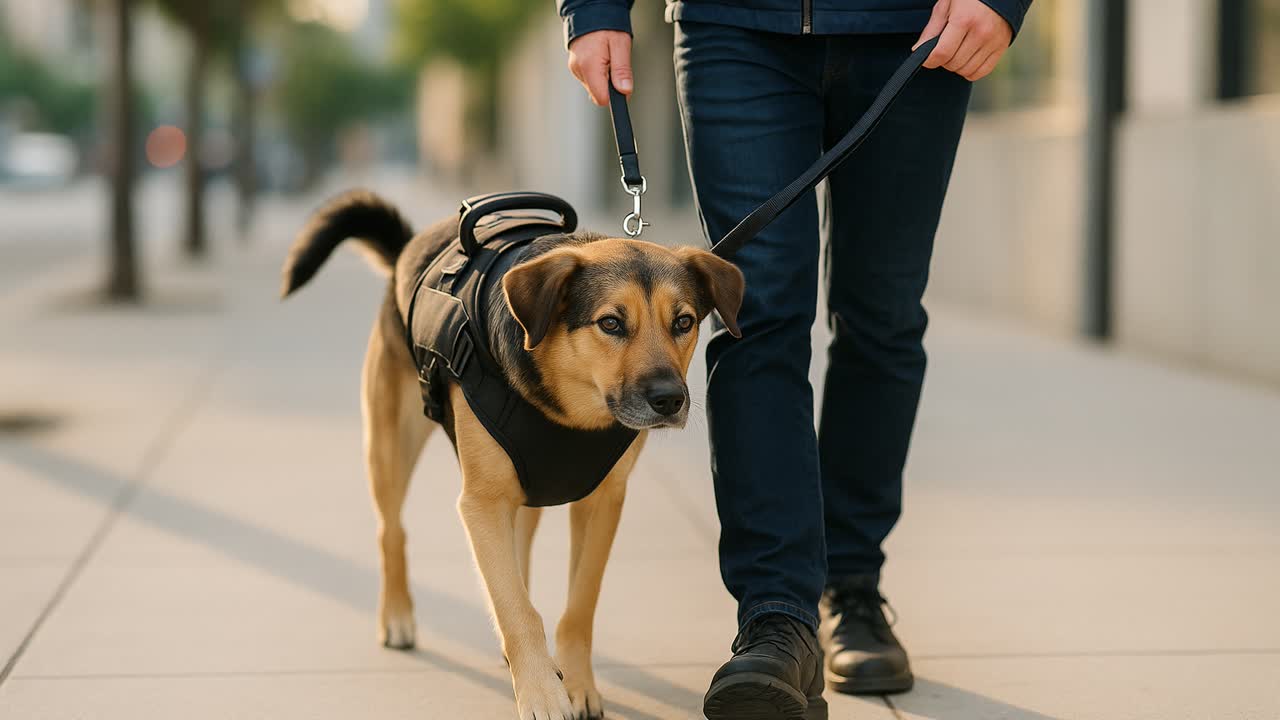
Well-chosen equipment helps a service dog work reliably, stay safe, and make public access smoother for both the handler and the dog. This guide explains common items, how to choose them, and practical tips for everyday use.
Quick Overview
Service dog equipment falls into a few functional groups: control and guidance, safety and identification (non-legal), task tools, and health/comfort gear. Some items are required for certain tasks (e.g., mobility harness for balance), while others are strongly recommended to reduce confusion or delays in public places. For a quick refresher on eligibility basics, see qualifying disabilities.
When picking gear, prioritize fit, freedom of movement, and comfort before “looking official.” A poorly fitted harness can create pressure points or change gait over time. If you’re unsure, have a trainer or veterinarian check the fit after a short walk and again after the dog has worked for 15–20 minutes.
1. Leashes, Collars, and Control Tools
Reliable control is the foundation of safe service work.
- Standard leash: A 4-6-foot flat leash in a strong material (nylon, leather) is versatile for most tasks.
- Hands-free options: Waist belts or cross-body leads can be useful when a handler needs both hands free for tasks or mobility aids.
- Slip and martingale collars: Use only if you and your trainer have assessed them as the best option for control without harm.
- Dual-handle leashes: Provide an extra short handle for tighter control in crowds or near traffic.
Choose hardware rated for your dog’s size and strength. Routine checks and replacement when worn prevent failures.
2. Harnesses and Task-Specific Gear
Harnesses are chosen to match the dog’s role.
- Mobility/support harness: Padded handles and rump support help with balance, bracing, or partial weight support.
- Guide-style harness: Used when precise steering and forward guidance are needed; often includes a rigid handle.
- Medical-alert task gear: Lightweight vests or attachments that carry small medical devices or target objects for the dog to retrieve.
Have a handler-focused fit session so the harness doesn’t restrict breathing, impede movement, or create hotspots. If you’re unsure what to prioritize, start with training basics.
3. Non-Legal Identification and Public-Facing Items
While vests, patches, and ID cards are commonly requested and can ease public interactions, they are not always legally required. Many handlers still find them strongly recommended because they quickly communicate that the dog is working and can reduce questions that distract the team.
- Working vests or patches: “Service dog,” “Do not Pet,” or task-specific labels make the dog’s role visible. Use language like “helps avoid delays” when deciding whether to show labels in sensitive situations.
- ID pouches: Carry medical or contact info that staff can consult if needed; keep sensitive details minimal and privacy-respecting.
- Reflective strips and lights: For evening or low-light use, these are strongly recommended to increase visibility.
For public interaction do’s and don’ts (which also affect what gear is practical), see this etiquette guide.
4. Travel and Public-Access Accessories
Travel-ready gear reduces stress when entering unfamiliar places.
- Portable water bowl and bottle: Collapsible bowls are light and packable.
- Car restraints and crates: Use crash-tested travel restraints when transporting dogs by car; crates should be ventilated and secured for safety.
- Public seating solutions: A small foldable mat or blanket defines the dog’s space and helps handlers manage seating in restaurants or transit.
- Calming aids: Chews, wraps, or scent tools recommended by your veterinarian can help during long trips or noisy environments.
If you fly, it helps to practice your screening routine. Here’s a practical airport screening guide.
5. Health, Grooming, and Maintenance Supplies
Routine health items keep a working dog comfortable and ready.
- First-aid kit: Bandages, antiseptic wipes, tick remover, and a basic wound spray. Tailor contents for your dog’s size and expected risks.
- Grooming tools: Brushes, nail clippers, and paw balm help maintain coat and paw health, especially if your dog works outside often.
- Medications and supplements: Carry dosages and storage instructions. Keep prescriptions in original containers with vet contact info.
6. Training and Cue Devices
Training tools should match humane, task-appropriate methods.
- Reward markers: Clickers or verbal markers used consistently during training sessions.
- Tug toys and treat pouches: Convenient reward delivery keeps teaching efficient during public practice.
- Remote training aids: Use sparingly and only under trainer guidance; ensure they don’t disrupt public settings.
Pair training devices with a documented plan and keep reinforcement consistent across environments.
FAQs
- Do I need a vest or ID card for my service dog?
- In many situations, these items are not always legally required, but they are often strongly recommended. Businesses commonly ask questions at entry, and clear recognition gear can help avoid delays or repeated interruptions.
- What equipment is essential?
- Only the equipment necessary for the dog to perform its tasks safely and effectively is essential. What that is depends on the task (e.g., a mobility harness for balance). Consult a trainer or clinician to match gear to needs.
- How do I choose a harness that won’t harm my dog?
- Fit, padding, and movement freedom are key. Try multiple styles, observe gait and respiration while wearing the harness, and prioritize designs recommended by professional trainers.
- Can I travel with my service dog on public transport?
- Policies vary. Carrying concise documentation and using clear signage often helps. Review local guidance and consider packing travel-specific gear, such as a collapsible bowl and safety restraint.
Sources
- U.S. Department of Justice (ADA): Service Animals (2010 Requirements)
- ADA.gov: Service animals overview
Takeaway
Choose equipment that directly supports the dog’s tasks, safety, and comfort. Use visible non-legal identification when it helps reduce confusion, and carry basic travel and health supplies to keep the team operational. When in doubt, consult professional trainers and your veterinarian, and practice public access scenarios so equipment becomes a seamless part of the team’s routine.