
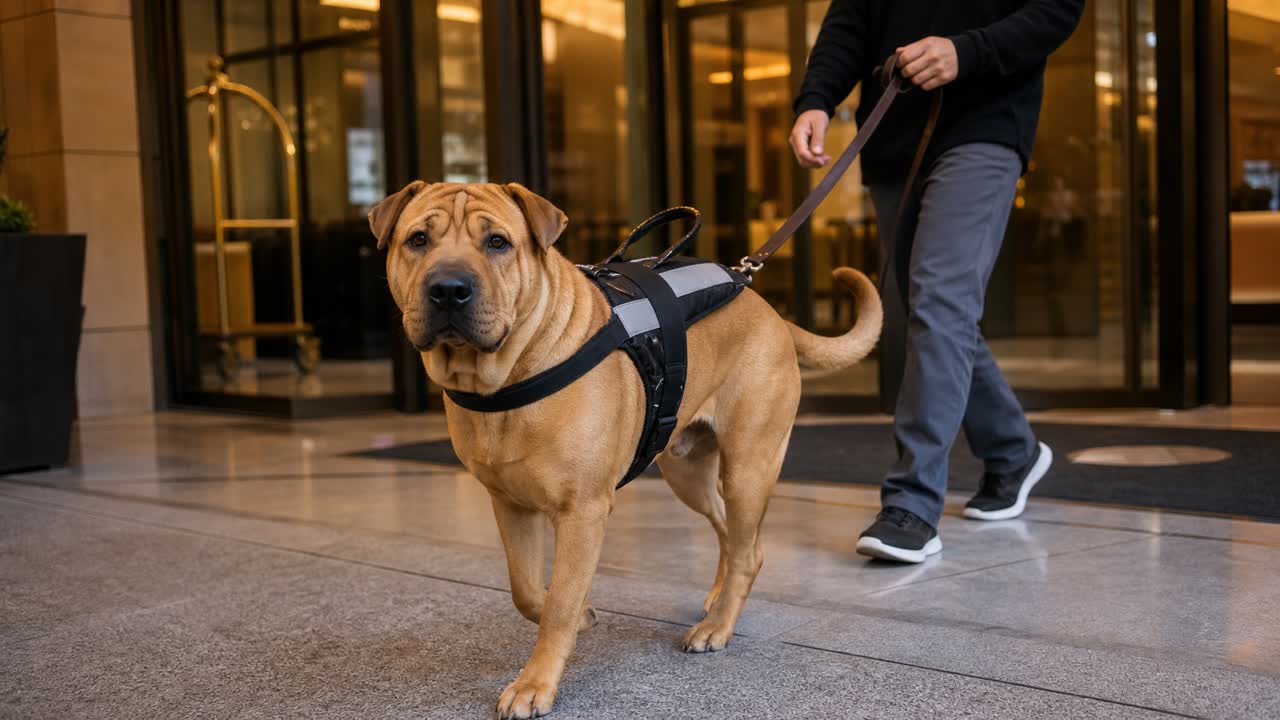
If you are looking for a durable dog service harness for large breeds, the main goal is not style or paperwork. It is reliable control, clear communication, and day-long comfort for a dog that may work in stores, housing settings, transit, or busy public spaces.
This topic is narrower than service dog training or certification. A harness does not confer legal status, nor does it replace task training or steady public behavior. What it can do is reduce friction, improve handling, and help a large working dog move safely without rubbing, shifting, or failing under load.
For most handlers, the best choice is a sturdy harness with durable stitching, broad chest coverage, adjustable fit, and hardware that can handle regular use. It also helps to keep practical records, review local regulations, and choose gear that supports the dog’s actual work rather than making the dog look “official.”
Quick Overview
- A service harness is usually optional, but it can make handling a large breed safer and more consistent.
- Prioritize strong stitching, reinforced attachment points, breathable materials, and a stable fit.
- A harness should not restrict shoulder movement, breathing, or task performance.
- Large breeds often need wider straps and better weight distribution than small dogs.
- Public access depends more on training and behavior than on gear alone.
- It helps to keep sizing notes, care records, and a short task summary in one place, such as a tracking app.
1) What Makes a Durable Dog Service Harness for Large Breeds Worth Using?
Large dogs put more stress on gear. Weak seams, thin webbing, and poor buckles show problems faster than they would on a smaller dog. A durable harness should stay centered, resist twisting, and hold up through repeated wear, cleaning, and weather changes.
Look for broad load-bearing areas across the chest and ribcage, not narrow straps that dig in. Reinforced handles can aid guidance and close control, but they should not force awkward wrist angles on the handler. Metal hardware often lasts longer than lightweight plastic for dogs that work often.
2) How Should a Large-Breed Harness Fit?
A good harness should feel secure without being tight. You want enough structure to prevent shifting, but not so much compression that the dog loses range of motion through the shoulders. If the harness rides into the armpits, slides sideways, or lifts off the body, the fit likely needs work.
Adjustment matters more than many people expect. Chest depth, rib shape, coat thickness, and body length vary a lot between dogs, even when they are all considered large breeds.
It helps to check the harness during ordinary movement, not just while the dog is standing still. If you are also organizing readiness notes, a simple PSA check can help you think through behavior and public-setting stability alongside gear fit.
3) Which Features Matter Most for Daily Public Access?
For many handlers, the most useful features are simple ones: a reliable top handle, durable leash attachment points, visible, yet unobtrusive identification panels, and breathable construction. What matters most is whether the dog can work comfortably and whether you can manage the dog smoothly in crowded or narrow environments.
Choose features based on function. If your dog performs mobility-related support, you may need a more stable build than someone whose dog mainly performs alert or psychiatric tasks. If you live in rental housing, it can help to separate gear choices from housing guidance so the conversation stays focused on accommodation rules rather than appearance.
A harness can reduce confusion in public, but it should not be treated as proof on its own. Under ADA guidance, the key issue is whether the dog is trained to do work or tasks for a person with a disability, not whether the harness looks impressive.
4) What Should Handlers Avoid when Choosing a Harness?
Avoid buying based only on labels like “tactical,” “official,” or “certified.” Those terms say little about comfort or legal usefulness. A heavy harness with too many straps can overheat a dog, restrict movement, or make routine tasks harder.
It is also smart to avoid gear that creates pressure on the throat, rubs behind the elbows, or shifts the leash connection too high or too far back. Large breeds can compensate for poor gear for a while, but over time, the result may be soreness or sloppy movement.
Another common mistake is using a harness to solve a training problem. If the dog pulls, startles, or struggles in public, the answer is usually training, management, or a break from the setting, not more equipment.
5) How can a Harness Reduce Friction in Housing, Work, and Travel Settings?
In real life, organized gear can make conversations easier even when it is not legally required. A clean, well-fitted harness may signal that the team is prepared and serious. That can matter in apartment buildings, workplaces, ride services, and travel settings where people may not fully understand service animal rules.
The lower-friction approach usually combines calm behavior, concise communication, and orderly records. Keep vaccination records up to date, note your dog’s measurements and gear settings, and keep practical information easy to review. The harness is part of the picture, not the whole picture.
For travel, remember that gear should allow the dog to rest comfortably for extended periods. Large breeds need enough room to lie down without their straps or bulky attachments getting tangled.
6) How do You Know When It is Time to Replace the Harness?
Replace the harness when safety or function starts to decline. Frayed stitching, stretched webbing, cracked buckles, bent rings, or uneven padding are all warning signs. If the dog’s body condition changes, the harness may also stop fitting correctly, even if the materials still look fine.
Handlers of large breeds should inspect high-stress points often, especially the handle base, leash ring, and chest junctions. A quick monthly review is usually easier than waiting for a visible failure in public.
A newer harness is not automatically better. If an older model still fits well, stays secure, and supports the dog’s work without irritation, replacing worn gear on time is usually the practical approach.
For related guidance, see our regulations and PSA check.
For related guidance, see our tracking app and housing guidance.
FAQs
Is a durable dog service harness for large breeds legally required?
Usually no. In most public settings, the law focuses more on disability-related needs, task training, and behavior than on a specific piece of gear.
Can a harness prove that a dog is a service animal?
Not by itself. A harness may help identify a working dog, but it does not replace training, task performance, or appropriate answers when questions are asked.
Should a large service dog wear a harness all day?
Only if the fit stays comfortable and the setting calls for it. Many handlers give the dog breaks when possible, especially during long days or warm weather.
What materials usually hold up best for large breeds?
Reinforced webbing, durable stitching, breathable padding, and solid hardware usually perform better over time than thin fabric or lightweight plastic parts.
Is a front-clip or back-clip harness better?
It depends on the dog’s work and handling needs. The better option is the one that keeps the dog comfortable, responsive, and stable without interfering with trained tasks.
What records are helpful to keep with service dog gear?
Sizing notes, cleaning dates, wear checks, vaccination records, and a simple task summary can all be useful. In some settings, orderly records help reduce confusion more effectively than flashy gear.
Sources
- ADA.gov: Service Animals
- ADA.gov: Service Animals FAQ
- CDC: Dogs
- CDC: Pet Travel Safety
- HUD: Information for Persons with Disabilities
Takeaway
A durable harness for a large service dog is best treated as practical working equipment. It will not replace training or legal understanding, but it can improve comfort, control, and everyday credibility when chosen carefully.
- Prioritize fit, movement, and hardware strength over appearance.
- Use the harness to support real work, not to stand in for training or status.
- Keep simple records so gear and accommodation conversations stay organized.