
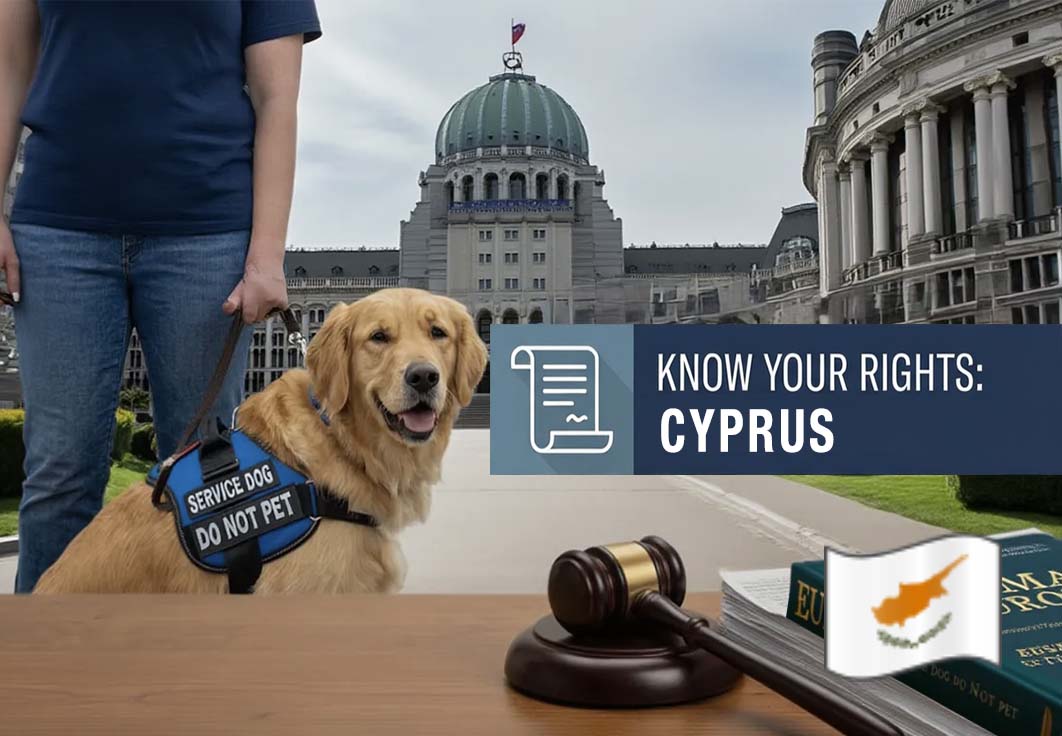
🇨🇾 Cyprus’s Laws & Regulations for Assistance Animals are as follows:
Acceptance
Housing
Cyprus does not have a single national statute that specifically regulates assistance animals in private housing. Acceptance of Service Animals, PSAs, and ESAs is generally determined by landlords, property managers, and building rules. Service Animals and PSAs are more readily accepted with documentation, while ESAs often require a prescription letter and proof of registration.
Air Travel
Cyprus follows EU aviation standards. Airlines operating from Larnaca and Paphos airports typically allow Service Animals and PSAs in the cabin when behavior and documentation requirements are met. ESAs are usually accepted with conditions, depending on each airline’s internal policy and the destination-country rules.
Public Access
Cyprus applies EU-aligned accessibility and anti-discrimination rules. Trained Service Animals and PSAs are generally allowed in government offices, public transport, hotels, shops, restaurants, and medical facilities when clearly identified and under control. ESAs may be accepted with strong documentation, but access is not guaranteed.
Additional Notes
- Service Animals & PSAs: widely recognized across Cyprus when properly documented.
- ESAs: accepted with documentation depending on venue and provider policy.
- Cyprus enforces EU-wide microchip, rabies vaccination, and pet-travel requirements for entry.
- Recognition Gear reduces questions and delays in busy tourist and transport areas.
Applicable Laws
ESA:
Accepted with conditions depending on landlord, airline, and venue policies.
PSA:
Generally treated similarly to Service Animals when trained for psychiatric or task-based assistance and supported by documentation.
Service Animals:
Accepted widely under Cypriot and EU disability and accessibility protections.