
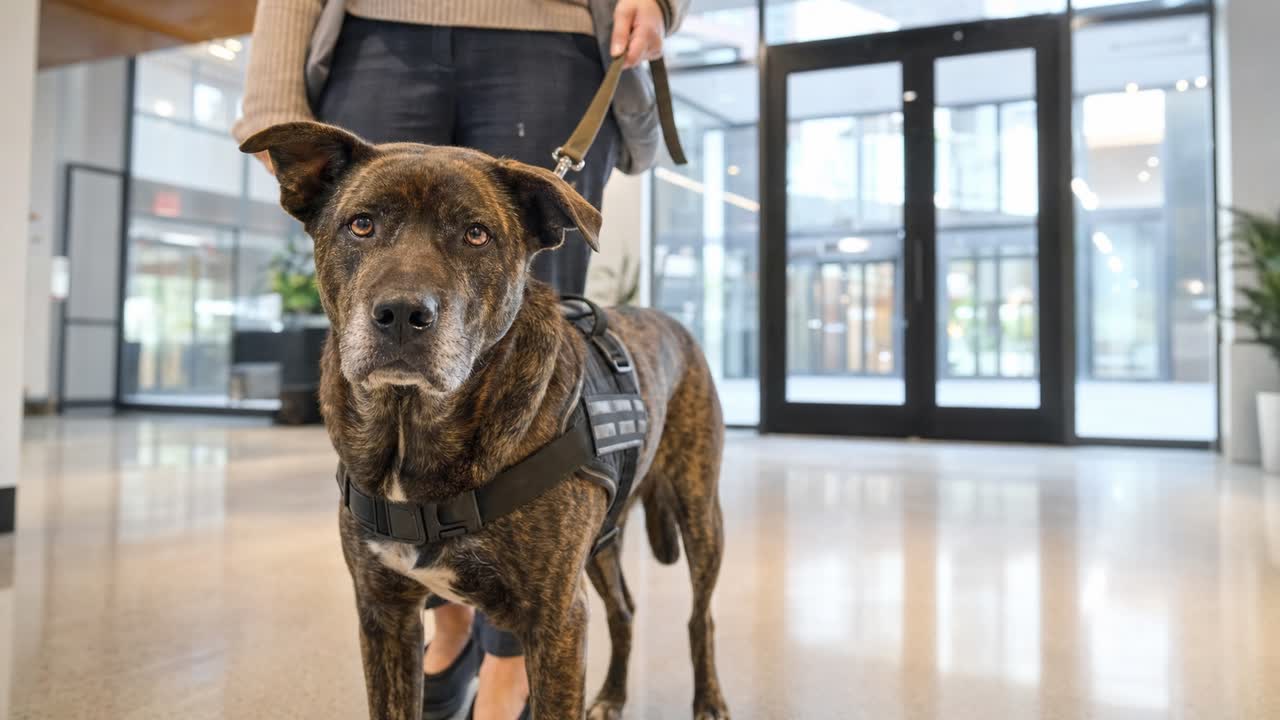
Conference attendance with a service dog is usually allowed in the United States, but the real challenge is often logistics rather than the basic rule. Large conferences can involve registration lines, crowded exhibit halls, hotel ballrooms, food service areas, long presentation blocks, and constant interaction with strangers who may not understand how to behave around a working dog.
For most attendees, the best approach is to plan early, communicate clearly with organizers when needed, and focus on what helps your dog work safely in a busy event setting. General public access rules matter, but conferences also raise practical issues such as seating layouts, relief breaks, nearby lodging, and how staff handle accessibility requests.
This article focuses on conference attendance with a service dog, including trade shows, conventions, academic events, and professional meetings. It is different from a general travel guide or a housing issue, although hotel stays connected to the event may overlap with separate housing guidance.
Quick Overview
- A service dog is generally allowed to accompany its handler at conferences held in public accommodations and similar event spaces.
- Event staff usually should not require a paid certificate, registry entry, or ID card as a condition for access.
- The most common problems are crowding, long hours, noise, food distractions, and poor relief-break planning.
- It helps to contact organizers early if you need seating space, route details, or information about quiet areas and entrances.
1) What the Access Rule Usually Looks Like at Conferences
Most conferences take place in hotels, convention centers, universities, or other facilities that are open to participants and covered by accessibility rules. In that setting, a service dog is generally treated as a working animal accompanying a disabled handler, rather than as a pet attending an event for convenience.
That does not mean every staff member will understand the rule perfectly. If the dog’s role is not obvious, staff may generally ask limited questions about whether the dog is mandatory because of a disability and what task or work it has been trained to perform.
For attendees who want a broader refresher on service-animal basics before a major event, a knowledge hub can help put the bigger picture into context before you focus on conference-specific planning.
2) How to Prepare before You Arrive
Preparation makes the biggest difference. Review the event schedule, the venue map, nearby exits, and the duration of keynote sessions or breakout rooms. A conference day can be much longer and more stimulating than an ordinary errand, so your dog should be ready for sustained focus.
It also helps to contact the organizer in advance if you need aisle seating, extra floor space, a quiet spot during breaks, or information about relief areas outside the building. This is not about asking for permission to bring a legitimate service dog. It is about reducing friction and avoiding avoidable surprises.
Bring only practical items: water, cleanup supplies, a mat if your dog settles better on one, and any records you personally find useful for travel organization. Some handlers like to do a quick readiness review before a major event, and a simple service-check mindset can help confirm the dog is prepared for a long, crowded day.
3) Common Conference Problems and How to Reduce Them
The most common problems are not legal disputes. They are environmental. Exhibit halls can be especially hard because people stop abruptly, booths create tight corridors, and vendors may use lights, sounds, or product demonstrations that distract a dog.
Try to arrive early enough to avoid the heaviest entry rush. Pick seats where your dog can tuck in without blocking traffic. Take breaks before your dog looks tired or overstimulated, not after. If your event lasts multiple days, build recovery time into the evenings rather than treating the dog as if it can work endlessly just because admission is allowed.
What helps most in real life is not proving your status over and over. It is having a dog that can ignore the chaos and recover quickly when the environment becomes more challenging than expected.
4) Food Areas, Exhibit Halls, and Special Event Spaces
Conference layouts can mix public walkways, catered meals, networking receptions, and restricted staff areas. A service dog can generally accompany the handler in places where attendees are normally allowed, including many food-service seating areas, provided the dog remains under control and does not create a sanitation or safety problem.
That said, not every sub-space works the same way. If an organizer needs to redirect you for a legitimate safety reason, focus on whether they are offering a workable path forward rather than assuming every instruction is an access denial.
Exhibit halls also create a special challenge because vendors may be tempted to interact with the dog as part of the attendee experience. A short, polite script can save energy: “Please don’t distract her; she’s working.” That usually works better than a longer explanation in a crowded aisle.
5) Hotels, Transportation, and Multi-Day Conference Planning
Many conferences involve more than the event hall itself. You may be managing airport travel, rideshares, hotel check-in, elevator use, and unfamiliar walking routes between the hotel and the venue. That means the conference plan should include the full trip, not just the badge pickup desk.
Think through relief timing, how far the hotel is from the venue, whether the dog can comfortably handle long indoor stretches, and what happens if the weather changes your normal routine. If you are sharing a hotel room with coworkers, set expectations early about not feeding, petting, or calling the dog away from you.
For multi-day events, simple written notes can help you track fatigue, meals, breaks, and any issues that come up. Organized routines matter much more than optional paperwork in this setting.
6) When Access can Still be Limited, or the Dog can be Removed
Conference access is not unlimited. A venue may generally act if a dog is out of control, not housebroken, or creating a direct threat that cannot be managed. That can include repeated barking during sessions, lunging at attendees, blocking critical aisles, or panicking in ways that create safety concerns during crowded movement.
The important distinction is that action should be based on behavior, not on the absence of a certificate or a staff preference for documentation. A calm, well-managed team is in a much stronger position than a stressed team arguing with event staff in the middle of a hallway.
If a problem happens, ask practical questions first. Is there a quieter entrance, an alternate seating area, or a short break that would solve the issue? Conferences are dynamic environments, and many conflicts can be reduced through simple adjustments instead of escalation.
FAQs
Is conference attendance with a service dog generally allowed?
Usually, yes, if the conference is held in a covered venue and the dog meets the definition of a service animal while remaining under control.
Can conference staff require a service dog certificate?
Generally, no. A paid certificate, registry, or ID card is usually not the legal standard for conference access.
Should I tell the organizer before the event?
It is often a good idea, especially if you need seating adjustments, route details, or information about nearby relief areas. That is usually about logistics, not permission.
Can my dog go into keynote sessions and exhibit halls?
Usually, yes, if attendees are allowed there and the dog can remain calm and safely positioned in those crowded spaces.
What if someone keeps trying to pet or distract my dog?
A short, direct reminder usually works best. You do not need a long explanation in a busy conference setting.
Sources
- ADA.gov: Service Animals
- ADA.gov: Service Animals FAQ
- CDC: Dogs
- CDC: Pet Travel Safety
- HUD: Information for Persons with Disabilities
Takeaway
Conference attendance with a service dog is usually less about proving legitimacy and more about planning for a demanding, crowded environment. When the dog is prepared and the handler thinks through the venue logistics early, the day tends to go much more smoothly.
- Plan for crowding, long hours, relief breaks, and hotel or transit logistics before the event starts.
- Use calm communication and practical preparation instead of relying on optional status-style documents.
- Keep the focus on safe behavior, practical accommodations, and realistic energy management for both the handler and the dog.