
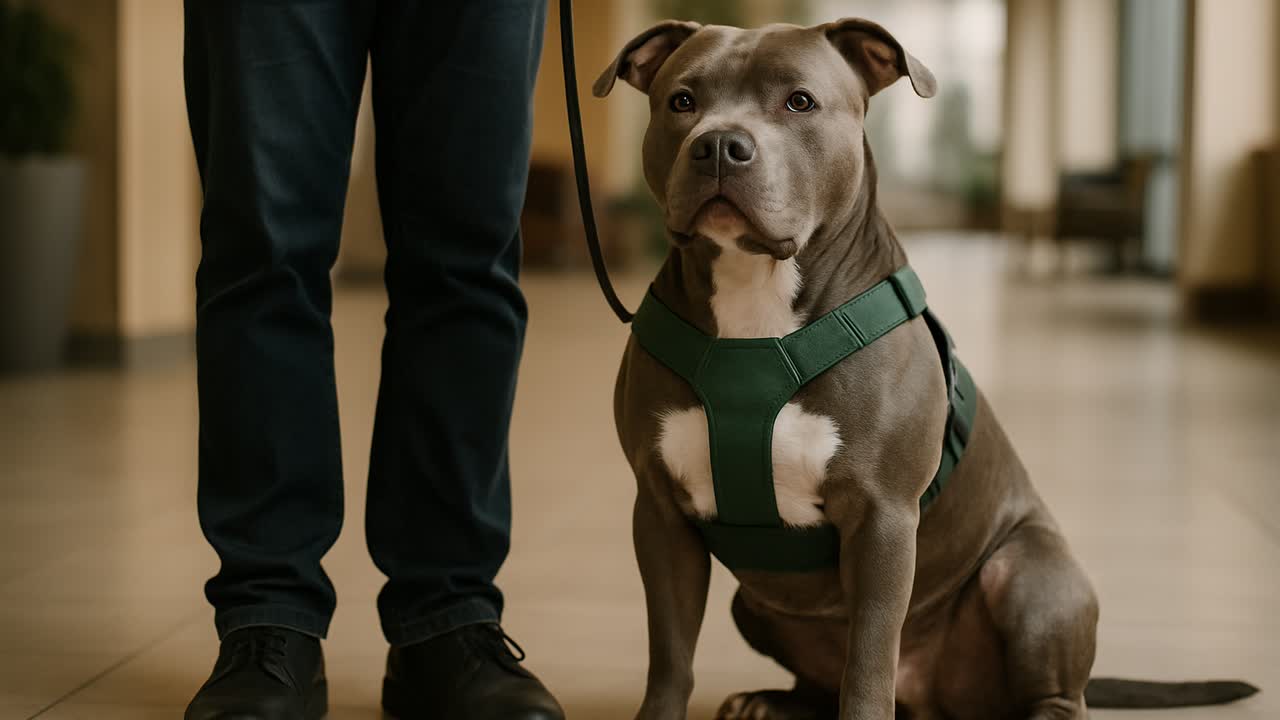
Many people ask whether pit bulls can serve as service dogs. Short answer: yes — pit bull-type dogs can perform many service tasks successfully when they have the right temperament, training, and ongoing management. This article summarizes what matters in practice, common considerations for handlers and trainers, and steps to reduce friction when using a pit bull in public-facing roles.
Quick Overview
Pit bull-type dogs are not a single breed but a category often including American Pit Bull Terrier, American Staffordshire Terrier, and related mixes. What matters most for service work is the individual dog’s temperament, reliability under distraction, and task-specific skills. Many handlers and trainers strongly recommend thorough socialization, professional task training, and documented behavior history to support public access. For more on training pathways, see how to get your dog trained.
1. Suitability: Temperament and Selection
Successful service dogs — regardless of type — share predictable traits: focus, low reactivity, resilience, and a strong bond with the handler. When evaluating a pit bull for service work, prioritize:
- Consistent calm under novel stimuli (cars, crowds, sudden noises).
- Tolerant handling during medical tasks (bracing, equipment manipulation).
- High trainability and motivation for the job (food, play, or handler praise).
- Stable social behavior with strangers and other animals encountered on duty.
Professional assessment by an experienced trainer helps determine whether a specific dog meets these benchmarks.
2. Training: Task Proficiency and Public Reliability
Training for service work consists of two parallel tracks: task training (teaching the dog to perform disability-related tasks) and public access training (reliability in distracting environments). For pit bulls, trainers commonly recommend:
- Start with short, frequent sessions to build focus.
- Use real-world practice in the exact settings the handler will frequent.
- Generalize commands across locations and handlers if backup support is planned.
- Record demonstrations of task performance and public access reliability for handler records and support providers.
Guidance and certification pathways vary; handlers often find it helpful to consult resources like the knowledge base for practical next steps.
3. Breed-Specific Challenges and How to Manage Them
Pit bull-type dogs sometimes face stigma or local breed-specific policies. Practical ways to reduce problems include:
- Carrying clear identification of the handler’s need and the dog’s role during outings.
- Maintaining up-to-date obedience and public-access records showing consistent behavior.
- Using appropriate management tools — secure harnesses, short leashes, and training aids that increase control without causing distress.
- Working with a trainer experienced with stronger, muscular breeds to shape impulse control and threshold management.
Emphasize demonstrations of safe, predictable behavior rather than debating policy; this approach commonly helps avoid delays or questions in public settings.
4. Health, Fitness, and Task Suitability
Service work can be physically demanding. For pit bulls, ensure the dog’s physical build and health align with the tasks expected. Key steps:
- Schedule a veterinary exam focused on musculoskeletal health, weight, and endurance.
- Design tasks that match the dog’s size and strength—bracing, balance assistance, retrieving items—while avoiding repetitive strain.
- Include conditioning and recovery in the daily plan to prevent injuries.
Routine health documentation supports long-term reliability and signals responsible stewardship to third parties.
5. Public Access and Etiquette
Successful public access comes from predictable behavior and proactive etiquette. Common practice recommendations include:
- Train the dog to maintain a focused working posture near the handler (underfoot or at heel) despite common distractions.
- Teach polite stationing during seating, transit, and lines to prevent crowding or sudden movements.
- Prepare concise, calm explanations for staff when questions arise, and carry any supporting documentation the handler uses for their own ease of interaction.
For a short guide to polite behavior and how to handle public encounters, see service dog etiquette.
6. Working with Landlords, Employers, and Transport
Many handlers encounter practical hurdles with housing, workplaces, or transit. Helpful practices include:
- Keeping concise documentation about the dog’s training and role available to share when appropriate.
- Requesting reasonable accommodations early and offering to provide evidence of behavior and training history when asked.
- Using calm, factual language during interactions—showing a trained, well-behaved dog often resolves concerns faster than debate.
For disability and eligibility fundamentals that support these conversations, handlers commonly review resources that detail which disabilities qualify.
FAQs
- Can any pit bull become a service dog?
- Not every dog is suited to service work. Selection depends on the individual dog’s temperament, health, and demonstrated task reliability. Professional assessment and staged training help determine suitability.
- Do pit bulls need special training compared with other breeds?
- Training principles are the same, but trainers often tailor techniques to the dog’s motivation and physicality. Experienced trainers adapt reward systems, management tools, and conditioning to the breed’s traits.
- What should I carry to reduce questions in public?
- Helpful items include a concise training summary, a health/behavior record, and a calm script the handler can use if asked about the dog’s role. Prior demonstrations of reliable behavior are often the most persuasive.
- Is additional socialization necessary?
- Yes — extensive, controlled socialization across ages and settings is commonly recommended to build the consistency required for public work.
Sources
- Professional trainer publications and case studies on service-dog selection and public access practice.
- Veterinary guidance on conditioning and musculoskeletal health for working dogs.
- Handler community resources and best-practice guides for preparing dogs for public work, including the site’s training and eligibility articles linked above.
Takeaway
Pit bull-type dogs can succeed as service dogs when carefully selected and trained. Focus on the individual dog’s temperament, robust task training, health and conditioning, and proactive public-access preparation. Handlers who document training progress, work with experienced trainers, and practice etiquette in real-world settings often experience smoother interactions with the public. For next steps on training and eligibility, explore the practical guides available in the knowledge base and training pathways referenced above.