
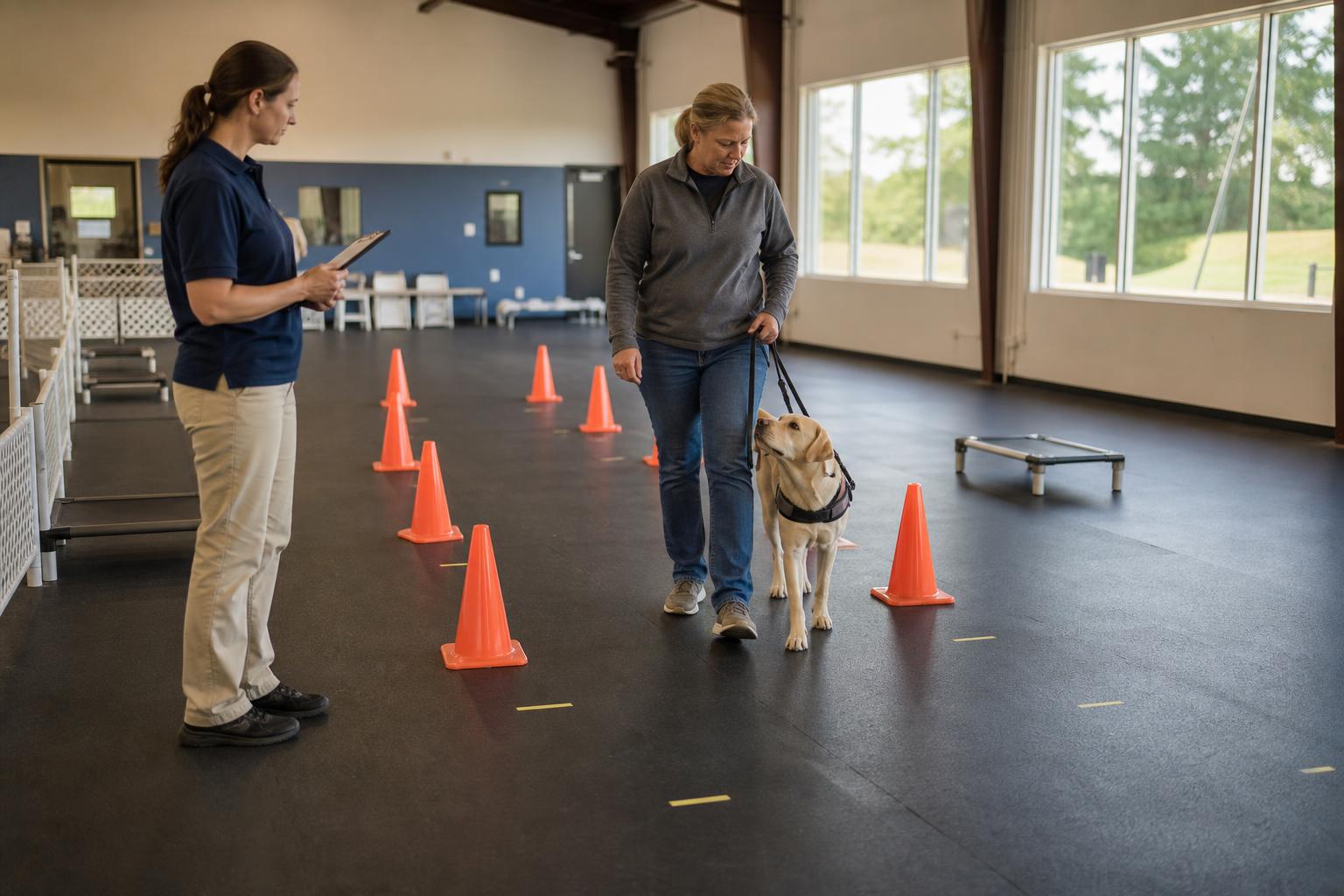
Assistance dog facility accreditation plays a vital role in ensuring that organizations’ training and placing assistance dogs meet established standards of quality, safety, and effectiveness. Whether you are a prospective handler, a trainer, or a facility administrator, understanding what assistance dog facility accreditation entails can help you make informed decisions.
Accreditation is a voluntary process that evaluates facilities on their training methods, dog welfare, and client support. While it is not always legally required, it is often helpful, as it can provide reassurance about the facility’s reliability, professionalism, and consistency.
This article explores the key aspects of assistance dog facility accreditation, its benefits, and practical alternatives for those seeking trustworthy assistance dog training programs.
Quick Overview
- Assistance dog facility accreditation is a voluntary certification process for training organizations.
- It assesses compliance with standards for dog training, welfare, and client services.
- Accredited facilities often follow best practices for training and placement.
- Accreditation can provide peace of mind but is not legally required to use or access assistance dogs.
- Alternatives to accreditation include reviewing training logs, task lists, and medical documentation.
- Different accrediting bodies may have varying criteria and focus areas.
- Accreditation may assist facilities in maintaining program quality and public trust.
- Handlers should consider multiple factors when choosing a training program.
1) What is an Assistance Dog Facility Accreditation?
Assistance dog facility accreditation is a formal process through which an independent organization evaluates and certifies a training facility’s adherence to established standards. These standards typically cover areas such as the humane treatment of dogs, effective training methods, proper socialization, and client education. The goal is to ensure that assistance dogs are well-prepared to perform their tasks reliably and safely in public settings.
Facilities that achieve accreditation demonstrate a commitment to quality and transparency. However, accreditation is not mandated by federal law and does not replace the legal recognition of assistance dogs under laws such as the Americans with Disabilities Act (ADA).
2) Why Consider an Assistance Dog Facility Accreditation?
Choosing an accredited facility may offer several advantages:
- Quality assurance: Accreditation involves a thorough evaluation that can identify a higher level
of training and care. - Transparency: Accredited programs often provide detailed information about their training processes and success rates.
- Support: Accredited facilities may offer ongoing support to handlers after placement.
- Public confidence: Accreditation can enhance trust among clients, healthcare providers, and the community.
That said, accreditation is just one factor to consider. Many reputable programs operate without formal accreditation but maintain high standards.
3) Common Accrediting Organizations
Several organizations provide assistance dog facility accreditation or similar certifications. Examples include:
- Assistance Dogs International (ADI): A widely recognized accrediting body that sets standards for training and placement.
- International Guide Dog Federation (IGDF): Focuses primarily on guide dog schools but also covers assistance dog standards.
- National Assistance Dog Registry: Offers registration services and may provide some level of program evaluation.
Each organization has its own criteria, evaluation process, and scope. Prospective handlers should research which accreditation aligns best with their needs.
4) What Standards are Evaluated?
During accreditation, facilities are typically assessed on:
- Dog selection and health: Ensuring dogs are physically and temperamentally suited for assistance work.
- Training methods: Use of positive reinforcement and task-specific training aligned with client needs.
- Public access training: Preparing dogs to behave appropriately in various public environments.
- Client matching and support: Careful pairing of dogs with handlers and ongoing assistance.
- Facility operations: Staff qualifications, record keeping, and ethical policies.
5) Alternatives to Accreditation for Verifying Program Quality
Because accreditation is voluntary, some handlers may seek other ways to confirm a program’s reliability:
- Training documentation: Reviewing logs that detail the dog’s progress and task mastery.
- Task list: A clear description of the specific tasks the dog is trained to perform.
- Medical or professional letters: Documentation from healthcare providers supporting the need for an assistance dog.
- Program evaluation: Independent assessments or testimonials from previous clients.
These alternatives can provide practical evidence of a dog’s training and suitability without relying solely on accreditation status.
6) How does Accreditation Affect Legal Recognition?
It is important to understand that assistance dog facility accreditation does not determine legal status under the ADA or other laws. The ADA defines a service animal as a dog individually trained to perform tasks for a person with a disability, regardless of accreditation or certification.
Facilities and handlers should focus on the dog’s training and behavior rather than documentation alone. However, having thorough records and professional support can help resolve misunderstandings or challenges in public access situations.
7) Maintaining Accreditation and Ongoing Quality
Accredited facilities usually undergo periodic re-evaluation to maintain their status. This process encourages continual improvement and adherence to evolving best practices. It also helps facilities stay informed about changes in regulations and industry standards.
Handlers should inquire about a facility’s commitment to ongoing quality assurance, whether or not it holds formal accreditation.
FAQs
-
What is assistance dog facility accreditation?
-
It is a voluntary certification process that evaluates training facilities against the standards established for quality and safety.
-
Is accreditation legally required to have a service dog?
-
No, accreditation is not legally required. The ADA recognizes service dogs based on their training and function, not certification.
-
Can a facility without accreditation still provide well-trained assistance dogs?
-
Yes, many reputable programs operate without accreditation but maintain high standards through experience and client feedback.
-
How can I verify the quality of an assistance dog program?
-
Look for training documentation, task lists, references, and professional letters that demonstrate the dog’s capabilities and the facility’s practices.
-
Does accreditation guarantee a dog’s behavior in public?
-
While accreditation indicates adherence to standards, individual dog behavior depends on ongoing training and handler management.
-
Are there different types of assistance dog accreditation?
-
Yes, some organizations focus on guide dogs, others on service or hearing dogs, and the criteria may vary accordingly.
-
How often do facilities need to renew accreditation?
-
Renewal periods vary but typically occur every 1-3 years to ensure continued compliance and program quality.
-
Can accreditation help with public access issues?
-
Accreditation may provide additional credibility but is not required for public access rights under the ADA.
Sources
- ADA Service Animals – U.S. Department of Justice
- Assistance Dogs International (ADI)
- ADA Service Animal Frequently Asked Questions
- HUD Assistance Animals Guidance
- International Guide Dog Federation (IGDF)
Takeaway
Assistance dog facility accreditation offers a useful framework for evaluating training organizations but is not a legal requirement. Handlers and professionals should consider accreditation as one of several tools to assess program quality and suitability.
- Accreditation indicates adherence to recognized standards but is voluntary.
- Alternatives like training logs, task lists, and medical documentation can also verify quality.
- Legal rights for assistance dogs depend on training and function, not accreditation status.
For more detailed information about assistance dog regulations and best practices, explore our Knowledge Center. When planning travel or daily living with an assistance dog, review our travel advice and living advice. To understand the distinctions between emotional support and psychiatric service animals, see “ESA vs PSA”.