
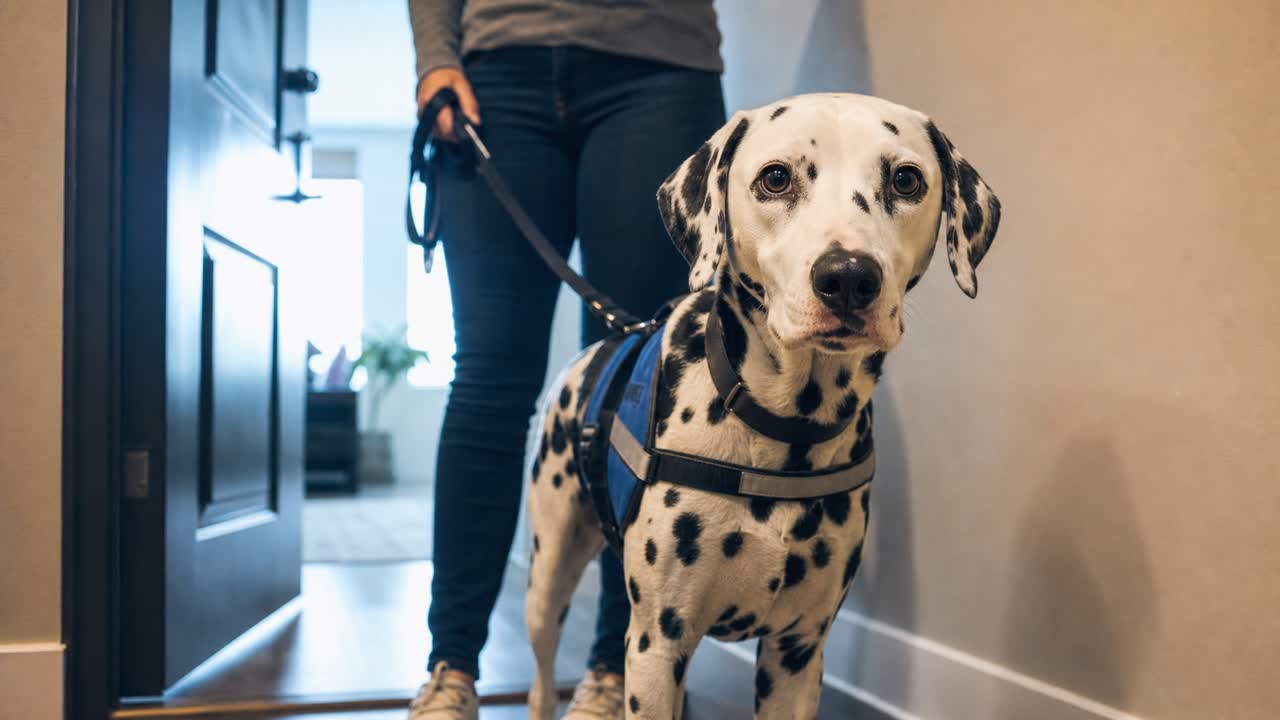
An office fire drill plan for service dog handlers should focus on safe evacuation, clear communication, and realistic practice. The goal is not to provide special treatment to the handler or the dog. It is to ensure both can navigate alarms, crowded exits, and changing instructions without confusion.
For many people, a service dog is part of safe daily functioning at work. That can include mobility support, medical-alert tasks, grounding, retrieval, or assistance with navigating stressful conditions. In a fire drill, those tasks may matter even more because the environment is louder, faster, and less predictable than a normal workday.
This article is about workplace emergency planning, not housing or travel. In most cases, the practical questions are who needs to know the plan, how the dog will respond to alarms and stairs, and what backup steps help if the usual route is blocked.
Quick Overview
- Build the plan around evacuation safety, not appearance-based proof.
- Tell the right people in advance, such as a supervisor, HR contact, or safety coordinator.
- Practice how your dog will respond to alarms, fast foot traffic, and crowded exits.
- Choose a primary route, a backup route, and an outdoor meeting point.
1) Office Fire Drill Plan for Service Dog Handlers Starts with Role Clarity
The first step is deciding what the dog actually needs to do during an evacuation. A plan works better when coworkers and safety staff understand the dog’s functional role instead of making assumptions based on a vest or harness.
This is also where it helps to separate general workplace access from emergency planning. A practical service-check mindset can help you assess whether the dog’s tasks are clear and workable in a fast-moving office setting.
2) Coordinate with the Right People before the Drill
You usually do not need to broadcast private medical details to the whole office, but it is wise to notify the people responsible for workplace safety. Keep the conversation focused on logistics: where you sit, what route you normally use, whether stairs are manageable, and whether the dog needs a little extra space during exit flow.
Some handlers also find it helpful to identify one backup coworker who understands the basics of the plan. That person does not need to handle the dog unless you specifically want that arrangement, but they can help relay instructions, clear a path, or confirm that you reached the meeting point.
If your workplace already has general disability or evacuation procedures, review them with a critical eye. Broad policies may not address leash handling, stair pacing, or how a service dog should position itself during an orderly but crowded descent. A general rules guide can help frame the larger access conversation, but your drill plan still needs office-specific detail.
3) Train for Alarms, Stairs, and Crowd Movement
Office fire drills create a strange mix of noise, urgency, and tight spaces. The dog may hear alarms, see people moving quickly, and feel tension from the handler and surrounding coworkers. Even a strong working dog can struggle if it has never practiced in these conditions. That is why gradual conditioning matters.
If possible, practice pieces of the routine before the actual drill. Work on moving through stairwells, pausing at doors, waiting calmly while others pass, and staying close without weaving. If the dog will need to navigate around canes, walkers, or a rolling office chair, include those details in practice.
Behavior under pressure matters more than labels. A dog that startles, pulls toward exits, or blocks landings can create real safety issues during a drill. Thinking in terms of a behavior check can be useful here because the standard is simple: calm, controlled movement even when the environment becomes noisy and crowded.
4) Build a Route Plan with a Backup Option
Every office fire drill plan should include a primary exit route and a backup route. Do not assume the nearest path will always be usable. A blocked hallway, crowded staircase, or temporarily closed door can change the whole flow. Handlers with service dogs benefit from deciding in advance how to adapt if that happens.
Think through the details that matter in real life. Are the stair treads slippery? Does the outdoor assembly point leave enough room for the dog to settle away from heavy foot traffic? If the handler uses a mobility aid, the route plan should consider how the dog and device move together through narrow doorways and turns.
This is one area where broader public access rules are helpful as background, but drills still require workplace-specific planning. Emergency planning is about how to stay under control while the whole building is moving at once.
5) Keep Gear and Supplies Simple
Emergency drills are not a good moment for extra straps, bulky accessories, or loose items that can catch on door hardware and chair legs. The safest setup is usually the one you can manage quickly and consistently. A well-fitted harness or collar, a practical leash length, and any mobility gear the handler genuinely uses are often enough.
If a small emergency kit helps, keep it compact. You might include waste bags, a little water for longer evacuations, paw wipes if the outdoor assembly area gets muddy, and a laminated contact card for your own use.
Optional identification items can help some teams feel more organized, but they should never be the centerpiece of the plan. In a drill, coworkers and safety leads care far more about whether the dog moves safely, stays close, and does not interfere with evacuation flow.
6) Review the Drill Afterward and Update the Plan
The first version of your plan may not be the best one. After a drill, take a few minutes to note what worked and what did not. Maybe the dog did well with the alarm but needed more space at the landing. Maybe the meeting point was too crowded, and the dog had trouble settling.
Short notes are often enough. A simple checklist of route choice, timing, dog behavior, and follow-up training goals can make the next drill easier. If the office layout changes or your own needs change, update the plan rather than assuming the old version still fits.
This kind of review also helps keep workplace emergency planning separate from other service-animal topics. A fire drill plan is about practical safety and communication on the job, not about shopping for documents or treating emergency access like a travel or housing issue.
FAQs
Does every service dog handler need an office fire drill plan?
Not every workplace will need a formal written plan, but most handlers benefit from having at least a basic evacuation routine, a route, and a backup option thought through in advance.
Should I tell my employer about my service dog before a fire drill happens?
Usually, yes, at least to the people responsible for supervision or safety planning. Advance communication can reduce confusion and make the drill safer for both handler and dog.
What if my dog is afraid of alarms?
That is a training issue worth addressing before the next drill. Gradual exposure, controlled practice, and realistic stairwell work are usually more effective than waiting for the alarm day itself.
Can a coworker help during the evacuation?
Yes, if you want that support and the role is clear. A backup coworker can help with communication or clearing the path, but they should not improvise with the dog unless that is part of your plan.
Do I need paperwork for an office fire drill plan for service dog handlers?
Usually not in the sense of special proof for the dog. What helps more is a clear workplace plan, simple notes, and shared understanding with the people handling safety logistics.
Sources
Takeaway
An office fire drill plan for service dog handlers works best when it stays practical. Clear coordination, realistic route planning, and calm dog behavior matter much more than appearance-based proof or last-minute improvisation.
- Tell the right workplace contacts what the plan is before the alarm sounds.
- Practice stairs, crowd movement, and settling at the outdoor meeting point.
- Review each drill and update the plan as your office layout or needs change.