
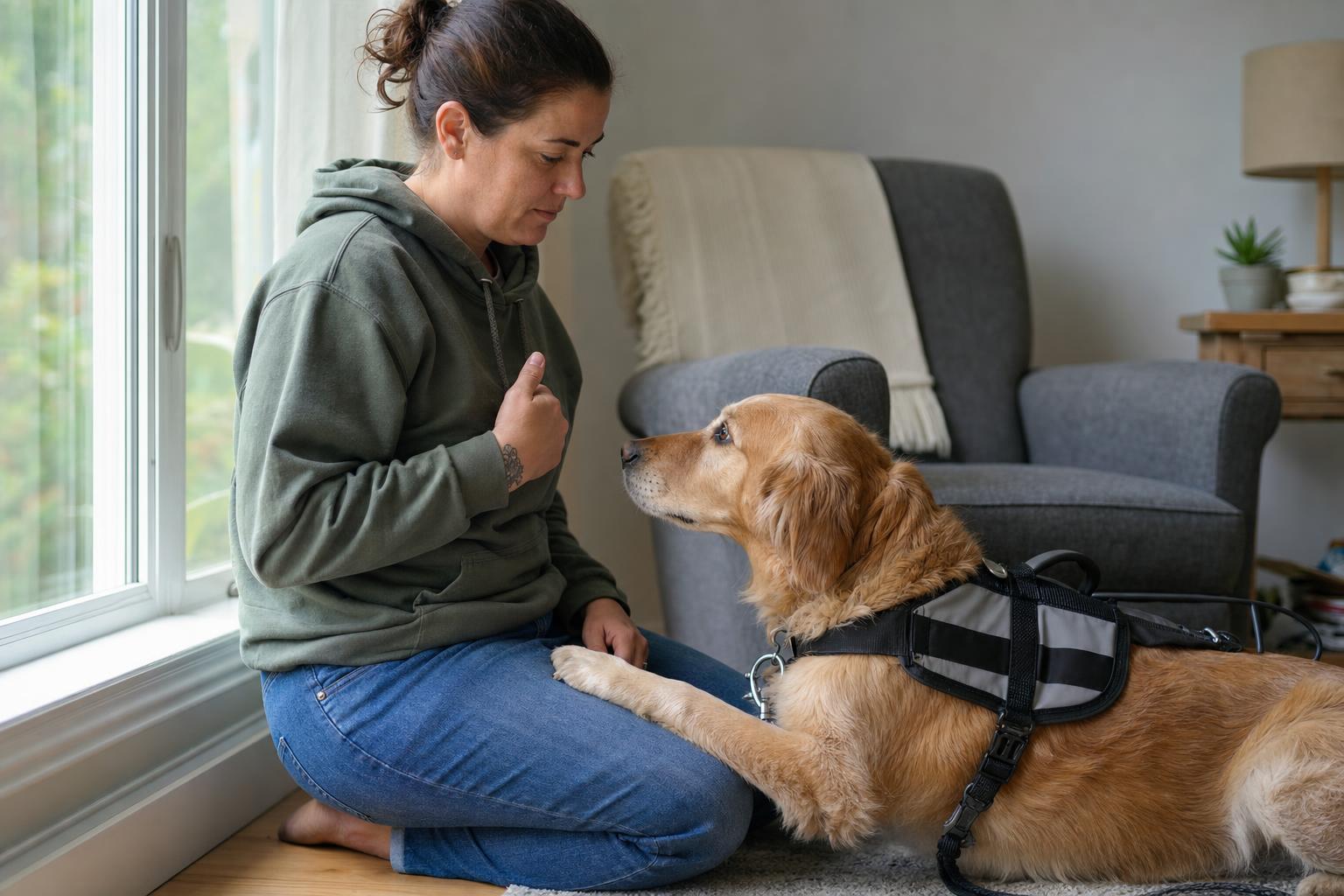
Training a psychiatric service dog for PTSD can be a life-changing process that provides essential support for individuals managing post-traumatic stress disorder. Understanding how to train a psychiatric service dog for PTSD involves more than basic obedience; it requires specialized skills to help the dog recognize and respond to specific symptoms.
Whether you are considering training your own dog or working with a professional, it’s important to know the steps involved and the types of tasks these dogs can perform. This article outlines practical guidance on how to train a psychiatric service dog for PTSD, focusing on effective methods and compliance considerations.
Quick Overview
- Psychiatric service dogs assist with PTSD symptoms by performing specific, trained tasks.
- Training focuses on public access skills, task training, and socialization.
- Basic obedience and reliable behavior in public are foundational.
- Task examples include interrupting anxiety episodes, grounding during flashbacks, and providing tactile stimulation.
- Consistent, positive reinforcement methods are most effective.
- Documentation, such as training logs and a task list, can support the dog’s service role.
- Legal requirements do not mandate service dog certification or vests.
- Consulting with healthcare providers helps tailor training to individual needs.
1) Understand the Role of a Psychiatric Service Dog for PTSD
Psychiatric service dogs are trained to mitigate symptoms of mental health disabilities such as PTSD by performing tasks directly related to the condition. These tasks might include interrupting panic attacks, providing deep pressure therapy, or reminding the handler to take medication. Unlike emotional support animals, psychiatric service dogs are trained to perform specific actions that help manage the disability.
Before training, it’s important to identify the specific symptoms you want the dog to address. Exchanging views with a mental health professional can help clarify which tasks will be most beneficial.
2) Choose the Right Dog
Not every dog is suited to be a psychiatric service dog. Ideal candidates are calm, attentive, and able to handle public environments without becoming easily distracted or stressed. Many trainers recommend starting with a young adult dog that has a stable temperament and good health. Common breeds used include Labradors, Golden Retrievers, and mixed breeds with similar characteristics.
Temperament testing and basic obedience skills should be evaluated before beginning specialized training.
3) Begin with Basic Obedience Training
Reliable obedience is the foundation of any service dog’s training. Your dog should respond promptly to commands such as sit, stay, come, heel, and down. This ensures safety and control in public settings. Training should be consistent, using positive reinforcement techniques like treats, praise, and play.
Public access training is also essential, teaching the dog to remain calm around distractions such as crowds, noises, and other animals.
4) Train Specific PTSD-Related Tasks
Once basic obedience is solid, focus on teaching tasks that directly mitigate PTSD symptoms. Examples include:
- Interrupting anxiety or panic attacks: The dog can be trained to nudge, paw, or lick the handler to interrupt distressing behaviors.
- Grounding during flashbacks: Providing tactile stimulation such as deep pressure therapy or leaning against the handler.
- Creating personal space: The dog can position itself between the handler and others to reduce anxiety in crowded areas.
- Medication reminders: Alerting the handler when it’s time to take medication.
Task training often involves breaking down each behavior into small steps and consistently rewarding progress.
5) Socialize and Acclimate the Dog to Public Environments
Psychiatric service dogs must behave appropriately in various public settings. Increasingly exposing your dog to different environments such as stores, public transportation, and busy streets. This helps the dog remain focused and calm despite distractions.
Socialization also includes teaching the dog to ignore unwanted attention from strangers and to stay by the handler’s side.
6) Maintain Training and Document Progress
Ongoing training is important to keep skills sharp and ensure the dog continues to perform tasks reliably. Maintaining a training log can be helpful for tracking progress and identifying areas needing reinforcement.
While not legally required, having a written task list and documentation from a healthcare provider can support the dog’s status as a psychiatric service animal, especially when accessing public places.
7) Consider Professional Assistance and Evaluation
Training a psychiatric service dog can be complex. Getting help from a professional trainer, especially one experienced in service dog training, can improve outcomes. Some organizations offer evaluation programs to assess a dog’s readiness and behavior in public settings.
Remember, service dog certification or registration is not required by law, but some handlers find these tools useful for organization and peace of mind.
FAQs
Q: How to train a psychiatric service dog for PTSD?
A: Training involves basic obedience, public access skills, and teaching specific tasks that mitigate PTSD symptoms, such as interrupting anxiety episodes or providing grounding during flashbacks. Consistent positive reinforcement and professional guidance can be very helpful.
Q: Is a service dog certificate required for a psychiatric service dog?
A: No, certificates, vests, or registrations are not legally required. However, some handlers find certificates helpful for organization or peace of mind. Practical alternatives include maintaining training logs, task lists, and a letter from a healthcare provider.
Q: Can any dog be trained as a psychiatric service dog?
A: Not all dogs are suitable. Ideal candidates have calm temperaments, good health, and the ability to focus in public. Temperament testing and basic obedience skills are important before beginning specialized training.
Q: What tasks can a psychiatric service dog perform for PTSD?
A: Common tasks include interrupting panic attacks, providing tactile stimulation to ground the handler, creating personal space in crowds, and reminding the handler to take medication.
Q: How long does training a psychiatric service dog take?
A: Training duration varies depending on the dog’s aptitude and the handler’s consistency. Basic obedience can take several weeks to months, while specialized task training and public access skills may require additional months of work.
Q: Can I train my own psychiatric service dog?
A: Yes, many handlers successfully train their own dogs. Access to professional advice and resources can improve success. Keeping detailed training records and a task list can support your dog’s service status.
Q: Are there legal restrictions on psychiatric service dogs?
A: Under the Americans with Disabilities Act (ADA), psychiatric service dogs are allowed in public places where pets are typically not permitted. The dog must be trained to execute tasks related to the handler’s disability and behave appropriately in public.
Sources
- ADA Service Animals
- ADA Service Animal Q&A
- HUD Assistance Animals
- Department of Justice – Service Animals
Takeaway
Training a psychiatric service dog for PTSD is a thoughtful process that requires patience, consistency, and understanding of the dog’s role in mitigating symptoms. While legal requirements do not mandate certification, practical documentation and ongoing training support the dog’s effectiveness and access rights.
- Focus on basic obedience and tailored PTSD-related tasks.
- Use positive reinforcement and gradual exposure to public environments.
- Maintain training logs and consider professional evaluation for best results.
For more detailed information on service animal regulations and support, visit our Knowledge Center, review rules and regulations, and explore living advice and travel advice. To understand the dissimilarities between emotional support animals and psychiatric service animals, see ESA vs PSA.