
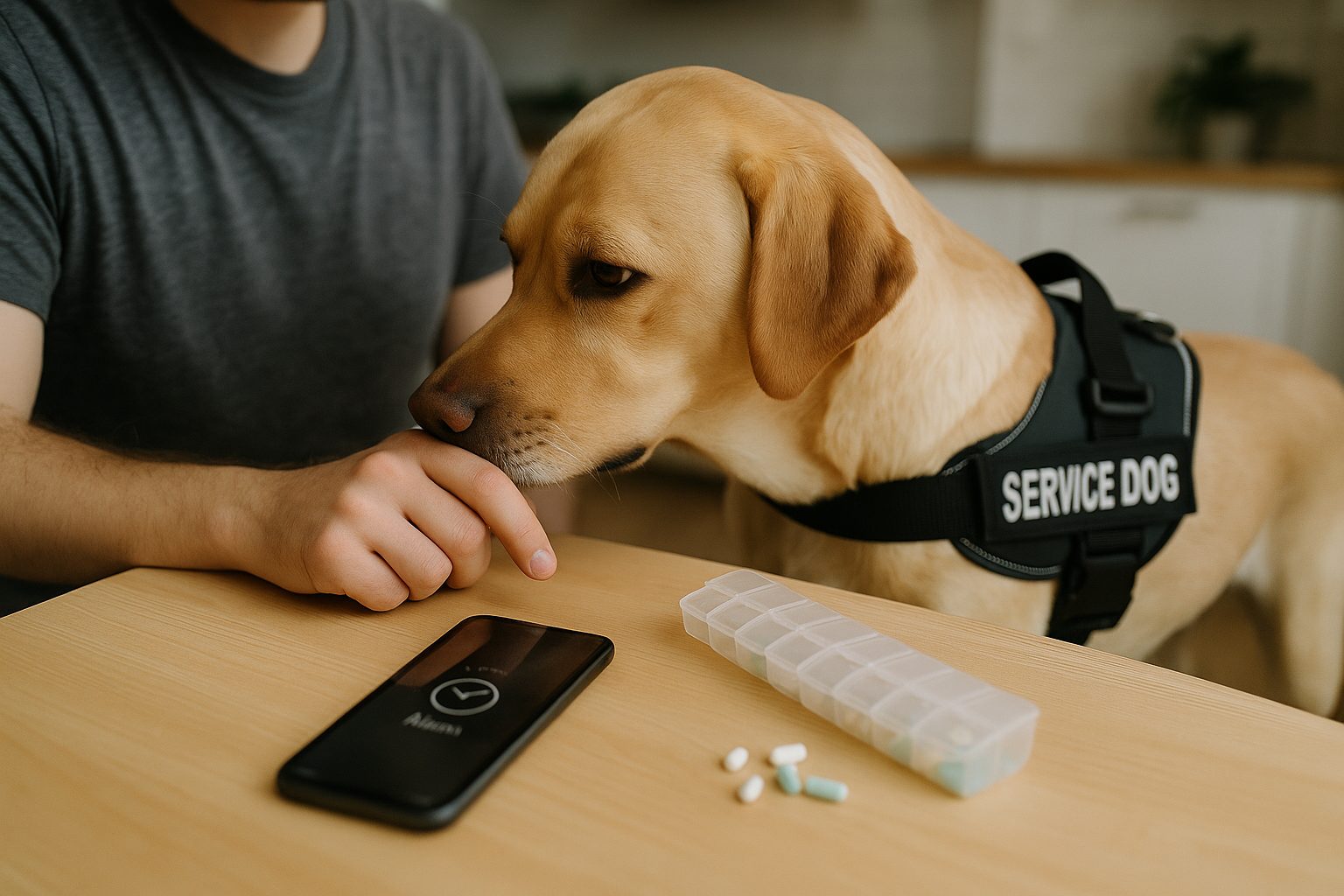
Living with ADHD (Attention-Deficit/Hyperactivity Disorder) can affect focus, memory, time management, emotional regulation, and daily routines. For many people, the challenge isn’t effort — it’s consistency. ADHD can make it harder to start tasks, switch tasks, remember steps, and stay organized when life gets busy.
A properly trained service dog can support a person with ADHD through specific, practical tasks. These tasks are designed to reduce daily friction and help the handler function more smoothly at home, in public, and at work or school.
It’s also helpful to understand the difference between a service dog and an emotional support animal (ESA). ESAs provide comfort through companionship. A service dog is trained to perform tasks that help with day-to-day functioning.
What Service Dogs can do for ADHD
Service dog work for ADHD is individualized. The best tasks are the ones that match the handler’s real-life “pain points,” such as:
- Missing alarms and appointments (time blindness)
- Forgetting medication or daily essentials
- Losing items frequently
- Getting overwhelmed in crowded environments
- Zoning out in unsafe places
- Getting stuck in repetitive behaviors during stress
A service dog is not a replacement for treatment, coaching, or accommodations — but it can be a powerful support tool when it’s trained around the handler’s specific needs.
Service Dog Tasks for ADHD (practical examples)
Below are realistic examples of service dog tasks for ADHD. Not every task is right for every person, and training should always be safe and humane for the dog.
1) Interruption and Redirection (pattern break)
A service dog can be trained to interrupt behaviors that tend to escalate or keep the handler “stuck,” such as:
- Zoning out
- Repetitive pacing
- Compulsive scratching/skin picking
- Spiraling into overwhelm
Common interruption behaviors include a gentle nose nudge, a paw target, or a trained “alert” behavior. The goal is to create a reset so the handler can reorient and take the next step.
2) Alarm Response and Transition Support (with a device cue)
A dog doesn’t understand time the way people do, but it can learn routines triggered by cues such as a phone alarm or smartwatch vibration.
For example, when an alarm sounds, the dog:
- Nudges the handler
- Stays persistent
- Helps the handler transition into the next action (stand up, go to a checklist, go to the door, etc.)
This can help with:
- Waking up
- Leaving on time
- Switching tasks
- Taking breaks
3) Medication Routine Support
For many people with ADHD, remembering medication consistently is a major challenge.
A service dog can be trained to:
- Retrieve a medication pouch
- Bring it to the handler after an alarm cue
- Prompt the handler until they complete the routine
Many handlers pair this with a pill organizer and a simple checklist, so it’s easy to track.
4) Item Retrieval (keys, wallet, phone, bag)
ADHD often comes with constant “Where did I put it?” moments.
A service dog can learn to retrieve:
- Keys
- Wallet
- Phone
- ID
- A work or school bag
Item retrieval saves time, reduces stress, and helps the handler keep moving forward without losing momentum.
5) “Find It” Support (locating essentials)
Some dogs can be trained to help locate commonly lost items using a structured “find it” routine.
This works best when the handler keeps a consistent system (designated spots at home, consistent item names/cues) and practices regularly.
6) Grounding Support During Overwhelm
Some people with ADHD experience overwhelm that looks like shutdown, panic, or emotional flooding — especially in noisy or crowded environments.
A dog can be trained to support regulation through:
- Deep Pressure Therapy (DPT) on cue
- A steady “lean” for calming contact
- A focused routine (such as a sit + eye contact) that helps the handler reset
7) Creating Space in Crowds (buffering)
Crowds can increase overstimulation and reduce focus.
A service dog may be trained to:
- Stand behind or in front of the handler to create space
- Help the handler hold position in lines
- Reduce the feeling of being rushed
8) Safety Routines for Distraction and Impulsivity
For some handlers, distraction can create safety issues (for example, stepping into traffic while focused on something else).
Depending on the person and the dog, training may include:
- Stopping at curbs
- Waiting before crossing
- Maintaining a stable heel
These routines should be taught carefully and gradually, with professional guidance if needed.
Benefits of a Service Dog for ADHD
A service dog can support daily functioning in ways that are practical and measurable:
- More consistent routines (less missed transitions and missed steps)
- Less time lost (retrieval and “find it” support)
- Reduced overwhelm (grounding routines)
- Improved organization (predictable cues and habits)
- More confidence in public (crowd buffering and structure)
The biggest benefit for many handlers is reduced mental load — fewer “small failures” stacking up into stress.
Who can Benefit from Service Dog Tasks for ADHD?
A service dog may be helpful if ADHD significantly affects daily life and you would benefit from task-based support.
You might be a good candidate if you:
- Regularly miss key time-based commitments
- Struggle with medication routines
- Lose essential items frequently
- Experience overwhelm that disrupts daily tasks
- Need extra structure to stay safe and regulated
- Can provide consistent care, exercise, and training reinforcement for a dog
A service dog is a long-term commitment. The best outcomes happen when the dog is one part of an overall support plan.
Next Steps: Choosing the Right Tasks
If you’re considering a service dog for ADHD, start by making your needs clear.
A Simple Approach:
1) List your top 3–5 ADHD challenges (example: time blindness, lost essentials, overwhelm in stores).
2) For each challenge, identify one task that would make life easier (example: alarm response, retrieval, grounding).
3) Keep tasks measurable and repeatable.
A Good Task Should Be:
- Clearly defined (either it happened or it didn’t)
- Realistic for your lifestyle
- Safe and fair for the dog