
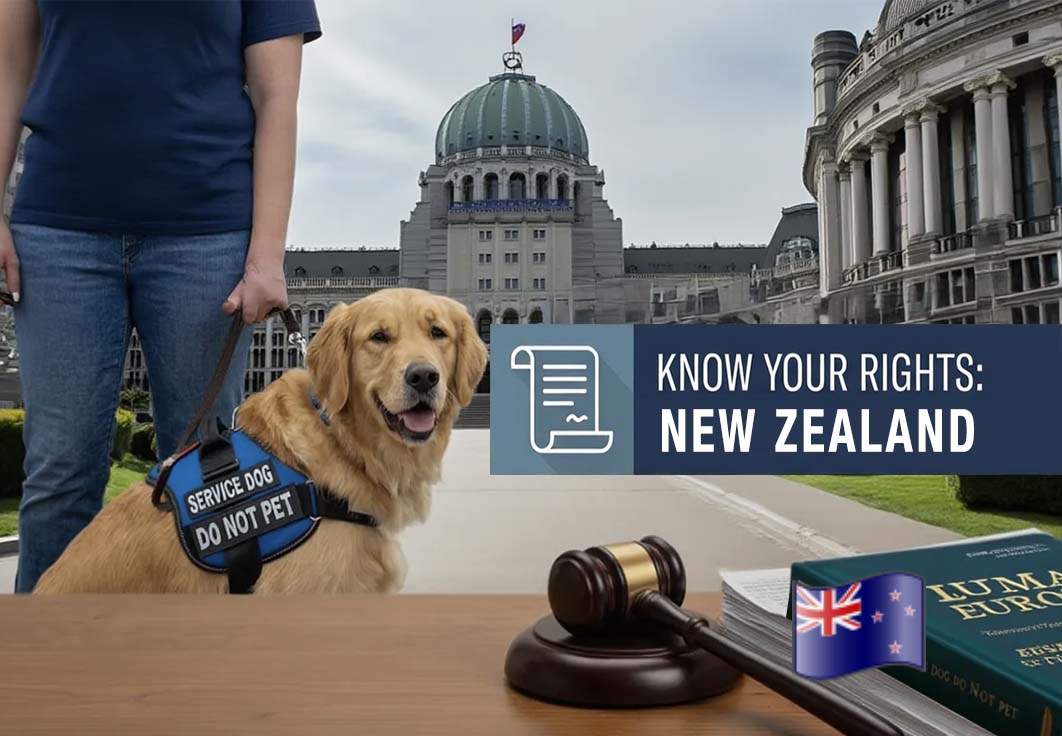
🇳🇿 New Zealand’s Laws & Regulations for Assistance Animals are as follows:
Acceptance
Housing
New Zealand does not have a single nationwide housing statute specific to assistance animals. Acceptance is governed by anti-discrimination and tenancy laws. Service Animals and PSAs are generally accepted with documentation. ESAs are accepted with conditions and often require a prescription letter and landlord approval.
Air Travel
New Zealand enforces very strict animal import and aviation regulations. Airlines recognize Service Animals and PSAs when advance airline approval and government permits are obtained. ESAs are accepted with conditions and may be subject to additional airline and biosecurity restrictions.
Public Access
New Zealand provides strong protections for assistance animals under disability law. Service Animals and PSAs are permitted in public transport, shops, restaurants, hotels, government buildings, workplaces, and medical facilities when properly identified. ESAs may be accepted with documentation but do not have guaranteed public-access rights.
Additional Notes
- Service Animals & PSAs: protected under New Zealand disability legislation.
- ESAs: accepted with conditions depending on venue and airline.
- New Zealand has some of the strictest animal import rules worldwide, including permits, testing, and quarantine.
- Recognition Gear and advance coordination are strongly recommended.
Applicable Laws
ESA:
Accepted with conditions depending on airline, housing provider, and venue.
PSA:
Treated similarly to Service Animals when trained for psychiatric or task-based support.
Service Animals:
Protected nationwide under disability and human rights legislation.