
General Ownership & Control
Leash & Muzzle Rules
Liechtenstein maintains strict dog-control regulations aligned closely with Swiss standards. Dogs must be kept on a leash in all public areas, including streets, parks, hiking trails, shopping districts, and residential zones.
Muzzle rules are situation-based rather than breed-based. Muzzles may be required for:
- Dogs showing aggression or fear-based reactivity
- Large or powerful breeds in crowded public areas
- Public transportation (depending on operator)
- Any dog classified as dangerous by local authorities
Off-leash activity is allowed only in designated dog areas and remote hiking paths, but the dog must remain under strict voice control at all times.
Breed-Specific Bans / Restrictions
Liechtenstein has no breed-specific bans. All breeds — including pit bull types, rottweilers, mastiffs, cane corsos, and shepherd breeds — are legal to own.
Dangerous dog classification is based entirely on behavior, not breed. Dogs deemed dangerous may be required to complete behavioral assessments and follow stricter handling rules.
Licensing & Microchipping
Microchipping is mandatory for all dogs. Owners must ensure that the microchip is registered with the national pet registry used jointly with Switzerland.
Owners must also comply with:
- Annual dog tax (varies by municipality)
- Up-to-date rabies vaccination
- Carrying waste bags and cleaning up after the dog
Failure to register or vaccinate may result in fines.
Service Dogs & Assistance Animals
Legal Definitions
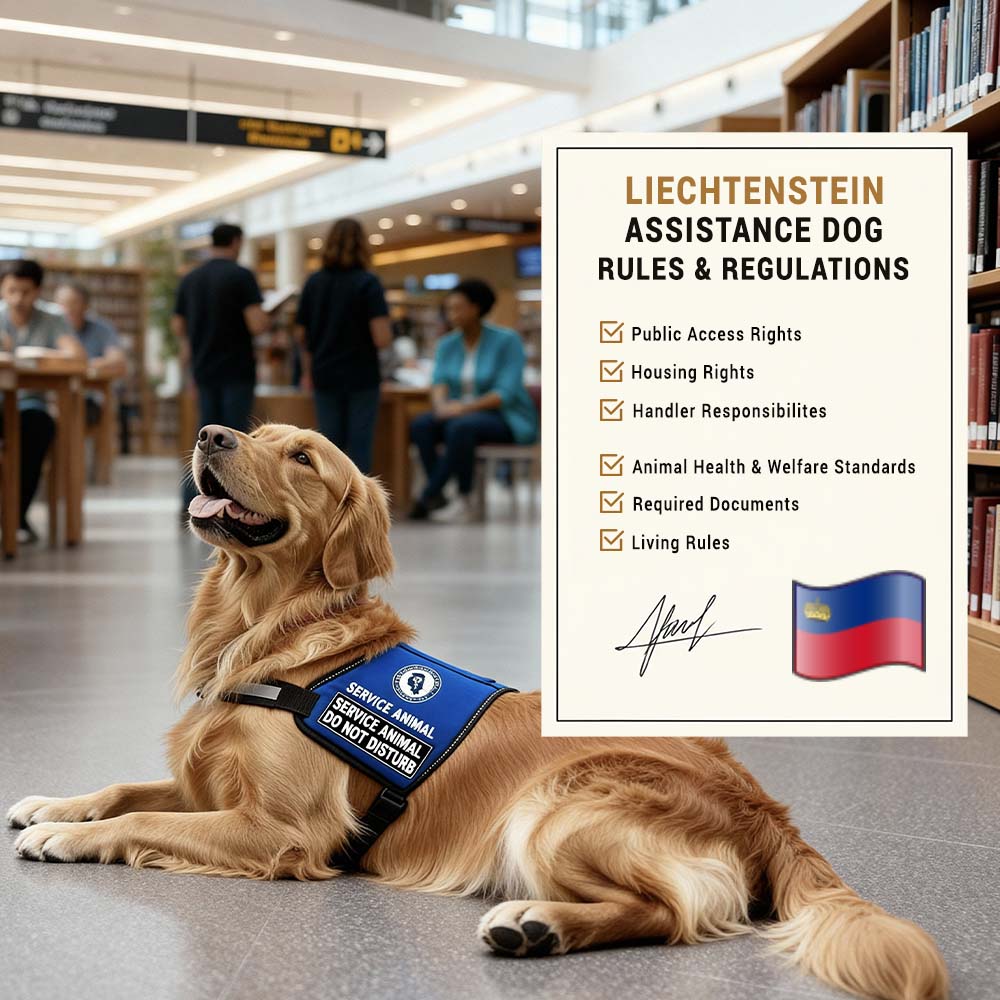
Liechtenstein recognizes several types of service dogs, including guide dogs, mobility assistance dogs, hearing dogs, seizure-alert dogs, diabetes-alert dogs, and psychiatric service dogs (PSDs). These dogs must be trained to perform specific disability-related tasks.
Public Access Rights
Service dogs have full access rights to all public places, including:
- Shops and supermarkets
- Restaurants and cafes
- Hotels and tourist sites
- Public transportation
- Hiking trails and parks
- Workplaces and educational facilities
- Government buildings
Public establishments cannot refuse entry to a legitimate service dog.
Certification / ID Requirements
Service dogs in Liechtenstein typically carry certification aligned with Swiss accreditation standards. It is advisable for handlers to carry:
- Physical ID Card (animal + handler)
- Training/Registration Certificate
- Visible Recognition Gear (vest or harness)
- Prescription Letter (ESA, PSA, or Service Animal letter from a licensed professional)
Emotional Support Animals (ESA) & Psychiatric Service Animals (PSA)
Legal Recognition
ESAs and PSAs are only recognized when registered with an accredited organization. Without this, ESAs do not have public-access rights and are treated as pets under Liechtenstein law.
Housing Rights
Registered ESAs/PSAs may be accepted in no-pet housing depending on landlord policy and documentation. Certified service dogs must always be permitted under disability accommodation rules.
Travel Rights
- European airlines accept service dogs with proper documentation.
- PSAs may travel as service animals when task-trained and accredited.
- ESAs generally follow standard pet policies unless a carrier recognizes them.
- Swiss public transportation systems (used by Liechtenstein residents) fully accept service dogs.
Veterinary & Animal Welfare Standards
Vaccination Schedules
Rabies vaccination is mandatory and must be kept current. Core vaccines (distemper, parvovirus, adenovirus, and leptospirosis) are strongly recommended.
Neutering / Spaying Regulations
Neutering is not mandatory, but it is recommended to support responsible ownership and prevent accidental litters.
Animal Welfare Acts
Liechtenstein enforces comprehensive animal welfare regulations aligned with Swiss standards. Owners must ensure proper shelter, nutrition, water, exercise, enrichment, and medical care. Abuse, neglect, and abandonment are criminal offenses.
The Office of Food and Veterinary Affairs (shared with Switzerland) oversees compliance and enforcement.