
General Ownership & Control
Leash & Muzzle Rules
Latvia requires dogs to be kept on a leash in most public spaces, including streets, city parks, shared residential areas, and busy pedestrian zones. Regulations are enforced especially in Riga, Liepāja, Daugavpils, and Jelgava.
Muzzle requirements depend on size, location, and behavior:
- Large dogs on public transportation must wear a muzzle
- Dogs showing aggressive tendencies may be required to wear a muzzle
- Municipal authorities can order muzzle use for any dog considered dangerous
Designated dog parks and rural areas may permit off-leash activity, but the dog must remain under full control.
Breed-Specific Bans / Restrictions
Latvia has no national breed bans. All breeds — including pit bulls, rottweilers, mastiffs, and shepherd breeds — are legal.
Dangerous dog rules apply based on behavior rather than breed. Dogs deemed dangerous by authorities may face additional restrictions, including mandatory muzzling and special permits.
Licensing & Microchipping
Microchipping is mandatory for all dogs in Latvia and is required for inclusion in the national pet registry. Updated contact information is the owner’s responsibility.
Requirements include:
- Microchip before 4 months of age
- Up-to-date rabies vaccination
- Veterinary passport or booklet
Additional municipal licensing may be required depending on the city.
Service Dogs & Assistance Animals
Legal Definitions
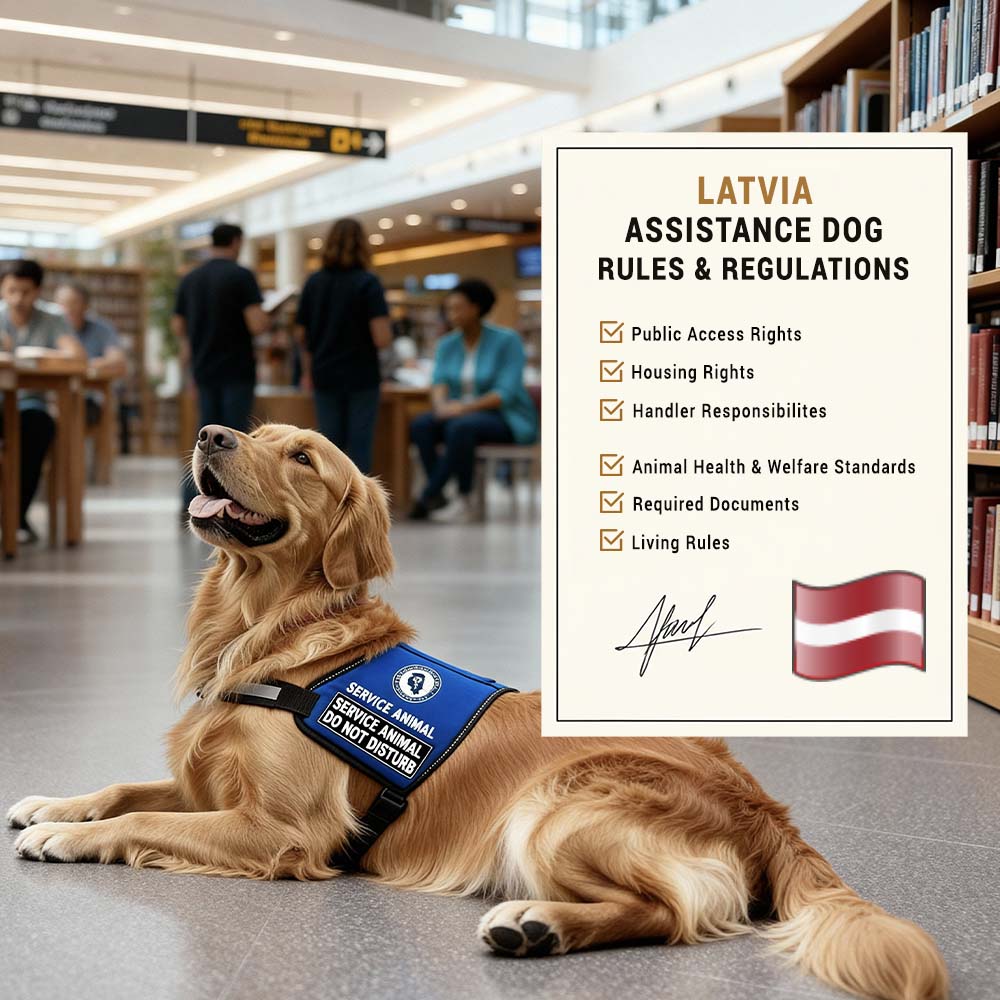
Latvia legally recognizes service dogs that provide assistance to individuals with disabilities, including guide dogs, hearing dogs, mobility assistance dogs, seizure-alert dogs, diabetes-alert dogs, and psychiatric service dogs (PSDs). These dogs must be task-trained.
Public Access Rights
Service dogs have full public-access rights to:
- Shops and shopping centres
- Restaurants and cafes
- Hotels and lodging
- Public transportation
- Government and municipal buildings
- Educational institutions
Businesses cannot refuse access to a legitimate service dog.
Certification / ID Requirements
Handlers should carry documentation to avoid access issues. Recommended items include:
- Physical ID Card (handler + animal)
- Training/Registration Certificate
- Visible Recognition Gear (vest, harness, or bandana)
- Prescription Letter (ESA, PSA, or Service Animal letter from a licensed professional)
Emotional Support Animals (ESA) & Psychiatric Service Animals (PSA)
Legal Recognition
ESAs and PSAs in Latvia are only recognized when registered with an accredited organization. Without accreditation, ESAs are treated as pets and do not receive any special access rights.
Housing Rights
Registered ESAs/PSAs may be accepted in housing that would otherwise restrict pets. Landlords may request documentation. Service dogs must always be accepted under disability accommodation rules.
Travel Rights
- European airlines serving Latvia accept certified service dogs with documentation.
- PSAs may travel as service dogs if accredited and task-trained.
- ESAs follow standard pet travel rules unless a carrier approves them as support animals.
- Public transport in Riga and other cities accepts service dogs; ESAs/PSAs depend on operator policies.
Veterinary & Animal Welfare Standards
Vaccination Schedules
Rabies vaccination is mandatory. Dogs must also receive recommended core vaccines, including distemper, parvovirus, adenovirus, and leptospirosis, depending on veterinary guidance.
Neutering / Spaying Regulations
Neutering is not legally required but is recommended to prevent overpopulation and reduce aggression-related behaviors.
Animal Welfare Acts
Latvia enforces strict animal welfare laws requiring owners to provide adequate shelter, water, food, exercise, and veterinary care. Mistreatment, abandonment, or cruelty is punishable by fines or criminal charges. Enforcement is overseen by the Food and Veterinary Service (FVS).