
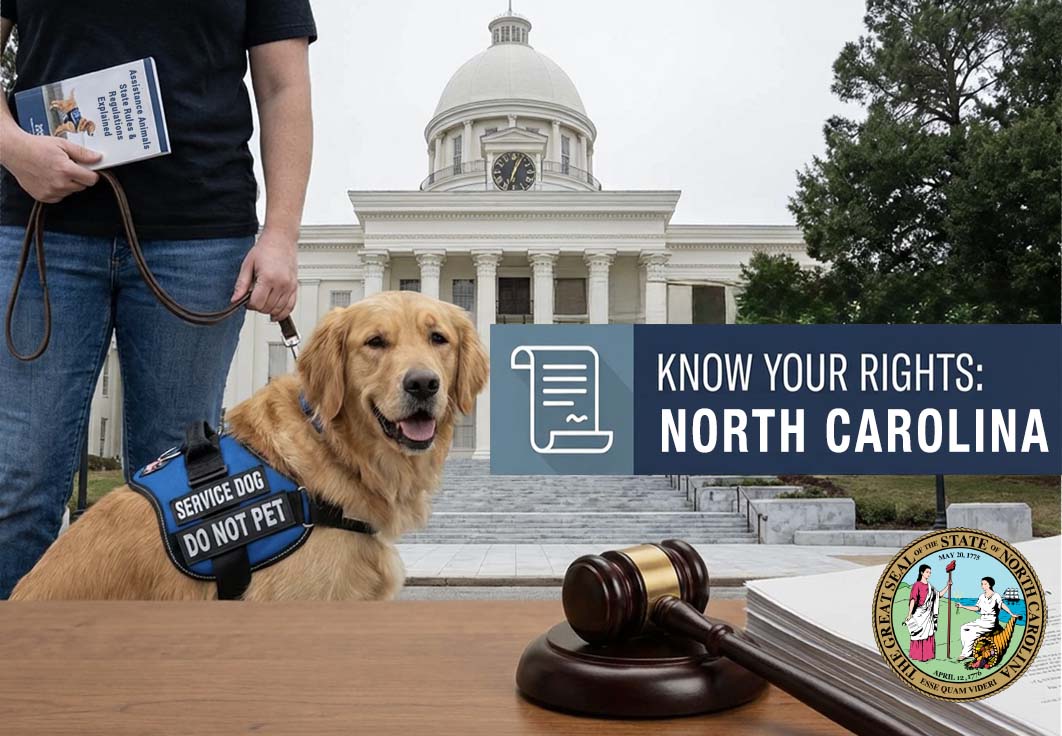
North Carolina’s Laws & Regulations for Assistance Animals are as follows:
Acceptance
Housing
North Carolina landlords must comply with the federal Fair Housing Act (FHA). This requires acceptance of ESAs, PSAs, and Service Animals when proper documentation is provided. North Carolina also enforces disability protections under the North Carolina Fair Housing Act, supporting tenants with assistance animals.
Air Travel
North Carolina follows the Air Carrier Access Act (ACAA). Only trained service dogs may fly as Service Animals. ESAs must follow airline pet rules. Travelers using Charlotte (CLT), Raleigh-Durham (RDU), Greensboro (GSO), Asheville (AVL), and Wilmington (ILM) may need DOT Service Animal forms.
Public Access
North Carolina follows the Americans with Disabilities Act (ADA) and state-specific protections under N.C. General Statute § 168-4.2. Only trained Service Dogs—including psychiatric service dogs—must be allowed in stores, restaurants, hotels, transit systems, hospitals, and government buildings. ESAs are not granted public-access rights.
Additional Notes
- ADA: Only task-trained dogs qualify as Service Animals.
- ACAA: Airlines accept only trained Service Dogs for in-cabin travel.
- FHA & NC Fair Housing Act: ESAs, PSAs, and Service Animals are protected for housing.
- State penalties: Misrepresenting a Service Animal is illegal in North Carolina.
- Recognition Gear: Strongly recommended statewide.
Applicable Laws
Emotional Support Animals (ESA):
Recognized for housing under FHA and North Carolina Fair Housing law; no public-access rights.
Psychiatric Support Animals (PSA):
Recognized as Service Animals only if trained to perform tasks.
Service Animals:
Recognized under ADA, ACAA, FHA, and North Carolina General Statutes.