
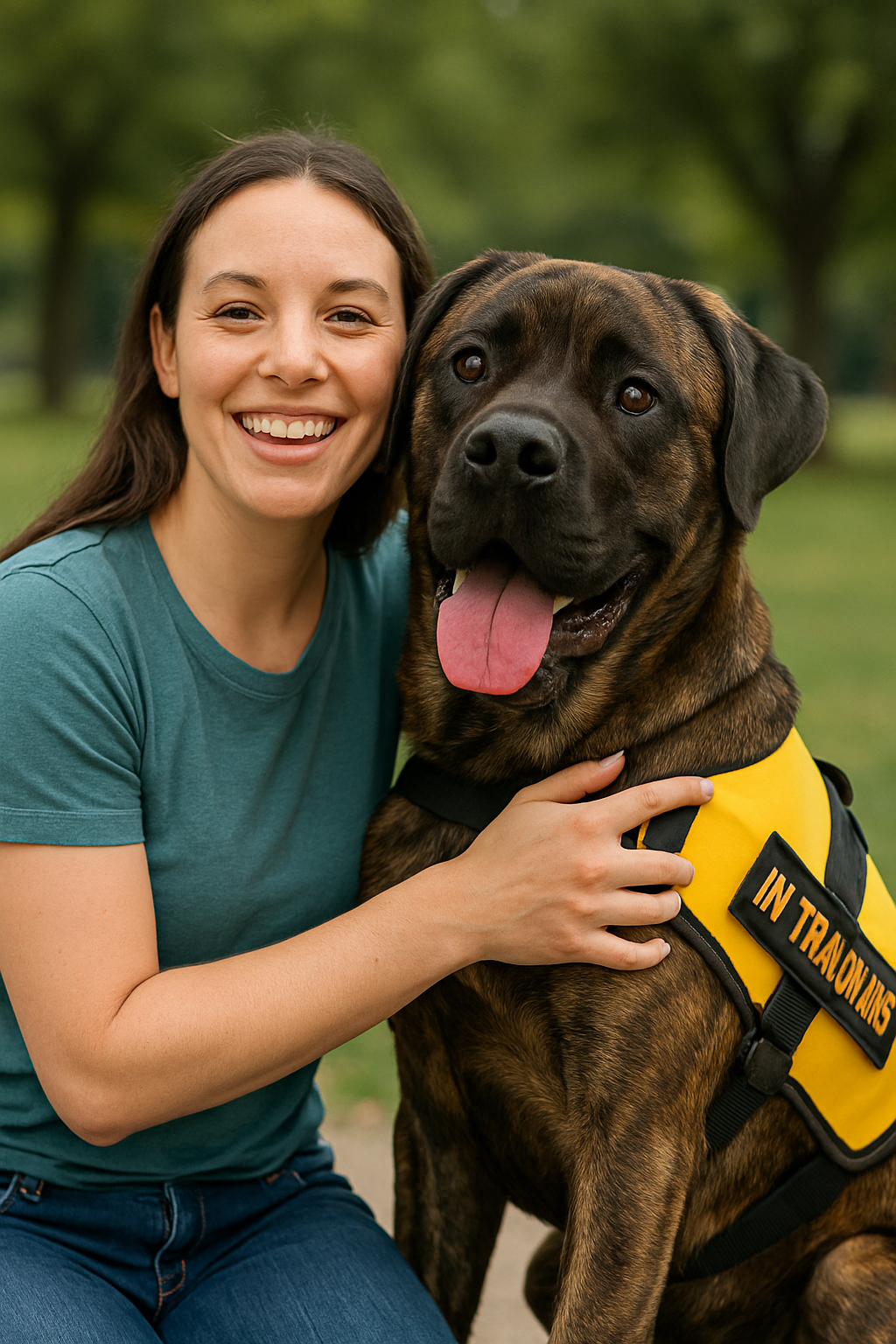
When people hear the term psychiatric service dog, they sometimes imagine a regular pet offering comfort. In reality, these dogs are highly trained to perform specific tasks that directly help with mental health disabilities such as post-traumatic stress disorder (PTSD), severe anxiety, depression, bipolar disorder, and panic disorders. Unlike emotional support animals, psychiatric service dogs (PSDs) are recognized because of the task work they perform — work that makes daily life safer, more stable, and more manageable for their handler.
So, what does a psychiatric service dog tasks list actually look like? While the exact tasks depend on the individual’s needs, there are many common ways PSDs can help.
One of the most recognized categories is interruption of psychiatric episodes. A PSD can nudge, paw, or lick their handler to interrupt spiraling thoughts, flashbacks, or self-harming behaviors. For people with PTSD, this can mean breaking a cycle of panic before it becomes overwhelming.
Another major area is grounding and calming. Many PSDs are trained to provide deep pressure therapy (DPT) by lying across their handler’s lap or chest during panic attacks. This firm, steady pressure can slow heart rate, lower blood pressure, and help the nervous system reset. Some dogs also perform “tactile stimulation” — nudging, pawing, or leaning — as a grounding technique when their handler is dissociating.
Medication support is another important task. Psychiatric service dogs can be trained to bring medication to their handler, remind them at set times, or even fetch a water bottle when it’s time to take a dose. For people with depression or anxiety who struggle with daily routines, this consistency can be life-changing.
In public, PSDs often help by creating physical space. A dog may stand behind their handler to block people from crowding them, or form a barrier in front during overwhelming situations. This not only gives the handler breathing room, it also increases their confidence to go out in public.
Here’s a more detailed psychiatric service dog tasks list that trainers often build from:
- Interrupting panic attacks, flashbacks, or self-harm behaviors
- Providing deep pressure therapy (DPT) for grounding and calming
- Reminding handler to take medication or bringing it to them
- Guiding handler to a safe space during overwhelming episodes
- Waking handler from nightmares or night terrors
- Creating a buffer in crowds or busy environments
- Alerting to rising anxiety before it escalates
- Bringing help in emergencies (e.g., fetching a phone or alerting another person)
What makes these tasks powerful is that they are reliable, repeatable, and directly tied to the disability. For example, it’s not just “my dog makes me feel better” — it’s “my dog is trained to apply deep pressure therapy when I’m having a panic attack.” That clear task performance is what qualifies a PSD under laws like the ADA in the U.S. or comparable standards in Canada and the UK/EU.
Training a PSD takes time and consistency. Handlers often spend months teaching both the basic public access skills and the psychiatric-specific tasks, sometimes with the support of a service dog training school or a professional trainer familiar with psychiatric conditions. But the result is a reliable partner who can truly change their handler’s quality of life.