
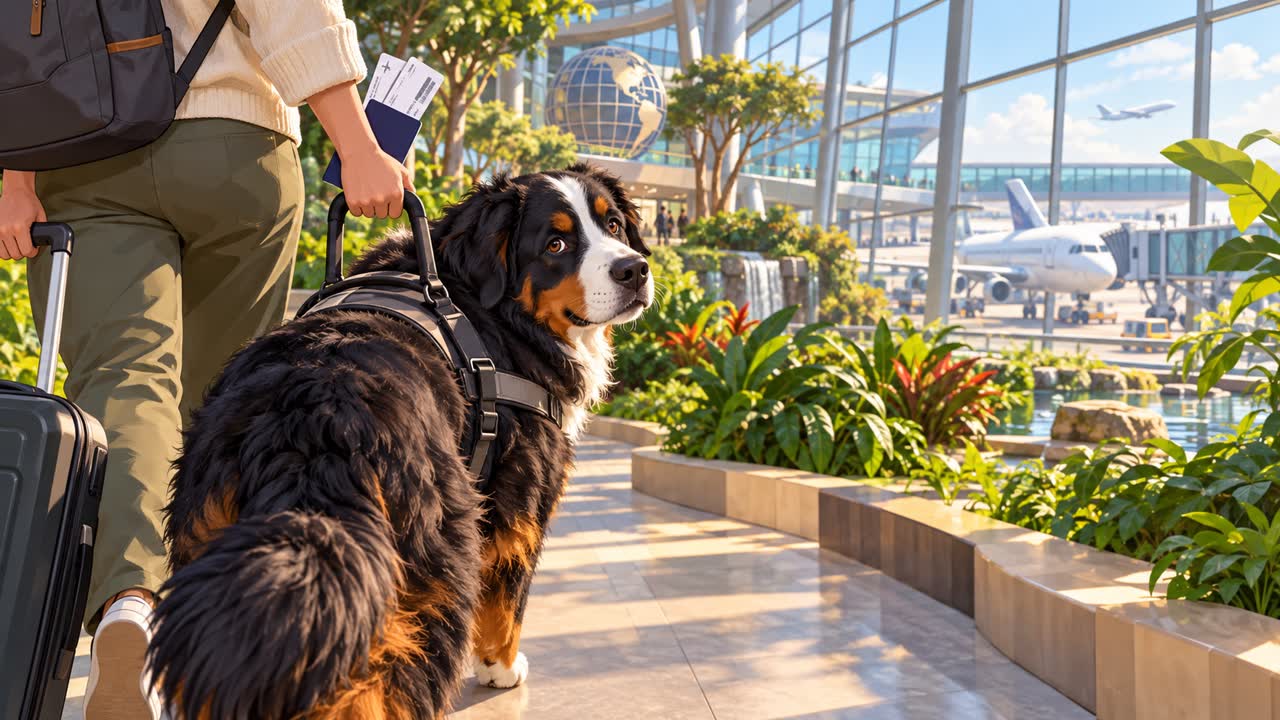
A service dog on an international layover requires more planning than a domestic connection because the transit airport, destination country, airline, and route may each have different animal-health, entry, security, and access requirements. A dog’s trained service role does not automatically replace customs, quarantine, vaccination, or transit rules.
The most important question is whether the layover remains entirely airside or requires the traveler to enter the transit country. A missed connection, overnight stay, terminal change, airport hotel, baggage recheck, or border-control requirement can quickly change the rules.
This guide offers general preparation information for U.S.-based travelers. Confirm current requirements directly with every airline and each country involved before booking or departing, because international rules can change.
Quick Overview
- Check requirements for the destination, return route, and every transit country.
- Confirm whether the layover is airside, requires immigration clearance, or may involve an overnight stay.
- Keep animal-health records, airline forms, and handler contact information easy to reach.
- Plan for relief areas, water, food, medication, and a delayed or missed connection.
1) Plan a Service Dog on International Layover before Booking
Review the full itinerary before purchasing a ticket.
Ask each airline whether it recognizes the dog as a service animal for that segment and what forms, advance notice, check-in timing, seating conditions, or behavior requirements apply. A ticket sold by one airline may include a flight operated by another carrier with different procedures.
Confirm whether the transit airport has an animal-relief area inside security and whether the dog can reach it without entering the country. If the airport has no accessible airside relief area, plan feeding, water, and timing carefully around the connection.
General information about service-animal travel is available through the knowledge hub, but international transit decisions must be based on the current rules for the specific route.
2) Separate Service-Dog Access from Border and Animal-Entry Rules
A trained service dog may have an access role during travel, but customs and animal-health authorities can still enforce entry requirements. Depending on the countries involved, officials may require vaccination records, identification details, health documentation, recent travel history, permits, inspections, or other materials.
These rules may matter even during a layover if the handler must leave the secure area, collect checked baggage, change airports, stay overnight, or enter the transit country because of a cancellation. Do not assume that remaining at an airport eliminates every animal-health requirement.
Keep the dog’s entry records separate from documents that describe its service role. A purchased certificate, registry entry, vest, or ID card does not replace government-required animal-entry documents or guarantee admission to a country.
A voluntary service check may help organize information about trained tasks and travel readiness. It is not government approval and does not determine customs, quarantine, or airline decisions.
3) Pack Documents and Supplies for Delays
Carry original records when required, along with readable copies stored separately from the originals. Keep important documents in the cabin rather than checked luggage. Include the handler’s contact information, veterinarian contact information, itinerary, emergency contact, and any required airline paperwork.
Pack a compact travel kit with water, a collapsible bowl, waste bags, absorbent pads if appropriate, medication, food for delays, a leash or harness, and a small resting mat if it can be carried safely.
Keep the dog’s supplies organized enough to explain during security or customs screening. Loose containers and unlabeled medication can create avoidable confusion when the handler is tired or rushed between gates.
4) Handle Airports, Security, and Relief Breaks Safely
Allow extra time after landing for a relief break, terminal transfer, security screening, immigration, or a gate change. A connection that looks adequate on a schedule may be too short when the handler and dog need accessible routes or must wait for staff assistance.
Use elevators or other safe routes instead of placing the dog at risk on escalators. Keep the dog clear of moving walkways, boarding doors, baggage belts, service carts, and emergency equipment. If a route becomes unsafe or inaccessible, ask airline or airport staff for assistance promptly.
The public access guide provides general context about controlled service-dog behavior. It does not override international security procedures, airline requirements, or border rules.
5) Prepare for Missed Connections and Overnight Disruptions
A delayed flight can create the most difficult part of an international layover. If you miss a connection, ask the airline whether the dog can remain airside, whether an airport hotel is available, and whether entering the transit country will trigger additional documentation or inspection requirements.
Do not leave the dog unattended in a terminal, carrier, restroom, hotel room, or vehicle. If the handler becomes ill or cannot continue travel safely, contact the airline and a trusted emergency person as soon as possible.
Before departure, plan for overnight delays. Know the transit country’s animal-entry rules, the airline’s rebooking process, and whether you have enough dog supplies for at least one unexpected day. Consider travel insurance or flexible booking options only after understanding what they cover for animal-related disruptions.
If a border or airline official identifies a documentation problem, ask what specific requirement is missing and whether a lawful alternative is available. Keep notes of the instructions provided, then verify the information with the appropriate official authority before changing the travel plan.
6) Keep the Dog Comfortable and Ready to Work
International travel can be physically demanding for both handler and dog. Long flights, unfamiliar airports, time-zone changes, crowded terminals, and disrupted routines can affect hydration, rest, medication schedules, and the dog’s ability to settle.
Watch for signs of stress, overheating, nausea, limping, excessive panting, withdrawal, or difficulty settling. A dog that is ill, injured, or overwhelmed may need veterinary attention or a changed travel plan rather than being expected to continue through multiple airport environments.
Maintain calm boundaries with other travelers. The dog should not approach people, eat dropped food, sniff bags, occupy seats, block aisles, or interfere with staff. A short statement such as, “The dog is working; please give us space,” can reduce distractions without inviting a long discussion.
A structured behavior check may help identify skills to practice before travel, such as settling near a seat, moving through crowds, handling airport noise, and responding to close-control cues. It does not replace airline approval or country-specific entry requirements.
FAQs
Can I take a service dog on an international layover?
You may be able to travel with a service dog, but you must confirm the current airline, airport, transit-country, and destination-country requirements for the exact itinerary.
Does an airside layover avoid all animal-entry rules?
Not necessarily. Requirements can change if you must clear immigration, collect bags, switch airports, stay overnight, or leave the secure terminal. Confirm the rules before departure.
Does my service dog need a certificate or registry for international transit?
No purchased certificate, registry entry, vest, or ID card replaces animal-health or border documents. Follow the official requirements for every country and airline involved.
What should I do if the airline cancels my connection?
Ask the airline whether you can remain airside and what documentation is needed if you must enter the transit country. Keep your dog’s records and supplies in your carry-on bag.
Can I bring dog food through a transit airport?
Rules vary by country and the food’s ingredients. Check destination and transit-country restrictions before packing, and declare items when required.
Sources
- ADA.gov: Businesses Open to the Public
- ADA.gov: Service Animals
- ADA.gov: Service Animals FAQ
- CDC: Dogs
- CDC: Pet Travel Safety
- U.S. DOT: Service Animals
Takeaway
An international layover works best when the handler plans for transit becoming entry, a short connection becoming an overnight delay, and each airline or country applying different rules.
- Verify requirements for every country, airline, and operating flight segment.
- Keep records, medication, water, and relief supplies in the cabin.
- Prepare a backup plan for delays, missed connections, and unexpected border clearance.