
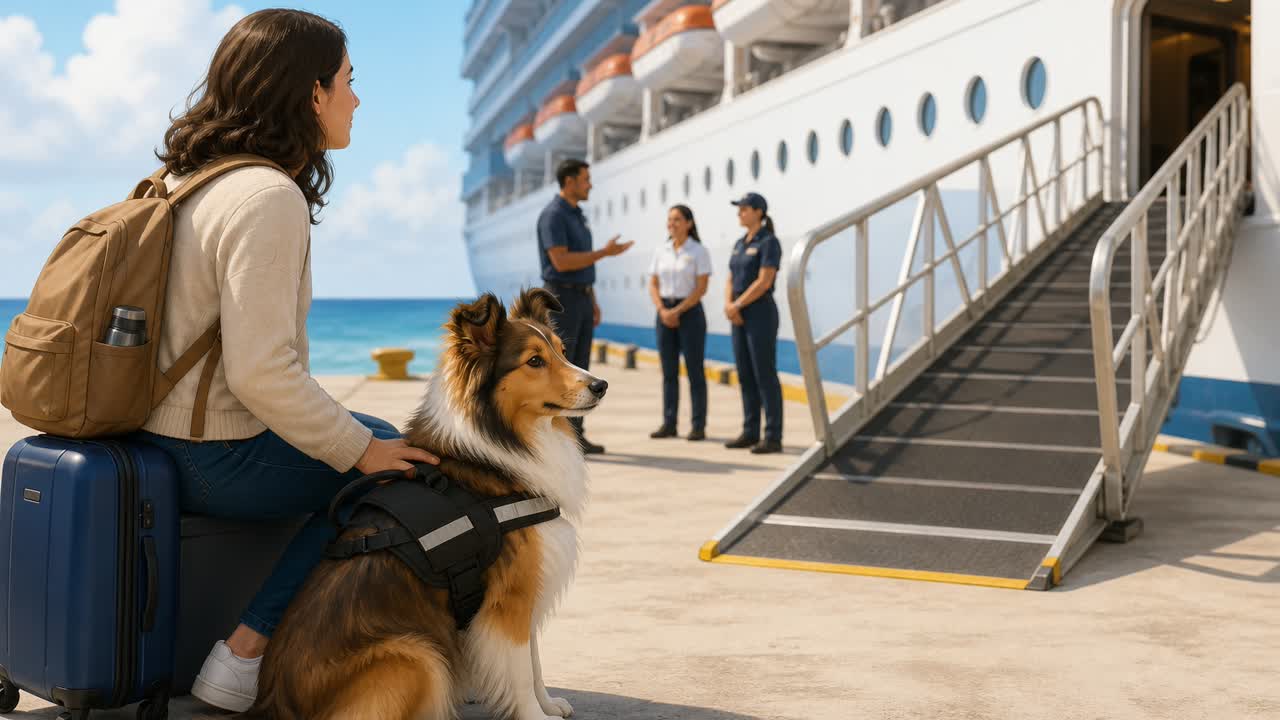
Bringing a service dog on a cruise ship is possible, but it requires more planning than a hotel, restaurant, or airport visit.
This guide focuses on U.S. travelers and practical compliance. It does not treat certificates, online registrations, vests, or ID cards as legal proof. Instead, it explains what cruise staff may reasonably need, how to prepare records, and how to reduce friction while protecting your rights and your dog’s welfare.
Cruise access is different from ordinary public access because the ship moves through multiple legal environments. U.S. disability rules may matter at embarkation and aboard some ships. However, ports, quarantine rules, and animal health requirements can still affect whether your dog may leave the ship or even sail on a particular itinerary.
Quick Overview
- A task-trained service dog may be allowed on many cruise ships, but policies vary by cruise line and itinerary.
- Start early: some cruise lines ask for notice, vaccination records, relief-box planning, and destination documents weeks before departure.
- A purchased certificate, registry listing, vest, or ID card is not the core legal standard for a service dog in U.S. public-access settings.
- Cruise ships usually treat emotional support animals and pets differently from service dogs.
1) What Cruise Lines Usually Mean by a Service Dog
For U.S. public-access purposes, a service dog is described as a dog specially trained to do work or accomplish tasks for a person with a disability. The task must be connected to the person’s disability, such as guiding, alerting, retrieving, interrupting a medical episode, providing mobility support, or another trained disability-related task.
That is different from a dog whose role is comfort, companionship, or emotional support alone. If you are still clarifying where your dog fits, a structured service check can help you organize the basic task, training, and behavior questions before you contact the cruise line.
The scope of this article is cruise preparation. For broader U.S. access concepts, keep the general public access rules separate from the extra travel and port-entry requirements that apply at sea.
2) Service Dog on Cruise Ship Access: What to Confirm before Booking
Before you pay for the cruise, contact the cruise line’s accessibility or special needs department. Do not rely only on a booking agent’s quick answer. Ask for the written service animal policy for your exact ship, sailing date, embarkation port, and destination ports.
Confirm whether the line requires advance notice, a service animal request form, veterinary records, proof of vaccinations, microchip details, parasite treatment records, or destination-specific paperwork. Ask whether the dog may accompany you in dining areas, theaters, tenders, excursions, and port facilities. Also ask what happens if a port country refuses animal entry or requires the dog to remain aboard.
Get the answers in writing and keep them with your travel documents. A calm paper trail is not the same as claiming a certificate is legally required. It simply helps everyone understand what was approved and what still needs to be handled.
3) Paperwork that Actually Helps
For cruise travel, useful documentation is usually practical, not decorative. Start with veterinary and itinerary records: current rabies vaccination, other required vaccinations, a health certificate if needed, microchip number, medication list, parasite prevention records, and your veterinarian’s contact information.
You may also want a concise task-and-handling note for yourself. This can state that the dog is trained to perform disability-related tasks, list those tasks in plain language, and describe any handling needs that affect boarding, security, dining, or seating.
If disability documentation is relevant to a separate accommodation process, work with a qualified clinician or decision-maker rather than relying on an instant document. Good records support a practical conversation; they do not replace training, control, or animal health compliance.
4) Shipboard Behavior, Relief Areas, and Safety Planning
A cruise ship is crowded, narrow, noisy, and full of unusual surfaces. Your dog should be ready for elevators, buffet lines, theater seating, stairways, rolling decks, children nearby, other animals in port, and long periods without easy outdoor access.
Ask where the relief area will be placed, what material will be used, who maintains it, and whether it is accessible at night or during rough weather. Some ships use mulch, sod, wood chips, or artificial turf. If your dog has only practiced on grass, train for alternate surfaces before sailing.
Bring a compact supply kit: food, collapsible bowls, medication, cleanup bags, a spare leash, grooming wipes, paw protection if needed, and copies of records. A tracking app can also help keep vaccination dates, training notes, medication schedules, and travel contacts organized in one place.
5) Ports, Quarantine Rules, and When Your Dog may Have to Stay Aboard
The hardest part of cruising with a service dog is often not the ship. It is the ports. Each destination may have its own animal import rules, even for a short visit. Some countries require advance permits, official health certificates, rabies titers, parasite treatment, or government endorsement. Others may restrict the dog from disembarking.
Ask the cruise line whether it helps review port requirements or whether you must work directly with each country’s animal import authority. Also ask what happens on shore excursions. A tour operator may have vehicle, wildlife, food-service, or local-law limits that differ from the ship’s general access policy.
Plan for the possibility that your dog stays on the ship at certain ports. That can affect whether an excursion is realistic, whether another adult can assist, and how you handle relief breaks, feeding, and medication.
6) What Staff may Ask and How to Respond Calmly
In many U.S. public-access situations, staff may ask whether the dog is compulsory due to a disability and what functions the dog has been trained to perform. They generally should not require a demonstration, demand diagnosis details, or insist on a particular registry card as the condition of access.
Cruise travel adds health and logistics questions, so separate the two categories. If a staff member asks for a certificate or registration, avoid arguing at the counter. A simple response works better: the dog is trained to perform disability-related tasks, and you also have the veterinary and cruise documents requested for this sailing.
For a deeper background on U.S. disability access, the site’s regulations guide can help you keep the legal concepts organized without turning the conversation into a paperwork dispute.
FAQs
Can I bring a service dog on cruise ship vacations?
Often, yes, but you need to confirm the cruise line’s policy and the rules for every destination on the itinerary. Approval may depend on advance notice, animal health paperwork, relief arrangements, and port-entry requirements.
Do I need a service dog certificate for a cruise?
A certificate, registry listing, vest, or ID card is not usually the legal standard for a service dog in U.S. public-access settings. For cruises, health records and destination paperwork usually matter more than a purchased certificate.
Can a cruise line deny my service dog?
A cruise line may have to follow disability access obligations, but it may also address safety, animal control, health documentation, and foreign port restrictions. A dog that is out of control, not housebroken, unsafe, or missing required travel documents can create serious access problems.
Are emotional support animals allowed on cruise ships?
Many cruise lines do not treat emotional support animals the same as trained service dogs. Policies vary, but comfort or companionship alone usually does not receive the same access treatment as a dog trained to perform disability-related tasks.
Where does a service dog relieve itself on a cruise ship?
The cruise line should explain the planned relief area before departure. Ask about location, surface material, cleaning, access hours, and backup plans for bad weather or rough seas.
Sources
- ADA.gov: Service Animals
- ADA.gov: Service Animals FAQ
- CDC: Dogs
- CDC: Pet Travel Safety
- HUD: Information for Persons with Disabilities
Takeaway
-
- Contact the cruise line’s accessibility team before booking or as early as possible.
- Prioritize task clarity, behavior, veterinary records, and port paperwork.
- Keep written confirmations with you so boarding-day conversations stay calm and practical.